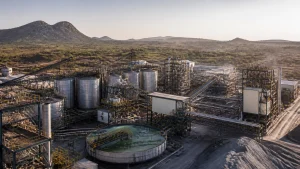
The $53 billion Anglo American-Teck Resources merger is officially a go, but here's the thing nobody's talking about yet: the industry's been surprisingly quiet about what this actually means. Sure, we got the usual executive cheerleading and regulatory rubber stamps, but the real expert analysis? The brutal honest takes from analysts who aren't getting paid by either company? That's still coming.

What we do have right now is a fascinating case study in how two mining giants are trying to rebrand themselves as "critical minerals champions" while the rest of the industry watches and waits to see if this thing actually delivers on its massive promises.
The Official Line: All Smiles and Synergies
Jonathan Price, Teck's CEO, rolled out the standard playbook when Canadian regulators gave their blessing: "an important step forward in the formation of Anglo Teck: a new global critical minerals champion headquartered in Canada." He's betting big on this creating "billions in investment and drive new economic activity and job creation here in Canada and beyond."
Duncan Wanblad from Anglo American echoed the same themes, calling it "a major global critical minerals powerhouse" and emphasizing their commitment to "responsible mineral production." Standard merger-speak, but the scale here isn't standard at all.

The companies are painting this as some kind of transformative moment for critical minerals supply chains. But here's what's missing: independent voices telling us whether that's actually realistic or just another case of merger math that looks great on PowerPoint but falls apart in execution.

Where Are the Industry Analysts?
This is where things get interesting. For a deal this size – we're talking about combining two major players in copper, steelmaking coal, and zinc – the industry reaction has been weirdly muted. No major mining consultancies have released detailed impact assessments yet. No blistering op-eds from industry veterans calling this brilliant or catastrophic.
That silence might tell us more than any press release. When BHP tried to acquire Anglo American earlier this year and got shot down, analysts were all over it within hours. Commentary flew from every direction about valuations, strategic fit, and market implications. This time? Crickets.
Maybe it's end-of-year fatigue. Maybe everyone's waiting to see how the integration actually plays out before weighing in. Or maybe the industry's genuinely split on whether this makes strategic sense, and nobody wants to be the first to call it.
The Critical Minerals Angle: Buzzword or Game-Changer?
Both companies keep hammering the "critical minerals" messaging, and there's a reason for that. With supply chain security dominating policy discussions in Ottawa, Washington, and Brussels, positioning this merger as essential for Western mineral independence is smart politics.
Anglo American brings world-class copper assets and platinum group metals. Teck adds significant zinc production and Canadian steelmaking coal. On paper, that's a compelling portfolio for governments worried about Chinese dominance in critical mineral processing.

But here's the reality check nobody's providing yet: combining two companies doesn't magically create new deposits or speed up permitting processes. If the goal is actually boosting critical minerals supply, the new Anglo Teck will still face the same regulatory hurdles, environmental challenges, and infrastructure bottlenecks that constrain every other mining operation.
The merger might create operational efficiencies and capital allocation advantages, but calling it a solution to critical minerals supply chain vulnerabilities is probably overstating things. We need independent analysis on whether this actually moves the needle on mineral security or just creates a bigger player in existing markets.
Coal Complications: The Elephant in the Room
Teck's steelmaking coal operations are a major part of this deal, but you won't hear much about that in the official messaging. Both companies are trying to position themselves as enablers of the energy transition, but steelmaking coal doesn't fit that narrative particularly well.
The reality is that steel production still depends heavily on metallurgical coal, and that's not changing anytime soon. Anglo Teck will be one of the world's largest suppliers of the stuff. That's great for cash flow and gives them significant influence in global steel markets, but it complicates their clean energy positioning.
Industry observers are probably waiting to see how the combined company handles this tension. Do they double down on coal as a necessary interim solution while steel technology evolves? Do they start divesting coal assets to focus purely on battery metals and critical minerals? The strategic direction here will tell us a lot about whether this merger is really about leading the energy transition or just getting bigger in traditional mining markets.
Geographic Rebalancing: Canada's Mining Moment
One angle that hasn't gotten enough attention yet is what this means for Canada's position in global mining. Teck brings significant Canadian operations, and the combined company will be headquartered in Vancouver. That's not just symbolic – it represents a major shift in where mining capital and decision-making power sits globally.

Australia has dominated mining M&A and strategic positioning for the past decade. BHP, Rio Tinto, and Fortescue have called most of the shots in iron ore, while Australian lithium companies captured early market leadership in battery materials. This merger potentially shifts some of that influence back toward North America.
Canadian mining policy has been increasingly focused on critical minerals and supply chain security. Having a major global mining company based in Vancouver, with significant operations across Canada, gives Ottawa more influence over global mineral markets than it's had in years.
What's Missing: The Skeptical Voices
The concerning thing about early reactions to this merger is how uniformly positive they've been. That's usually a red flag. Big mining mergers are complex, risky endeavors that destroy value as often as they create it. The fact that we haven't heard skeptical takes from industry veterans, activist investors, or independent analysts suggests either everyone's still processing the implications or the critical voices are staying quiet for now.
We need honest assessments of integration risks. These companies have different corporate cultures, operational approaches, and geographic focus areas. Combining them successfully while maintaining operational efficiency and safety standards isn't guaranteed.
We also need realistic analysis of whether the projected synergies are achievable. Mining companies have a long history of overpromising on merger benefits and underdelivering on execution. The $53 billion price tag implies massive synergies and value creation that may or may not materialize.
ESG Implications: Uncharted Territory
Neither company has released detailed analysis of how this merger affects their environmental and social governance commitments. That's a problem, because ESG performance increasingly determines access to capital and social license to operate.
Anglo American has been working to improve its ESG profile after various controversies over the years. Teck has generally maintained stronger community relationships and environmental standards. How these different approaches get integrated could determine whether the combined company becomes an ESG leader or inherits the worst practices from both sides.

The steelmaking coal issue looms large here too. ESG investors are increasingly skeptical of fossil fuel exposure, even when it's metallurgical coal rather than thermal coal. Anglo Teck will need to articulate a clear position on how coal fits into their long-term strategy and ESG commitments.
Market Position: Size Versus Strategy
Creating a larger mining company doesn't automatically create a more successful one. The history of mining M&A is littered with deals that made companies bigger without making them better. Anglo Teck will be massive, but massive and efficient aren't the same thing.
The real test will be whether the combined company can use its scale to access better projects, negotiate better terms with customers, and deploy capital more effectively than the two companies could separately. That's where independent industry analysis becomes crucial – and where we're still waiting for substantive expert commentary.
Looking Forward: What to Watch
As more industry reactions emerge over the coming weeks and months, several key themes will determine whether this merger succeeds or becomes another cautionary tale about mining M&A.
Integration execution will be critical. Mining operations are complex, and combining them successfully requires seamless coordination across multiple countries, regulatory environments, and operational systems. Early indicators of how well this is proceeding will signal whether the merger creates value or destroys it.
Strategic direction will matter enormously. Does Anglo Teck focus on becoming the critical minerals leader it claims to be, or does it get distracted by managing a sprawling portfolio of different commodities across different regions? Clear strategic focus has been the difference between successful and unsuccessful mining companies in recent years.
Market reactions will tell us whether investors buy the critical minerals story or remain skeptical about mining mega-mergers. Share price performance, analyst upgrades and downgrades, and institutional investor commentary will provide better signals than company press releases about whether this deal makes sense.
The real industry reactions are still coming. When they arrive, they'll tell us whether Anglo Teck represents a new model for mining companies or just another case of merger enthusiasm overwhelming strategic logic. Either way, the $53 billion question mark hanging over this deal deserves more skeptical analysis than it's gotten so far.