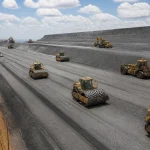
Here is the thing nobody wants to admit in the executive suites of major mining houses: your multi-billion-dollar extraction operation is only as fast, resilient, and profitable as the weakest link in your communications backhaul. For decades, remote extraction sites in the Pilbara, the Canadian Shield, and the Atacama Desert operated like isolated island states: relying on brittle satellite links, sluggish microwave relays, and patchwork Wi-Fi networks that dropped packets the moment a dust storm rolled across the pit or a massive Caterpillar haul truck cut across a line-of-sight path.

The strategic calculus isn’t subtle anymore. In an era where commodity supercycles, stringent decarbonization mandates, and relentless safety pressures collide, legacy connectivity is a multi-million-dollar liability. We are standing at a hard industrial inflection point. Mining giants are no longer treating connectivity as an IT overhead expense; they are weaponizing private LTE and 5G cellular networks as core infrastructure assets. From the iron ore juggernauts of Western Australia to global gold and copper syndicates, private cellular is replacing the past and rewriting the rules of pit-side supremacy.
The Death of Legacy Backhaul: Why Wi-Fi and Satellite Are Cracking Under Pressure
To understand why the industry is rushing toward private 5G, you have to look at the sheer data hemorrhage happening inside modern open-pit and underground operations. A single autonomous haul truck generates up to 30 gigabytes of real-time telemetry data every single hour. Multiply that across a fleet of 150 vehicles, add high-resolution lidar mapping, real-time pit slope monitoring sensors, underground diesel emission trackers, and ultra-high-definition video feeds for tele-remote drilling, and you are pushing terabytes of mission-critical data per shift.
Legacy infrastructure simply buckles under this load. Traditional Wi-Fi access points installed on high-wall benches suffer from severe propagation limits and handover latency. When a truck moves at 50 kilometers per hour across a bench switch, Wi-Fi handovers frequently drop connections: triggering emergency safety stops in autonomous fleets that cost thousands of dollars per minute in lost uptime. Meanwhile, geostationary satellite links introduce round-trip latencies exceeding 600 milliseconds, making real-time teleoperation or remote-control shovel manipulation an impossibility. Low-Earth Orbit (LEO) constellations have improved throughput, but they remain vulnerable to weather attenuation, high subscription costs, and bandwidth contention across shared regional beams.
Bandwidth Bottlenecks and Latency Traps
The technical friction points between legacy systems and modern operational demands are stark. Consider the operational ceiling imposed by older technologies:
More Read

- Wi-Fi & Leaky Feeder: Suffer from high interference in heavy industrial environments, limited coverage radius requiring dense power infrastructure, and unacceptable packet loss during high-speed vehicle handovers.
- Microwave Backhaul: Highly susceptible to foliage growth, heavy rainfall fade, and structural misalignment caused by blasting shockwaves in the pit.
- Satellite Backhaul: Prohibitive latency (500ms to 800ms), strict data caps, and high vulnerability to physical disruptions or localized interference.
When you are running autonomous haulage systems (AHS) or underground tele-remote loaders, a latency spike of even 200 milliseconds can mean the difference between a smooth production cycle and a catastrophic collision. Private 5G slashes latency to under 10 milliseconds while delivering deterministic bandwidth that guarantees zero jitter, even when hundreds of heavy assets are transmitting simultaneously.

Front-Running the Pit: How BHP, Rio Tinto, and Newmont Are Weaponizing Private 5G
The transition to private cellular is not an experimental sandbox; it is a full-scale industrial arms race. Major tier-one producers are front-running the market by deploying robust, dedicated cellular grids that span hundreds of square kilometers.
BHP Jimblebar and the Autonomous Haulage Blueprint
BHP’s Pilbara operations have long set the industry benchmark for automation. At Jimblebar, where BHP deployed its first fully autonomous truck fleet back in 2017, heavy-vehicle safety risks plummeted by roughly 90% while overall haulage costs dropped by nearly 20% compared to conventional manned operations. However, maintaining that level of productivity across millions of cubic meters of material requires bulletproof wireless infrastructure. BHP’s ongoing network evolution across Western Australia relies heavily on high-capacity private wireless backbones to support continuous sensor streaming, real-time equipment health monitoring, and upcoming trials of battery-electric haul trucks developed in collaboration with Caterpillar and Rio Tinto.
More Read
Rio Tinto’s Gudai-Darri and the Industrial Digital Twin
Rio Tinto’s flagship Gudai-Darri iron ore mine in Western Australia represents the pinnacle of this cellular transformation. Designed from the ground up as a “smart mine,” Gudai-Darri integrates an advanced industrial wireless network to orchestrate a massive fleet of autonomous Komatsu haul trucks, automated drills, and robotic water trucks. More importantly, the high-throughput network feeds real-time telemetry directly into a comprehensive digital twin of the entire operation. Plant managers sitting in Perth: over 1,500 kilometers away: can monitor drill bit wear, ore grade variations, and conveyor belt vibrations with sub-second visibility. This level of oversight turns reactive maintenance into predictive mastery.
Newmont’s Multi-Mine Global Rollout Strategy
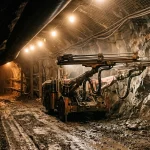
While iron ore miners pioneered open-pit automation, gold and copper majors are aggressively closing the gap. Newmont Corporation has initiated multi-mine private cellular rollouts spanning key operations across four continents and 14 major mines, including the world-class Cadia operations in New South Wales. For underground gold and copper extraction, where GPS signals are entirely absent and Wi-Fi coverage is notoriously expensive to maintain in twisting declines, private LTE and 5G nodes installed along ventilation shafts provide uninterrupted voice communications, real-time personnel tracking, and autonomous loader guidance.
The Ericsson Factor: Dominating Western Australia’s Industrial Wireless Grid
Behind many of these marquee deployments lies enterprise-grade infrastructure from technology heavyweights like Ericsson. Ericsson Private 5G solutions have become the de facto standard across Western Australia’s remote mining corridors, offering turnkey cellular core networks deployed directly on-site (edge computing) without reliance on public telecom infrastructure.
In regions where public cellular coverage is non-existent: often spanning hundreds of miles of red dirt and arid scrubland: mining operators need standalone (SA) 5G architectures that remain operational even if regional fiber optic cables are severed by severe weather or bushfires. Ericsson’s single-server dual-mode core allows site IT directors to manage private LTE and 5G simultaneously, bridging legacy machine-to-machine (M2M) protocols with ultra-reliable low-latency communication (URLLC) required for mission-critical industrial automation.
Economic Realities: Private 5G vs. Satellite vs. Microwave vs. Wi-Fi
For Chief Technology Officers and mine financial controllers, the decision to rip out legacy comms and deploy private 5G comes down to a brutal cost-benefit analysis. While the initial capital expenditure (CapEx) for a private cellular grid is higher than slapping up commercial Wi-Fi routers, the total cost of ownership (TCO) over a five-to-ten-year mine life heavily favors 5G.
| Technology | Initial CapEx | Operational Cost (OpEx) | Average Latency | Max Bandwidth | Reliability in Pit Environment |
|---|---|---|---|---|---|
| Private 5G (Standalone) | High ($1.5M – $4M per site) | Medium (Managed software updates & node expansion) | < 15 ms | 1 Gbps+ | Exceptional (Unaffected by dust, rain fade, or heavy vehicle obstruction) |
| Industrial Wi-Fi / Leaky Feeder | Low to Medium | High (Frequent maintenance, cable breaks, high repair labor) | 50 ms – 150 ms | 150 Mbps | Poor (High packet loss, frequent handover dropouts, interference) |
| Microwave Backhaul | Medium | Low | 20 ms – 50 ms | 300 Mbps | Moderate (Vulnerable to blast misalignment and heavy rainfall) |
| Satellite (GEO / LEO) | Low | Very High (High monthly recurring subscription & data volume fees) | 500 ms – 800 ms (GEO) / 40 ms (LEO) | 50 Mbps – 100 Mbps | Moderate (Subject to line-of-sight obstruction and weather attenuation) |
As detailed in our recent market intelligence reports covering global commodity pricing and structural deficits in copper and critical minerals (explore insights at Skillings Mining Intelligence), reducing operational downtime by even 0.5% across a Tier-1 copper or gold asset yields millions of dollars in net-new revenue annually.
Calculating the ROI: When Multi-Million Dollar Infrastructure Pays for Itself in Months
The financial math behind private 5G is startlingly straightforward when evaluated through the lens of asset utilization. In a conventional open-pit truck-and-shovel operation, idle time accounts for up to 18% of total shift hours: driven by queue bunching at shovel faces, slow network handovers, and reactive maintenance checks.
By deploying a private 5G network that enables real-time dynamic dispatching, predictive AI maintenance on haul truck powertrains, and seamless tele-remote supervision during shift changes, mine operators consistently report:
- A 12% to 15% increase in effective asset utilization hours across heavy haul truck fleets.
- A 30% reduction in unplanned maintenance events through continuous vibration and thermal sensor streaming.
- Zero lost-time incidents related to autonomous equipment interference or communication dropouts.
When a single 300-ton haul truck costs upwards of $6 million and operates at an hourly running cost exceeding $300, eliminating just 10 minutes of unnecessary daily idle time per truck across a 100-vehicle fleet saves over $1.8 million annually in fuel and tire wear alone. The network essentially pays for itself before the fiscal year closes.
Bottom Line: The Inflection Point for Mining CTOs and Investors
The global mining industry is locked in a high-stakes competitive chess match. With tightening ore grades, skyrocketing capital expenditure requirements for greenfield projects, and intensifying regulatory scrutiny across global jurisdictions, operational efficiency is no longer optional: it is the ultimate barrier to survival.
For mine IT directors, operations managers, CTOs, and tech-focused mining investors, clinging to legacy Wi-Fi and satellite backhaul is equivalent to running modern algorithmic trading software on a dial-up modem. Private 5G is no longer an exotic luxury reserved for tier-one technology showcases; it is the fundamental operational operating system of the modern mine. Those who front-run this cellular pivot will capture structural cost advantages and safety dominance, leaving legacy laggards buried in the dust.