By Salini Krishnan

NASARAWA, Nigeria : Nigeria has officially commissioned the Diamond New Energy lithium processing plant in Nasarawa State. The project marks a major shift in Africa’s critical minerals industry.
With an operational capacity of 6,000 tonnes per day (TPD): equivalent to approximately 3 million metric tonnes per annum: the facility is now the largest lithium downstream processing hub in West Africa.
The commissioning, led by Vice President Kashim Shettima on behalf of President Bola Tinubu in early July 2026, marks the cornerstone of Nigeria’s “Value-Addition” mandate. The policy effectively ends the era of raw ore exports, requiring mining companies to establish processing plants within the country to foster industrialization and domestic wealth creation.
“We are no longer a mere extraction point for the global North or East,” Vice President Shettima stated during the inauguration at the Endo community in Nasarawa. “With this plant, Nigeria is securing its place in the global electric vehicle (EV) value chain, ensuring that the wealth generated from our soil remains in our economy.”
More Read

A Technical Milestone in Nasarawa
The Diamond New Energy facility is a joint venture involving the Nasarawa State Government and a consortium of Chinese investors, including the Julian Group and Tiangua New Energy Group. The plant’s 6,000 TPD capacity more than doubles the output of previous regional facilities, positioning Nasarawa as the “Lithium Capital” of Nigeria.

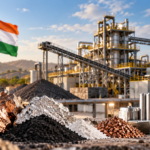
The plant utilizes advanced flotation and chemical concentration technologies to process spodumene and lepidolite ores into high-grade lithium concentrates. This concentrated material is the essential precursor for lithium-ion battery manufacturing, used globally for mobile devices, grid-scale energy storage, and the burgeoning electric vehicle market.

More Read

According to technical specifications released by the operator, the plant features a closed-loop water recycling system and integrated solar-power arrays to reduce its carbon footprint: a nod to the zero-carbon mining trends gaining traction across the continent.
Breaking the Raw Export Cycle
For decades, Nigeria’s solid minerals sector was characterized by artisanal mining and the export of unprocessed “stones” to international markets. The 2026 commissioning of the Diamond New Energy plant represents the operationalization of the Solid Minerals Roadmap, championed by Minister of Solid Minerals Development, Dele Alake.
Under the current regulatory framework, any mining entity seeking a license for critical minerals like lithium, cobalt, or rare earths must provide a comprehensive plan for local processing. The policy aims to capture the significant price delta between raw lithium ore and processed lithium carbonate or hydroxide.
“The economics are simple,” said a lead analyst at Skillings Mining Intelligence. “Exporting raw ore is exporting jobs and revenue. By processing 3 million tonnes locally, Nigeria can capture up to five times the value compared to shipping bulk minerals. This is the same playbook we’ve seen with Zimbabwe lithium and Namibia, but Nigeria is moving at a scale that challenges the established regional leaders.”
Economic Impact and Local Integration
The facility has already begun to reshape the local economy in Nasarawa. Diamond New Energy officials confirmed the creation of over 1,000 direct jobs, ranging from chemical engineers to heavy machinery operators. An additional 2,000 indirect jobs in logistics, security, and maintenance have been generated within the Endo and surrounding communities.

To support the massive throughput of the 6,000 TPD plant, the state government has invested in the rehabilitation of haulage roads and power infrastructure. This “mining-led development” model is being watched closely by other mineral-rich states in Nigeria, including Kogi and Kwara, which hold significant deposits of tantalite and copper.
Regional Competition: The African Lithium Race
Nigeria’s entry into the high-volume processing space places it in direct competition with Southern African giants. Zimbabwe, which currently hosts some of the continent’s largest lithium mines like Bikita and Arcadia, has similarly implemented strict bans on raw ore exports. However, Nigeria’s strategic advantage lies in its geographic proximity to European markets and its aggressive integration of Chinese capital and technology.
The 2026 outlook for African lithium is increasingly competitive. While the global market experienced a “L-shaped” recovery throughout 2025, the demand surge for 4680-format battery cells has renewed interest in stable, long-term supply agreements. Projects like the Diamond New Energy plant provide the “de-risked” concentrate that global refiners crave.
Investors are also eyeing Nigeria’s potential for a fully integrated “mine-to-battery” ecosystem. Minister Alake has indicated that the next phase of development involves attracting manufacturers for lithium-foil and battery-cell assembly plants within Nasarawa’s designated industrial zones.
Logistical Challenges and Sustainability
Despite the optimism, the scale of the 3-million-tonne-per-year operation presents significant logistical hurdles. The transport of concentrates from landlocked Nasarawa to the ports of Lagos or the newly commissioned Lekki Deep Sea Port requires a robust rail and road network.

Environmental concerns also remain a priority for policymakers. The processing of lithium involves significant chemical use and waste management challenges. The Nigerian government has assured the public that the Diamond New Energy plant adheres to the 2026 Revised Environmental Regulations for Solid Minerals, which mandates strict tailings management and community health safeguards.
Global Market Context: 2026 Lithium Outlook
The commissioning comes at a critical juncture for the global lithium market. After the volatility of 2023 and 2024, 2026 has seen a stabilization in prices, driven by consistent demand from the energy transition. As Western nations seek to diversify supply chains away from a single-country reliance, African jurisdictions that can offer processed value-added products are becoming increasingly attractive to critical minerals stocks and institutional investors.
Nigeria’s move into downstream processing is not merely a local milestone but a signal to the global market that Africa is moving up the value chain. The Diamond New Energy plant is the first of several planned facilities, with two more 4,000 TPD plants currently in the permitting phase in neighboring states.
Conclusion: A New Era for Nigerian Mining
The commissioning of the Diamond New Energy lithium plant is a definitive marker for Nigeria’s industrial ambitions. By leveraging its vast lithium reserves and enforcing a strict value-addition policy, the country is transitioning from a frontier mining destination to a central player in the global energy transition.
For operators and investors, the message is clear: the future of Nigerian mining is downstream. Companies looking to capitalize on the region’s mineral wealth must now come prepared with more than just drill rigs; they must bring the infrastructure to process, refine, and add value on Nigerian soil.

LinkedIn/X Snippet:
Nigeria has just commissioned West Africa’s largest lithium processing plant. With a 6,000 TPD capacity, the Diamond New Energy facility in Nasarawa marks the end of raw ore exports and the beginning of Nigeria’s dominance in the EV supply chain. #MiningNews #Lithium #EnergyTransition #NigeriaMining #SkillingsMining