Faraday Copper just rewrote the playbook for copper district consolidation in Arizona. On February 20, 2026, the company signed a non-binding letter of intent with BHP to acquire the San Manuel property while simultaneously closing a C$100 million ($73 million) capital raise backed by Lundin and BHP. This isn’t incremental expansion. This is the kind of land grab that creates generational copper districts.

The strategic calculus here isn’t subtle. Take two adjacent porphyry systems 19 kilometers apart, add 27,000 acres of private land, layer in existing infrastructure, and suddenly you’re looking at 100,000 to 150,000 tonnes per annum of copper cathode production. For decades.
That’s not a junior miner’s dream. That’s a mid-tier producer getting built in real time.
The Deal Mechanics
BHP isn’t selling San Manuel. They’re trading it for equity. The consideration: 30% of Faraday’s issued and outstanding common shares, representing approximately C$300 million ($220 million) in implied value. And they’re keeping participation rights to maintain that ownership stake through future equity raises.
This matters because it signals conviction. BHP isn’t exiting Arizona copper: they’re repositioning. They’re swapping operational responsibility for strategic exposure in a district they clearly still believe in. When a major walks away from operating assets but doubles down on equity participation, that tells you something about their long-term price assumptions.
More Read



The transaction is expected to close by the end of Q3 2026, subject to definitive agreements and regulatory approvals. That’s a 180-day deadline for Faraday to hammer out terms, complete technical due diligence, and navigate regulatory clearances. The clock is already ticking.
Meanwhile, the C$100 million capital raise: backed by Lundin and BHP: provides the working capital to execute on consolidation. This isn’t just acquisition funding. It’s operational runway for a company about to manage two major projects simultaneously while advancing engineering studies, permitting workstreams, and infrastructure planning.
More Read

What Consolidation Actually Delivers
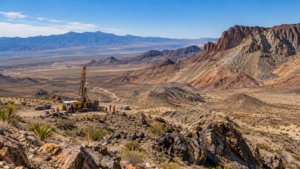
San Manuel sits approximately 19 kilometers from Faraday’s flagship Copper Creek project in Pinal County, Arizona. That proximity isn’t coincidental: it’s geological. Both properties sit within the same copper corridor that’s been producing metal for over a century. The difference now is unified ownership and modern extraction techniques applied to a massive combined resource base.
Copper Creek alone hosts 422 million tonnes in measured and indicated resources grading 0.48% copper equivalent. That translates to nearly 4.5 billion pounds of contained metal. Add San Manuel’s resource potential: which BHP spent decades exploring and developing: and you’re looking at a multi-generational asset base that can support staged production over decades.
The operational advantages stack up quickly:
Shared infrastructure. Both projects can leverage existing regional infrastructure including roads, rail access, power transmission, and natural gas. That’s not just cost reduction: it’s environmental footprint compression. Instead of duplicating infrastructure across two separate operations, the combined entity can optimize utilization and minimize surface disturbance.
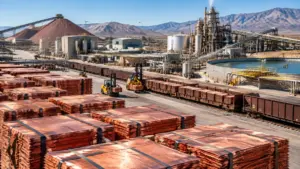
Accelerated production pathway. San Manuel’s private land position enables faster permitting timelines compared to projects on federal or state lands. That matters when copper markets are already pricing in supply deficits through 2030. The ability to bring cathode production online ahead of open pit sulfides gives Faraday optionality in how they sequence capital deployment.
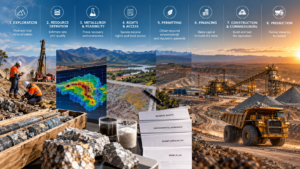
Staged development potential. The combined assets support a phased approach: prioritize copper cathode production from oxide and secondary sulfide material first, followed by open pit sulfide operations, with underground mining potential as a later-stage upside. That flexibility allows the company to respond to market conditions rather than lock into a single development pathway years in advance.

The Numbers That Actually Matter
Haywood Capital Markets called the transaction “transformational” with production potential of 100,000 to 150,000 tonnes per annum. Let’s contextualize that.
At 125,000 tonnes per annum: the midpoint of that range: Faraday would be producing approximately 275 million pounds of copper annually. At current copper prices hovering around $4.50 per pound, that’s over $1.2 billion in annual revenue. From a single consolidated district in Arizona.
That production level puts Faraday in the same weight class as established mid-tier producers. It’s not Escondida or Grasberg scale, but it’s meaningful tonnage in a market where every new pound matters. Particularly when that copper is being produced domestically in the United States.
The resource base supports this production profile for decades. Even at 150,000 tonnes per annum, Copper Creek’s 4.5 billion pounds of contained copper alone represents 30 years of mine life before considering San Manuel’s contribution. This isn’t a flash-in-the-pan development play. This is infrastructure that outlasts management teams.
Infrastructure Advantage in a Critical Mineral Economy
Arizona’s copper corridor offers something increasingly rare in North American mining: existing infrastructure that can support major new production without requiring greenfield construction of power, water, and transportation systems from scratch.
The region has been producing copper since the early 20th century. That legacy means transmission lines, rail spurs, highway access, and industrial water rights already exist. The towns have mining-experienced workforces. The regulatory agencies understand copper development. The supply chains are established.

This matters more now than it did a decade ago. As the United States prioritizes domestic critical mineral production and supply chain resilience, projects that can move quickly through permitting and development timelines get disproportionate attention. Faraday’s combined position checks multiple boxes that government officials and institutional investors care about: domestic production, existing infrastructure, private land component, and production timelines measured in years rather than decades.
The Biden administration’s Inflation Reduction Act and subsequent critical minerals initiatives have created preferential treatment for domestic copper projects. While those policies may evolve under different administrations, the fundamental driver remains: the United States consumes far more copper than it produces, and that gap is widening as electrification accelerates.
Arizona produces about 70% of America’s copper. Faraday’s consolidation play puts them at the center of that production base with room to grow into what U.S. policymakers are explicitly trying to incentivize: scaled domestic copper cathode production that can feed downstream manufacturing.
Market Context and Timing
The timing of this consolidation isn’t accidental. Copper markets are pricing in structural deficits as electrification demand accelerates faster than new mine supply can respond. Electric vehicles, grid infrastructure, renewable energy systems, and data centers are all pulling on the same constrained copper supply base.
Meanwhile, the mining industry faces brutal realities on the supply side. Ore grades are declining across major producing districts. Permitting timelines for new projects stretch into decades in many jurisdictions. Capital costs for greenfield development have inflated dramatically. And the pipeline of large-scale copper discoveries hasn’t kept pace with depletion at existing mines.

Faraday’s approach sidesteps several of these constraints. They’re not exploring for new deposits: they’re optimizing known resources with modern techniques. They’re not fighting decade-long permitting battles: they’re operating in an established mining district with private land positions. They’re not building infrastructure from scratch: they’re leveraging what’s already there.
That’s the kind of pragmatism that actually moves metal in tight markets.
What Comes Next
The non-binding letter of intent gives Faraday and BHP until Q3 2026 to finalize definitive agreements. That means technical due diligence on San Manuel, finalizing share valuation mechanics, negotiating BHP’s participation rights in future raises, and clearing regulatory approvals.
Assuming the transaction closes as expected, Faraday immediately becomes one of the more interesting copper stories in North America. The combined asset base, backed by both Lundin and BHP equity positions, gives them institutional credibility and access to capital markets that few juniors can match.
The next milestones to watch: updated resource estimates for the combined district, preliminary economic assessments that model staged development scenarios, and permitting progress on the cathode production pathway. Faraday has indicated they’re targeting accelerated production timelines: which in mining terms still means years, not months: but the infrastructure advantages and private land position give them realistic shot at bringing copper online ahead of purely greenfield competitors.
For BHP, the deal represents a calculated reallocation. They’re trading operational complexity and near-term capital requirements for long-term equity exposure in a district they know intimately. If Faraday executes and copper prices hold: or strengthen: BHP’s 30% position could ultimately deliver better returns than continuing to operate San Manuel themselves.
For Arizona’s copper corridor, the consolidation represents what modern mining districts increasingly look like: fewer operators with larger land positions, optimizing infrastructure utilization, and pursuing staged development strategies that can flex with market conditions.
100,000 to 150,000 tonnes per annum. Backed by multi-billion-pound resource bases. In a jurisdiction that actually permits copper mines. That’s the consolidation thesis in five data points.
The capital is raised. The deal is inked. Now comes the hard part: execution.