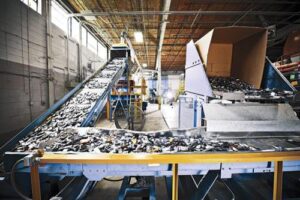
Copper processing infrastructure in Queensland’s Mount Isa region.

By Charles Pitts
Austral Resources Australia has moved ahead with its takeover of Hammer Metals after the deadline for a competing offer from Larvotto Resources expired, clearing the way for a transaction that would create a larger Queensland-focused copper producer, developer and explorer.
Under the binding scheme implementation deed, Austral will acquire all of Hammer’s issued securities through a scheme of arrangement valued at approximately A$80.7 million, or A$0.087 per Hammer share. The transaction remains subject to shareholder, court and other customary approvals.
The deal brings together Austral’s existing copper operations and processing infrastructure with Hammer’s Mount Isa-region resource and exploration portfolio. It also separates Hammer’s Western Australian gold assets into a new vehicle that will be distributed to Hammer shareholders.
More Read

The combination is part of a broader consolidation strategy in northwest Queensland, where producers and explorers are seeking to match regional mineral resources with existing processing capacity.

Larvotto’s matching right expires
Hammer’s board had previously agreed to a scheme with Larvotto Resources, but declared Austral’s proposal superior after comparing the value, structure and strategic rationale of the competing transactions.
Larvotto had a five-business-day right to submit a matching or superior proposal. That period expired on August 10 without Larvotto proceeding with a counteroffer, according to Hammer’s ASX announcements and subsequent industry reporting.
More Read
Hammer and Austral have since entered into a binding scheme implementation deed. Hammer’s board continues to recommend that shareholders vote in favour of the Austral transaction, describing it as a higher-value outcome and a stronger platform for advancing the company’s Mount Isa portfolio.
The scheme still needs to pass through the standard Australian process. This includes an independent expert’s assessment, court involvement and a vote by Hammer shareholders. The final timetable will depend on the preparation of the scheme booklet and court scheduling.
For Austral, the end of the matching period removes the immediate competitive uncertainty around the takeover. For Hammer shareholders, the transaction provides exposure to an enlarged copper group while retaining ownership of the company’s Western Australian gold assets through the proposed spinout.
Deal structure gives Hammer shareholders copper and gold exposure
The consideration consists primarily of Austral shares rather than cash.
| Transaction component | Terms |
|---|---|
| Total implied value | Approximately A$0.087 per Hammer share |
| Austral consideration | 1.2903 Austral shares for each Hammer share |
| SpinCo consideration | A$0.007 per Hammer share of implied value |
| Implied transaction value | Approximately A$80.7 million |
| Expected Hammer ownership of enlarged Austral | Approximately 31.1% |
| Austral working capital facility | Up to A$6 million |
The scrip structure means Hammer shareholders are expected to own approximately 31.1% of the enlarged Austral, with existing Austral shareholders holding the remaining interest.
The non-copper assets will be transferred into a separate company, referred to as SpinCo. The portfolio includes the Bronzewing South, Orelia North and Mount Sefton gold projects and associated assets in Western Australia’s Yandal region.
The demerger is expected to occur through a capital reduction and in-specie distribution of SpinCo shares to Hammer shareholders. This allows the Austral transaction to focus on the Queensland copper portfolio while preserving a separate vehicle for the gold assets.
According to the August 3 ASX announcement, the proposal is not subject to financing or due diligence conditions. Austral has also agreed to provide Hammer with an unsecured working capital facility of up to A$6 million to support the company through the implementation process, including the repayment of existing obligations and general working capital requirements.

Copper exploration work and drill core in Queensland.
Processing infrastructure is central to Austral’s strategy
The strategic rationale for the takeover rests on the combination of Hammer’s resources with Austral’s existing infrastructure.
Austral operates the Mt Kelly processing facility, which is designed to handle oxide material, and owns the Rocklands processing facility, which is associated with sulphide processing. Both assets are located in the broader Mount Isa region of Queensland.
Hammer contributes a portfolio of copper, gold and base-metals assets in the same district. Its Kalman resource, which contains copper, gold, molybdenum and rhenium, is expected to be a potential long-term source of feed for Rocklands.
That creates the possibility of a regional operating model in which ore from multiple deposits is processed through Austral’s infrastructure rather than relying exclusively on third-party facilities. The approach could reduce duplication in processing, logistics and site services, although the extent of any future benefits will depend on mine development studies, metallurgical performance, permitting and capital availability.
Austral chairperson David Newling said the transaction would combine Hammer’s resource base with Austral’s processing infrastructure, operational capability and balance sheet.
The company has presented the enlarged group as a potential mid-tier copper platform in Queensland. That ambition reflects the strategic importance of the Mount Isa district, which has an established mining workforce, transport links, processing experience and a long history of copper and base-metals production.
The deal does not, however, immediately convert Hammer’s resources into production. The assets still require further exploration, technical evaluation, approvals and investment before they can provide commercial feed to Austral’s plants.
Regional scale is the main industrial logic
The proposed merger comes as mining companies place greater emphasis on regional scale. In copper, the ability to secure ore feed is becoming as important as owning processing capacity, particularly as new large-scale projects face long permitting timelines, rising capital costs and infrastructure constraints.
Austral’s existing facilities offer a potential route to development for selected Hammer assets. Hammer, in turn, gains exposure to a producing and infrastructure-backed group rather than remaining solely an exploration and development company.
That distinction is important for investors and operators assessing the transaction. The value of the deal is not based only on Hammer’s in-ground resources. It also depends on whether the combined company can sequence projects effectively, maintain sufficient working capital and restart or expand processing operations at competitive costs.

Aerial view of mining roads, drill pads and processing infrastructure near Mount Isa.
Austral has described the transaction as part of its plan to consolidate the northwest Queensland copper sector. A larger regional portfolio could support shared exploration, procurement and technical capabilities, while allowing the company to prioritize deposits according to ore type and processing requirements.
The model also carries execution risks. Sulphide processing generally requires more complex flowsheets than oxide treatment, and the timing of any Rocklands restart or expansion will depend on engineering studies, funding and operating conditions. Metallurgical recoveries, haulage distances and the consistency of future ore feed will also influence project economics.
Approval process remains the next milestone
The binding deed marks a significant step, but it does not complete the takeover.
Hammer shareholders will need to consider the scheme booklet, the independent expert’s report and the board’s recommendation before voting. Court approvals and other conditions must also be satisfied before the transaction can be implemented.
The scheme could therefore remain subject to timing and execution uncertainty through the remainder of the process. Shareholder ownership of the enlarged Austral may also differ slightly from the current estimate depending on the treatment of options, performance rights and the final fully diluted capital structure.
The proposed SpinCo demerger adds another layer to the transaction. Hammer shareholders will receive interests in the gold vehicle, but the value and future development of those assets will depend on the ability of SpinCo to fund exploration and advance its projects independently.
For Austral, the immediate task will be to communicate how the enlarged group intends to allocate capital between existing production, processing infrastructure, resource development and exploration. The market will also assess whether the company can convert regional scale into higher utilization of its facilities and a more reliable future production pipeline.

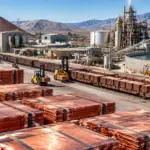
Copper oxide processing tanks and ore stockpiles in northwest Queensland.
Why the transaction matters for Australian copper
Australia remains a major mining jurisdiction, but its copper sector includes a wide range of mature operations, development projects and early-stage explorers. Consolidation can provide smaller resource holders with access to infrastructure and technical capacity, while giving producers additional options for replacing declining ore feed.
The Austral-Hammer transaction illustrates that trend at a regional level. It combines a copper producer with processing assets and a company holding a large exploration and resource portfolio around Mount Isa.
The strategy also aligns with broader efforts to strengthen supply of metals needed for electrification, power networks and industrial manufacturing. Skillings’ copper market analysis examines how supply disruptions and processing constraints are influencing the copper market, while its mining M&A outlook tracks the wider consolidation cycle.
Austral’s takeover of Hammer is not yet a completed production expansion. It is a corporate and infrastructure combination that could create a stronger platform for future copper development if approvals, funding and technical execution remain on track.
For now, the key milestones are the scheme booklet, independent expert’s conclusion, shareholder vote and court approvals. Once those steps are completed, the enlarged Austral will face the more difficult test: turning regional resource scale and processing ownership into sustained copper output.