STOCKHOLM : Boliden AB announced Thursday a SEK 5.5 billion ($520 million) capital allocation aimed at fortifying its position as a leader in sustainable mineral extraction. The investment, split between the Garpenberg zinc-silver mine and the Rönnskär copper smelter, represents a significant bet on the electrification of heavy industry and the circular economy.

The move comes at a critical juncture for European mining. As the continent scrambles to secure domestic supply chains for the energy transition, Boliden is doubling down on its Swedish core. The strategic calculus here isn’t subtle: optimize what you have, electrify what you can, and monetize the waste.
Of the total package, SEK 4 billion is earmarked for a massive infrastructure overhaul at Garpenberg. The remaining SEK 1.5 billion will fund an industrial demonstration plant at Rönnskär to produce SCMentum: a low-carbon cementitious material derived from smelting slag.
The Garpenberg Pivot: From Diesel to Electric Hoisting
Garpenberg is often cited as the world’s most automated underground mine. But even world-class facilities face the brutal physics of depth. As mining operations move deeper, the cost and carbon footprint of hauling ore via diesel trucks become prohibitive.
The SEK 4 billion investment centers on a new, high-capacity hoist system. Construction is slated for the 2028–2029 window. Once operational, the system will allow Garpenberg to maintain its 4.5 million tonnes per year (Mtpa) production rate well into the next decade.
More Read
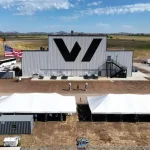


The technical logic is straightforward. Hoisting ore vertically using electricity is exponentially more efficient than driving it up a ramp in a 60-tonne truck. It’s about energy density and mechanical advantage. By shifting the primary logistics load to an electric hoist, Boliden isn't just cutting emissions: it’s protecting its margins against volatile diesel prices.
"Capitalizing on Garpenberg’s world-class mineral deposits requires thinking in decades, not quarters," said Mikael Staffas, CEO of Boliden.
More Read

However, the path isn't entirely clear. While Boliden has secured an environmental permit for the 4.5 Mtpa rate, that approval is currently under appeal. It’s a classic European mining bottleneck: the technical capability exists, the capital is ready, but the regulatory framework remains a moving target.
Rönnskär and the Rise of SCMentum
While the Garpenberg investment is about scale and efficiency, the SEK 1.5 billion allocated to Rönnskär is about a fundamental shift in how the industry views waste.
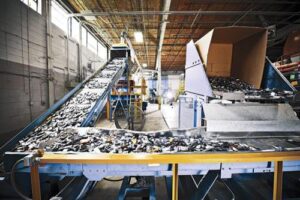
Smelters are traditionally linear. You take concentrate, extract the metal, and stack the residue. Boliden is attempting to close that loop. The new industrial demonstration plant will produce SCMentum, a supplementary cementitious material (SCM).

The numbers on SCMentum are, frankly, startling. The material will have less than 5% of the carbon dioxide emissions associated with traditional Portland cement. In an era where the construction industry is desperate for "green" inputs to meet ESG mandates, SCMentum could transform a liability (slag) into a premium-priced asset.
The investment will be spread evenly between 2026 and 2028. At full capacity, the plant is expected to churn out 280 kilotonnes per year.
The strategic shift here is vital to understand. Smelting is an energy-intensive, chemically complex process that has historically left behind significant environmental footprints. By proprietary technology, Boliden is aiming for "waste-free" smelting. If successful, this demonstration plant won't just meet Boliden’s internal rate of return (IRR) requirements: it will provide a blueprint for every other smelter operator in the Western world.
The Macro View: Copper, Zinc, and the "Green Premium"
Boliden’s investment doesn't happen in a vacuum. The mining industry is currently caught between two competing realities. On one hand, the "shiny AI revolution" and the electrification of everything are driving unprecedented demand for copper and zinc. On the other, the cost of building new mines has skyrocketed.
The structural pivot in the copper market: highlighted in our recent analysis of the $13,000 copper reset: suggests that supply-side constraints are the new normal. Boliden knows this. Instead of chasing high-risk greenfield projects in volatile jurisdictions, they are optimizing their Tier-1 Swedish assets.
It’s a safer bet. Sweden offers a stable (if slow) regulatory environment and access to low-carbon grid power. In a world where "green copper" fetches a premium, being able to prove low-CO2 production from mine to gate is a massive competitive advantage.

Operational Flexibility and Identified Mineralization
The Garpenberg investment isn't just about replacing old gear. It’s about unlocking new parts of the ore body. The new hoist system provides the operational flexibility to mine newly identified mineralization that was previously considered sub-economic due to logistics costs.
Productivity in underground mining is a function of "time on tool." If your trucks are spending 40% of their cycle time climbing ramps, your productivity is capped. The hoist removes that ceiling. It allows for faster cycle times at the face and more efficient deployment of the underground fleet.
This is the "Documentary-style" reality of modern mining: it’s less about picks and shovels and more about logistical engineering and power management.
Financial Risks and the IRR Hurdle
Boliden is notorious for its disciplined capital allocation. They don't spend SEK 5.5 billion on a whim. The company noted that under conservative price assumptions, the Rönnskär SCMentum plant meets their internal rate of return requirements.
But there are risks.
- The Appeal Process: If the 4.5 Mtpa permit is successfully challenged, the ROI on the SEK 4 billion Garpenberg hoist takes a hit.
- Construction Inflation: The 2028–2029 timeline for Garpenberg is far enough out that labor and material costs could shift significantly.
- Market Adoption: SCMentum is a new product. While the low-CO2 profile is attractive, it must perform technically in concrete mixes to displace established players.

The Bottom Line: Sweden’s Strategic Significance
This investment reinforces Sweden’s position as the mining powerhouse of Europe. While other countries talk about "Critical Minerals Acts," Sweden is actually moving dirt: and doing it with a carbon footprint that makes competitors in other regions look like relics of the 19th century.
Boliden is signaling that they are ready for the long haul. They are betting that the future of mining isn't just about what you take out of the ground, but how little you leave behind and how cleanly you move it.
The SEK 5.5 billion is a lot of money, sure. But in the context of the global energy transition, it’s a necessary ante to stay in the game. Those who don't electrify and don't solve their waste problems will eventually be regulated out of existence or priced out of the market. Boliden is choosing to lead the way.
For more on how major miners are shifting their strategies to meet the new commodity reality, see our coverage of Lundin Mining’s expansion in the Vicuña District.
Social Media Snippet (LinkedIn/X):
Boliden is doubling down on Sweden with a SEK 5.5B investment. From a new SEK 4B hoist system at Garpenberg to a revolutionary low-CO2 cement plant at Rönnskär, the message is clear: the future of mining is electric and circular. Is this the blueprint for the "Green Premium" era? Read our full breakdown of the Boliden Garpenberg investment and Rönnskär’s SCMentum pivot. #Mining #Sustainability #Boliden #Copper #Zinc #Electrification #SMR