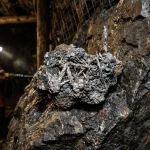
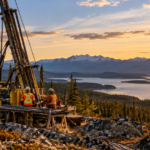
Canada has fast-tracked construction of the Matawinie graphite mine in Quebec — a project set to become the largest graphite mine in North America, producing 106,000 tonnes annually for electric vehicle batteries and defence technologies.
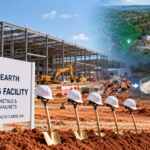
Prime Minister Mark Carney broke ground at the Nouveau Monde Graphite (NMG) mine on May 19, 2026. The Matawinie site sits about 120 kilometres north of Montreal, in Quebec’s Lanaudière region. Carney called it a centrepiece of Canada’s critical minerals strategy — a plan to strengthen supply chains and reduce dependence on non-allied nations.

The Largest Graphite Producer in the G7
Carney told reporters that no other G7 nation hosts a mine capable of matching Matawinie’s output. He said Canada now leads the G7 in graphite production capacity. The federal government’s Major Projects Office fast-tracked the mine in November 2025. NMG had held operating permits since 2021 — but the project only entered construction after the government intervened to cut delays.
“We are getting our resources from mines to market at an unprecedented pace,” Carney said. He added that non-US exports have risen sharply and that Canada aims to double them within the next decade. The prime minister also confirmed talks with Italian Prime Minister Giorgia Meloni about exporting Quebec graphite to Europe and Asia, including Japan and Italy.
Economic Impact: Jobs and Billions for Canada
The government projects the mine will generate nearly $2 billion for the Canadian economy. It expects to create 1,000 jobs across skilled trades and engineering. The federal financing package amounts to $459 million. A battery material processing plant will also be built in Bécancour, Quebec to refine the extracted graphite before export.
Ottawa has committed to purchasing 30,000 tonnes per year for seven years at a guaranteed price. Buyers span strategic, civil, and military sectors. This offtake agreement gives NMG stable revenue during its early production years. Graphite is a key material in lithium-ion EV batteries, as well as in defence and aerospace manufacturing. Canada’s push here mirrors a broader global scramble — our analysis of the nickel market outlook for 2026 shows how new mineral discoveries are reshaping supply chains worldwide.
More Read

Construction Timeline and Production Goals
Construction will take approximately two years. NMG targets full commercial production by the end of 2028. CEO Eric Desaulniers co-founded the company and confirmed that the company conducted detailed environmental impact studies covering soil, water, and air quality. Quebec granted project approval in 2021 after reviewing those assessments.

Desaulniers acknowledged local concern. “It is normal for residents to be concerned about a mining project of this scale,” he said. He assured stakeholders that the company completed all required studies and secured government authorisations before construction began. The Chief of the Atikamekw Nation of Manawan, Sipi Flamand, attended the groundbreaking and expressed support for the project — a sign of Indigenous community engagement in the approval process.
Local Opposition Remains Active
Not everyone celebrates the fast-track decision. A local group — the Coalition des opposants à un projet minier en Haute-Matawinie — formed in 2016 to challenge the project. The coalition opposed Ottawa’s November 2025 decision to accelerate approvals. Members cite risks to forests, water sources, and air quality near the mine site. The government has not announced specific mitigation commitments in response to those concerns.
More Read
Part of a Broader Canadian Resources Push
The Matawinie mine is not an isolated project. The Carney government used its Major Projects Office to speed up several large infrastructure developments. The office aims to compress approval timelines from over a decade to just a few years. Canada also continues discussions about a proposed oil pipeline to the British Columbia coast, though that project still lacks a private-sector proponent and faces provincial resistance.
Analysts note that graphite, lithium, cobalt, and nickel sit at the centre of the global energy transition. Canada holds significant reserves of all four. The Matawinie project signals Ottawa’s intent to position Canada as a reliable supplier to allies seeking independence from China, which currently dominates global graphite processing. Uranium is also entering this conversation — see how Metals One surged 45% on a Colorado uranium deal, reflecting the wider critical minerals investment surge.
Source: Reporting based on statements by Prime Minister Mark Carney and NMG CEO Eric Desaulniers at the Matawinie groundbreaking ceremony, May 19, 2026. Additional context from the Government of Canada’s Major Projects Office announcement.