Key Takeaways
- Power Metals’ Case Lake lithium cesium tantalum project confirms high-grade multi-mineral recovery from spodumene ore and process waste.
- New metallurgical results show spodumene concentrate at 7.70% Li₂O and tantalum at 1.25% Ta₂O₅.
- Case Lake remains the only cesium development project globally, with 2026 production targeted.
- The Ontario property is one of few globally positioned to produce all three critical minerals from a single deposit.
Power Metals Corp. has positioned its Case Lake lithium cesium tantalum project in Ontario as a rare triple-mineral source, following new metallurgical results confirming commercial-grade recovery across all three battery and tech metals.

Recent test work shows that spodumene concentrate from the West Joe zone reached 7.70% Li₂O, with tantalum concentrates hitting 1.25% Ta₂O₅. Cesium-bearing pollucite remains recoverable at commercial purity. These results place Case Lake among the only globally known projects capable of producing lithium, cesium, and tantalum from a single hard rock source.
Multi-Mineral Potential Backed by Metallurgy
The Case Lake lithium cesium tantalum tests, conducted by Nagrom in Western Australia and reviewed by SGS Lakefield in Canada, targeted reject material from prior ore sorting. Using dense media separation (DMS), flotation, and magnetic separation, the program yielded lithium recoveries of up to 99.5% and tantalum recoveries of 45%.
Two samples from pollucite sorting waste returned 5.24% and 7.20% Li₂O grades, respectively—both with low iron impurities. The lithium flotation tailings also showed cesium grades of 0.88% Cs₂O, hinting at downstream by-product credits.
“This is not a single-metal play,” said CEO Haydn Daxter. “The Case Lake lithium cesium tantalum system presents one of the highest-potential, multi-product profiles in the critical mineral sector.”
More Read

Table: Metallurgical Results – Case Lake Lithium Cesium Tantalum

| Sample ID | Method | Mineral | Grade (%) | Recovery (%) | Fe₂O₃ (%) |
|---|---|---|---|---|---|
| 24-036-02W | DMS + Flotation | Li₂O | 7.20 | 78.8 | 0.65 |
| 24-036-02W | DMS Only | Li₂O | 5.24 | 85.8 | 0.54 |
| 24-036-03W | WT + Magnetic Sep. | Ta₂O₅ | 1.25 | 45 | — |
| 24-036-02W | Flotation Residue | Cs₂O | 0.88 | N/A | — |
Rare Cesium Source in Tight Global Supply
Cesium remains one of the rarest and least replaceable industrial minerals. It’s primarily used in oilfield fluids and specialty electronics, and its market is currently supplied by a single operation—Tanco mine in Manitoba.
Power Metals has long positioned Case Lake as the world’s fourth-largest cesium resource. The recent validation of lithium and tantalum recovery from cesium waste streams elevates the asset’s commercial profile and resource flexibility.
More Read

“Where others see tailings, we see revenue streams,” said Chairman Johnathan More.
Ontario’s Critical Minerals Corridor
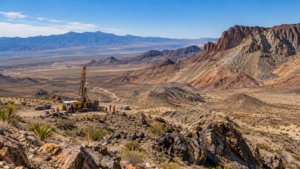
The Case Lake lithium cesium tantalum property lies near the Ontario-Québec border, covering 586 claims and more than 10 kilometers of LCT pegmatites. Power Metals has drilled nearly 24,000 meters on-site and owns 100% of the project.
Alongside Case Lake, the company holds two early-stage LCT properties in Québec—Decelles and Mazerac—totaling over 330 km² of spodumene-beryl terrain near Val-d’Or. The company acquired both from Winsome Resources in 2023.
Engineering Ahead of 2026 Production Target
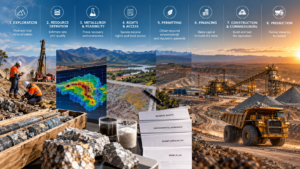
With laboratory results confirming commercial-grade multi-mineral output from both primary and reject ore, Power Metals is preparing engineering assessments for a small-scale DMS plant. Full feasibility work is expected in the coming quarters.
The Case Lake lithium cesium tantalum test work was independently overseen by Manan Paul, P.Eng. of SGS Canada and Amanuel Bein, P.Geo., both qualified under NI 43-101 standards.