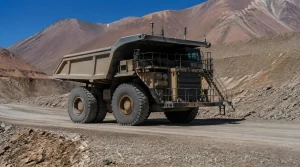
- Over $300 million in copper and mining equipment sits idle at Cobre Panamá amid ongoing shutdown.
- Site maintenance costs estimated at $13 million per month, much of it to preserve stranded machinery.
- OEMs and suppliers exposed to asset depreciation, delivery holdbacks, and stalled revenue.
- Case underscores broader risk of capital-intensive mining bets stuck in legal and political limbo.
In the jungle heart of Panama, rust is beginning to win. More than $300 million in mining equipment and copper concentrate now lies dormant at Cobre Panamá, one of the world’s most ambitious copper projects, as a legal freeze paralyzes operations and drains millions from its Canadian operator, First Quantum Minerals.

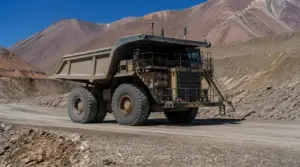
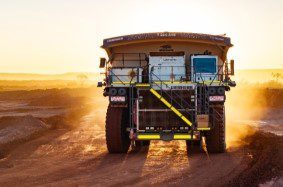
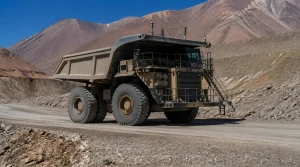
The 13,600-hectare mine—once hailed as a cornerstone of Central America’s industrial future—is now a static liability. With copper exports frozen, workers furloughed, and the site shut since late 2024, the most visible casualty is the hardware: haul trucks, crushers, drilling rigs, and conveyor systems deployed for a metals boom that never fully materialized.
Reuters reports that First Quantum expects maintenance costs at Cobre Panamá to rise to roughly “$17 million to $18 million per month”—a clear indicator of the deep financial strain caused by halted operations and idle machinery.
Shutdown Economics: $13M a Month to Stay Still
First Quantum continues to spend an estimated $12–13 million monthly just to maintain the site, according to filings and government sources. A significant portion goes to protect machinery from corrosion, humidity damage, and power failures that could impair sophisticated systems left untended.
| Asset | Status | Estimated Value (USD) |
|---|---|---|
| Haul Trucks (CAT 793F) | Idle | $80M |
| Crushers and Conveyors | Unused | $50M |
| Drilling Systems | Mothballed | $30M |
| Copper Concentrate (in warehouse) | Stranded | $140M |
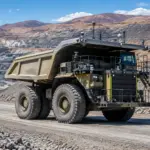
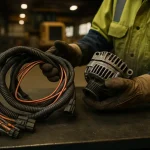
“The tropics are unforgiving to metal and wiring,” said a site contractor who requested anonymity. “We’re running generators, climate control in storage units, rodent barriers—just to keep the machines from decaying into junk.”

A Stranded Supply Chain
The stranded equipment represents more than a maintenance problem—it reflects a web of stalled transactions, broken timelines, and deferred cashflow across the mining equipment ecosystem. Analysts estimate that $200 million in active machinery, including assets from Caterpillar, Komatsu, Sandvik, and several U.S. regional suppliers, is caught in limbo.
For OEMs and leasing vendors, the risks multiply:
- Delivery holdbacks from mines counting on exports
- Lease default exposure
- Warranty degradation
- Delayed payments and accounting impairments
The Cobre Panamá case highlights a broader pattern—where billion-dollar mining bets collapse under the weight of legal and political backlash, leaving behind stranded capital and idle machines.

Wider Fallout: Panama’s Economy and the Global Copper Chain
The shutdown cuts deep into Panama’s GDP—Cobre Panamá once represented 5% of national output. And with 120,000 tonnes of copper concentrate stranded on-site, the global market has lost a meaningful supply source during a time of soaring EV and grid demand.
The loss isn’t just material—it’s reputational. Panama has re-entered negotiations with First Quantum under public pressure, but uncertainty reigns. In the meantime, stranded gear corrodes by the hour.
A Cautionary Tale for Global Miners
Cobre Panamá isn’t unique. Across Serbia, Alaska, Argentina, and parts of Africa, billions in capital equipment are now stuck in projects derailed by protests, permits, or politics. But it may be the most vivid.
“There’s this idea that mining is cyclical,” said a procurement executive at a Canadian OEM. “But we’re learning it’s not just about price swings—it’s about whether your machines get to run at all.”