By Charles Pitts

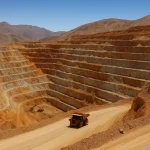
The global adoption of autonomous mining technology has crossed a definitive operational threshold. No longer confined to isolated pilot projects or elite Tier-1 greenfield sites, autonomous haulage systems (AHS) and battery-electric fleets are scaling across commercial operations in Australia, Canada, Chile, and major extraction hubs worldwide. Recent industry data confirms that Komatsu’s global autonomous haul truck fleet has surpassed 1,000 commissioned ultra-class units, while overall autonomous and tele-remote equipment now accounts for over 4% of active global mining operations: a sharp acceleration from under 1% at the start of the decade.
For mining executives, operators, and capital allocators, August 2026 marks a structural shift. The conversation has moved past whether self-driving haulage works. Instead, leadership teams are navigating a dual-track technological transformation: the rapid deployment of “born-autonomous” cabless electric trucks in new developments, and the expansion of OEM-agnostic retrofit autonomy kits designed to modernize existing brownfield fleets.
The Rise of Cabless, Born-Autonomous Electric Trucks
The most visible hardware transformation in modern mining operations is the complete removal of the operator cab on new autonomous haul trucks. By eliminating the cabin entirely, manufacturers have redesigned heavy haulage equipment around the physical requirements of autonomy and electrification.

More Read

Platforms such as the SANY SKT145Ei demonstrate the engineering advantages of these born-autonomous designs. Without a cabin, the vehicle profile is shorter and features a significantly lower center of gravity. This geometry allows the truck to negotiate narrower haul roads and steeper grades than conventional 90-ton diesel counterparts, opening up new efficiencies in pit design and waste rock management. Powered by high-capacity battery packs capable of rapid recharging within an hour, these platforms combine zero tailpipe emissions with advanced perception stacks. Utilizing LiDAR, millimeter-wave radar, and high-definition cameras, these trucks operate continuously through heavy dust, fog, and extreme temperature variations.

Similar deployments are reshaping operations across state-owned and private pits. In Inner Mongolia, battery-electric haul trucks from manufacturers like XCMG and Yutong operate autonomously in sustained production environments at the Yimin Open-Pit Coal Mine, proving their operational reliability in ambient temperatures plunging to −40°C. These deployments validate that electric autonomous platforms can maintain high utilization rates under demanding meteorological conditions while removing human operators from hazardous highwalls and dump points.
Retrofit Autonomy and Open-Architecture Ecosystems
While greenfield projects embrace purpose-built cabless vehicles, existing brownfield mines face a different economic reality: vast capital investments are locked into conventional, young diesel fleets. Scrapping operational machinery to buy new autonomous electric units is rarely viable, making fleet retrofits the primary vehicle for automation adoption.
More Read

Industry projections indicate that retrofit autonomy systems will capture approximately 30% of the brownfield market by the end of the decade. A primary driver of this trend is the emergence of open-architecture, OEM-agnostic AHS partnerships. For instance, collaborations between major equipment makers like Hitachi Construction Machinery and autonomy specialists such as Pronto are breaking down legacy silos. These systems allow mixed-OEM fleets: combining trucks from different manufacturers: to run under a single centralized autonomous haulage platform using standardized onboard perception and control kits.

The typical retrofit kit integrates high-precision GNSS positioning, inertial measurement units (IMUs), radar, and lidar with fleet management dispatch systems. This technology stack enables automated route planning, precise traffic management, and synchronized loading and dumping cycles. According to recent operational reports, mines integrating these retrofit systems with AI-driven analytics report a 12% to 15% improvement in overall fleet productivity and a 20% to 30% reduction in unplanned mechanical downtime.
Safety, Productivity, and Cost-Per-Ton Metrics
The economic case for autonomous mining technology rests on quantifiable operational improvements. Rio Tinto and other major operators with mature AHS deployments have logged millions of haul kilometers with zero lost-time injuries attributable to haulage operations. By removing human operators from repetitive, fatigue-inducing driving cycles, sites achieve consistent vehicle handling, optimized tire wear, and predictable braking patterns.

On a cost-per-ton basis, fully autonomous operations achieve roughly a 20% reduction in operating expenditures compared to manual benchmarks. These savings stem from reduced fuel and electricity waste, extended component lifespans, and minimized operator turnover costs. Furthermore, regulatory bodies in key mining jurisdictions are moving toward mandatory Level 8 and Level 9 collision-avoidance standards. This regulatory evolution is accelerating the standardization of sensor suites and control protocols across both factory-integrated and retrofitted fleets, ensuring high baseline safety compliance across the industry.
Strategic Decision-Making: Greenfield vs. Brownfield
As mining companies plan capital expenditures, project teams must weigh the distinct trade-offs between deploying cabless electric trucks and retrofitting existing assets.
| Operational Dimension | Cabless Electric Trucks (Born-Autonomous) | OEM-Agnostic Retrofit Kits |
|---|---|---|
| Primary Deployment | Greenfield sites, major expansions, net-zero projects | Brownfield mines, mixed-brand existing fleets |
| Capital Expenditure | High upfront equipment cost; requires dedicated charging infrastructure | Moderate upfront cost; leverages existing truck frames |
| Operational Advantage | Zero emissions, lower center of gravity, optimized pit geometry | Rapid deployment, extends life of young diesel assets |
| Primary Constraint | Requires robust site power grids and rapid-charge stations | Dependent on remaining mechanical lifespan of donor trucks |
For insights on broader industry developments and commodity trends, explore coverage on Skillings Mining Intelligence. Sites with aggressive ESG mandates and access to reliable, low-cost power grids find compelling long-term value in cabless electric fleets. Conversely, operations constrained by immediate capital expenditure limits or seeking near-term productivity gains favor retrofit autonomy solutions.
Conclusion
Autonomous mining technology has transitioned from a forward-looking technological experiment into a core operational pillar. Whether through the deployment of zero-emission, born-autonomous cabless trucks in new developments or the integration of open-architecture retrofit kits into legacy fleets, operators are successfully capturing tangible safety, environmental, and financial gains. As these technologies continue to scale globally, they redefine the operational baseline for mineral extraction and processing worldwide.