The global copper market has entered a period of unprecedented volatility that is reshaping the industrial landscape of 2026. As of April 5, 2026, the metal: often called the "doctor of economics": is signaling a structural fever that market participants can no longer ignore. After LME cash copper hit a record-breaking $13,300 per metric ton on January 6, the industry has been grappling with a reality where demand is not just outstripping supply, but sprinting away from it.

For mining operators, investors, and policymakers, the 2026 outlook is defined by a series of "secrets" that have moved from the periphery of analysts' notes to the front pages of global financial news. From force majeure events at the world’s most productive sites to an AI-driven demand surge that was underestimated by half, the copper deficit is no longer a future risk; it is the current reality.
The Supply-Side Crisis: Force Majeure and Stagnation
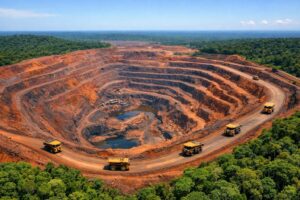
The tightening of the copper market in 2026 can be traced back to a series of acute supply disruptions that occurred in late 2025 and early 2026. The most significant blow came from Indonesia’s Grasberg mine, the world's second-largest copper producer. In September 2025, a massive mudslide decimated the infrastructure of the Block Cave section.
This section represents approximately 70% of Grasberg’s previously forecasted production. The resulting force majeure has left a gaping hole in global supply, with recent updates suggesting the section will remain offline until at least the second quarter of 2026. This single event removed hundreds of thousands of tons from the market exactly when the global energy transition was hitting its stride.
Simultaneously, Chile: the world’s top producing nation: is facing its own set of structural hurdles. Production at Codelco has stagnated following a series of tragic deep-level mining accidents in 2025 that led to intensified regulatory oversight and operational pauses. Furthermore, production guidance at the Quebrada Blanca mine was recently downgraded due to unforeseen geological challenges, compounding the regional supply crunch.
More Read


Demand Drivers: The AI and Defense Delta
While supply is faltering, demand has found new, aggressive catalysts. While the "green transition" (EVs and renewables) was the primary story for years, 2026 has introduced two additional pillars: artificial intelligence and global defense spending.
The massive build-out of AI data centers has created a secondary demand surge for high-quality copper cabling and thermal management systems. Current projections suggest that AI data centers alone will consume 500,000 metric tons of copper annually by 2030. In 2026, we are seeing the first major wave of this consumption as hyperscalers scramble to secure supply.
More Read
Furthermore, rising geopolitical tensions have led to a significant increase in global defense spending. Military hardware: from advanced missile systems to naval vessels: is copper-intensive. Unlike consumer electronics, defense and critical infrastructure demand is relatively price-inelastic; these sectors will pay whatever is necessary to secure the metal, further driving up price floors.
Market Snapshot: 2026 Copper Balance Forecasts
| Institution | 2026 Forecasted Balance | Projected Average Price (2026) |
|---|---|---|
| J.P. Morgan | 330,000-ton Deficit | $12,075/mt |
| ICSG | 150,000-ton Deficit | $11,500/mt |
| Goldman Sachs | 160,000-ton Surplus | $10,500/mt |
| S&P Global | Acute Deficit (Multi-year) | $13,000/mt+ (Peak) |
The divergence between J.P. Morgan’s deficit forecast and Goldman Sachs' contrarian surplus projection highlights the market’s uncertainty. However, the Kamoa-Kakula copper shock of April 2, 2026, has tilted the consensus toward the "deficit" camp as even the most reliable new projects face logistical and grade-consistency hurdles.
The Structural Gap: Why 80 New Mines are Needed
Looking beyond the 2026 horizon, the math for the copper industry becomes even more daunting. S&P Global projects that copper demand will swell to 42 million metric tons by 2040: a 50% increase from current levels. To close the gap between projected supply and this massive demand, industry experts estimate that the world needs approximately 80 new, sizable copper mines by 2040.
The problem? Developing a new "tier-one" copper mine now takes an average of 16 to 25 years from discovery to first production. We are currently seeing the results of a decade of underinvestment in exploration. Even with prices at record highs, the "incentive price" for new projects is rising due to labor costs, ESG requirements, and the increasing complexity of mining lower-grade ores.

Resource nationalism is also playing a significant role. Governments in copper-rich regions are increasingly looking to maximize their share of the "green premium" through higher royalties and stricter environmental mandates. While necessary for sustainable development, these factors lengthen the timeline for new supply to hit the market. This structural bottleneck is why the current forecast is keeping industry leaders awake at night; there is no "quick fix" for a copper shortage.
Technological Innovation and M&A: The Industry Response
In response to the deficit, the mining industry is turning to two primary strategies: aggressive M&A and rapid technology adoption.
Large-scale miners are increasingly looking to buy production rather than build it. We are seeing a wave of consolidation as "majors" acquire "mid-tier" players with proven reserves. This trend is evidenced by projects like the Vicuna District expansion, where strategic stake increases are becoming the standard method for securing future output.

On the technical side, the industry is betting on leaching technologies and precision mining to extract more value from existing waste piles and low-grade deposits. Technologies like Nuton (Rio Tinto’s venture) are being watched closely as potential game-changers for primary sulfide leaching, which could unlock millions of tons of copper that were previously considered uneconomical.
These innovations are critical, but they require significant capital. For more on how the industry is navigating these shifts, see our analysis on minings’s transformation at recent industry conferences.
The Base, Bull, and Bear Case for 2026
To help decision-makers navigate the coming months, we have broken down the potential scenarios for the copper market through the end of 2026:
- Base Case: The market remains in a moderate deficit of 150,000–200,000 tons. Grasberg partially recovers by late Q3. Copper prices stabilize between $11,500 and $12,500/mt. Demand from the global battery revolution continues to grow at a steady 3-5% pace.
- Bull Case (The Deficit Nightmare): Further disruptions occur in Peru or Chile due to labor strikes or climate events. AI demand exceeds forecasts, and the refined copper deficit swells beyond 400,000 tons. Prices test the $15,000/mt mark, triggering significant demand destruction in lower-margin manufacturing sectors.
- Bear Case: A global economic slowdown reduces industrial construction demand in China and Europe. Supply from new projects like Quebrada Blanca Phase 2 ramps up faster than expected, leading to a small surplus. Prices retreat to the $9,500–$10,000/mt range.

Conclusion: Preparing for a High-Price Environment
The "secrets" of the copper deficit are now out in the open. The combination of aging assets, lack of new discoveries, and a surge in high-tech demand has created a perfect storm. For operators, the focus must remain on operational efficiency and the adoption of eco-friendly mining technology to maintain social licenses and lower costs.
For investors, the 2026 forecast suggests that copper is no longer a cyclical play but a structural one. The 10-million-ton deficit projected for 2040 begins with the 330,000-ton deficit we are facing today. As we move through 2026, the industry’s ability to innovate and consolidate will determine who thrives in this high-stakes, high-reward environment.
Featured Lead / M&A Social Media Snippet:
Copper's January peak of $13,300/mt was just the beginning. With Grasberg under force majeure and AI demand surging by 500k tons, the 2026 deficit is finally here. We dive deep into the 330,000-ton shortfall and why the 80-mine gap is keeping the C-suite awake at night.
Read the full analysis at skillings.net.
#Mining #CopperDeficit #EnergyTransition #SkillingsMining #CommodityMarkets #CopperPrice2026