By Charles Pitts

The global mining landscape in July 2026 has become a high-stakes arena where the world’s two largest miners, Rio Tinto and BHP, are locked in a strategic maneuvers for copper dominance. As copper prices stabilize above US$13,000 per tonne, the focus has shifted from simple organic growth to a $40 billion “chessboard” of mergers, acquisitions, and district-scale partnerships.
With the energy transition and AI-driven data center demand accelerating, the race for tier-1 copper assets: mines that produce over 200,000 tonnes annually with low operating costs: is no longer just a corporate goal; it is a structural necessity. While Rio Tinto seeks transformational scale through its ongoing negotiations with Glencore, BHP has pivoted toward mid-tier targets like Capstone Copper and Hudbay Minerals, alongside a strategic “return to Argentina” in the massive Vicuña district.
The Chessboard: Rio’s $260B Mega-Merge vs. BHP’s Mid-Tier Blitz
The divergence in strategy between the two majors has never been clearer. Rio Tinto’s primary focus is the pursuit of global copper scale. In early 2026, the company entered negotiations for an all-share merger with Glencore, a deal with a combined enterprise value exceeding $260 billion. If successful, the entity would consolidate a significant portion of the world’s copper supply, rivaling the output of state-backed giants.
BHP, however, is playing a different game. After its failed attempt to acquire Anglo American in 2024, the Melbourne-based major has refined its focus. Analysts now see a 35% probability that BHP will move on mid-tier producers Capstone Copper or Hudbay Minerals before the end of the year. These companies represent “bolt-on” growth that provides immediate cash flow and established footprints in the Americas.
More Read

Market Snapshot: Copper M&A Activity (July 2026)
| Metric | Rio Tinto Strategy | BHP Strategy | Market Baseline |
|---|---|---|---|
| Primary Target Type | Mega-cap / Diversified | Mid-tier / Pure-play Copper | Tier-1 Assets only |
| Key Focus Region | Global / Multi-jurisdictional | Americas / Argentina | Latin America / NA |
| M&A Capacity | ~$50B+ (Debt/Equity mix) | ~$25B+ (Cash/Debt) | $120B Total Sector |
| Technology Angle | Nuton (Bio-leaching) | Autonomous Fleet / AI | ESG & Yield Tech |
| 2026 Outlook | Consolidation of Scale | District-scale Acquisition | Supply Deficit: 4.5Mt |
Argentina’s Vicuña District: The New Frontier
One of the most critical squares on the copper chessboard is the Vicuña district, a massive porphyry cluster straddling the border of Argentina and Chile. Historically considered a difficult jurisdiction, Argentina’s San Juan province has emerged as a top-tier destination for investment under new regulatory frameworks designed to attract foreign capital.

Both Rio and BHP have established beachheads in Vicuña, primarily through partnerships with Lundin Mining and related vehicles. The district hosts several world-class deposits, including Filo del Sol and Josemaria. For the majors, these are “generational assets”: projects with 50-year-plus lifespans that can underpin a copper portfolio for decades.

High-altitude exploration in the Vicuña district remains a logistical challenge, but the potential for tier-1 discovery justifies the capital outlay.
More Read

Target Profile: Capstone Copper and the Mantoverde Catalyst
Capstone Copper has emerged as a prime target for BHP due to its successful ramp-up of the Mantoverde Development Project in Chile. Capstone represents a “clean” copper story: a pure-play producer with a high-growth pipeline and a management team that has proven its ability to deliver major projects on time.
For BHP, acquiring Capstone would be a strategic strike into the heart of the Chilean copper belt while diversifying its portfolio. However, they are not alone. Chinese strategic buyers, including Zijin Mining and CMOC, are also reportedly monitoring Capstone’s Mantoverde assets as they seek to secure supply for their domestic smelting capacity.
Hudbay Minerals and the Nuton Factor
Hudbay Minerals presents a more complex opportunity. In Q2 2026, Hudbay finalized its acquisition of Arizona Sonoran Copper, creating the third-largest copper district in North America. This deal was notable not just for the acreage, but for the involvement of Rio Tinto’s innovation arm, Nuton LLC.
Nuton, which specializes in advanced bio-leaching technology to recover copper from waste rock and low-grade ores, held a 5.1% stake in Arizona Sonoran and voted in favor of the Hudbay merger. This creates a unique situation where Rio Tinto already has a “technological moat” around Hudbay’s North American assets. If BHP were to bid for Hudbay, it would likely have to negotiate with Rio over the use of Nuton’s proprietary tech, adding a layer of complexity to the bidding war.

Advanced mineral processing technology is becoming as valuable as the ore itself in the race for tier-1 dominance.
Geopolitical and Antitrust Hurdles
The $40 billion race is not without its risks. Any move by Rio Tinto to absorb Glencore’s copper portfolio will face unprecedented scrutiny from antitrust regulators in China, the EU, and Australia. The concentration of market power in a single entity could trigger forced divestments, potentially feeding assets back into the hands of mid-tier players or Chinese competitors.
In Argentina, while the political climate has improved, the “Vicuña cluster” remains a logistical and environmental challenge. Water rights, cross-border infrastructure, and ESG compliance are at the forefront of every investment decision. For BHP and Rio, the challenge is to prove that they can develop these massive projects responsibly while delivering the returns expected by a demanding investor base.
2026 Outlook: The Consolidation Final
As we move toward the second half of 2026, the copper market is entering a “consolidation final.” The supply deficit: projected to reach 4.5 million tonnes by the end of the decade: is the underlying driver. Organic growth at existing mines like Escondida or Oyu Tolgoi is no longer enough to move the needle.
“In a world where finding new copper is harder and more expensive than ever, buying existing production is the only way for the majors to maintain their relevance,” says an industry analyst. “The $40 billion currently on the table is just the opening bid.”
Whether Rio Tinto succeeds in its Glencore gambit or BHP executes a series of mid-tier strikes, the outcome will define the copper industry for the next quarter-century. The chessboard is set, and the next move belongs to the majors.

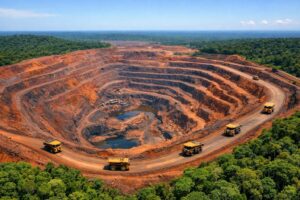
Operational scale remains the primary barrier to entry for the world’s most profitable copper mines.