By Charles Pitts

LONDON : Copper prices surged to a fresh 2026 high on Wednesday, as the rapid expansion of artificial intelligence (AI) data centers and the resulting strain on global power grids forced a significant upward revision in demand forecasts.
Three-month copper on the London Metal Exchange (LME) touched $13,000 per tonne in early trading, surpassing previous resistance levels and marking a pivotal shift in market sentiment. Analysts point to a “perfect storm” of inelastic demand from the high-tech sector and a widening structural deficit in global mine supply.
The rally reflects a growing realization among industrial operators and investors that the AI revolution is not merely a digital phenomenon, but a physical one. Each gigawatt of data center capacity requires substantial amounts of copper for internal cabling, cooling systems, and, crucially, the massive grid infrastructure needed to deliver power to hyperscale facilities.
The AI Squeeze: From Silicon to Solenoids
The primary driver behind the current price action is the acceleration of AI data center construction. Current estimates suggest that global refined copper demand will reach approximately 28.2 million tonnes in 2026, with AI-related infrastructure accounting for a disproportionate share of new growth.
More Read
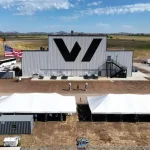
According to institutional research, every 15 gigawatts (GW) of new data center capacity adds roughly 750,000 tonnes of incremental copper demand. With hyperscale providers like Microsoft, Google, and Amazon racing to build out GPU clusters to support generative AI models, the demand for high-conductivity copper busbars and internal power distribution units has spiked.

“We are seeing a transition where copper is no longer just a proxy for global construction and manufacturing,” said a senior metals strategist in London. “It is now a critical component of the global compute layer. You cannot run an AI cluster without an enormous physical footprint of copper.”
Internal cabling within these facilities is only part of the story. Modern, high-density AI racks consume significantly more power than traditional cloud servers, requiring more robust electrical infrastructure to manage the thermal and power loads.
More Read


Grid Infrastructure: The “Hidden” Copper Consumer
While data centers themselves are copper-intensive, the infrastructure required to connect them to the power grid is the larger, often overlooked, driver of demand. Analysts note that for every tonne of copper used inside a data center, several more are required for external power infrastructure, including substations, transformers, and transmission lines.
The International Copper Study Group (ICSG) has recently withdrawn its surplus forecast for 2026, now projecting a structural deficit of at least 150,000 tonnes. This marks the first major structural shortage since 2009. Some more aggressive estimates, including those from J.P. Morgan, suggest a shortfall as high as 330,000 tonnes as grid reinforcement projects worldwide fall behind the pace of data center expansion.
“The grid is the bottleneck,” said a representative from a major European utility. “The sheer volume of copper needed for transformers and distribution upgrades to support these new AI hubs is staggering. We are competing for the same supply as EV manufacturers and renewable energy developers.”
This trend is explored in depth in our recent analysis on the AI copper squeeze and why $15,000/t may become the new floor for the industry.

Producer Outlook: BHP and Freeport Signal Structural Tightness
Major copper producers have spent the first half of 2026 emphasizing the “structural tightness” of the market. BHP and Freeport-McMoRan, two of the world’s largest miners, have both noted that while demand is surging, the supply-side response remains constrained by permitting delays, falling ore grades, and a lack of major new discoveries.
In its most recent quarterly outlook, BHP highlighted that global data center copper usage is expected to rise from roughly 500,000 tonnes per year to 3 million tonnes per year by 2050. The company stressed that this demand is layered on top of the already significant requirements of the global energy transition.
Freeport-McMoRan executives have echoed these concerns, stating that higher sustained prices are necessary to justify the billions of dollars in capital expenditure required for new large-scale mine developments. The industry is currently facing a period where few “shovel-ready” projects are available to meet the immediate spike in demand.
To maintain current supply levels and meet new demand, the industry may need up to $250 billion in new investment over the coming decade. Much of this focus is shifting toward new jurisdictions, such as the resurgence of copper exploration in Colombia and Ecuador.
2026 Market Balance and Price Forecasts
The consensus among analysts is that copper prices will remain elevated through the remainder of the year. While some volatility is expected, the underlying fundamentals suggest a robust base for the red metal.
| Metric | 2025 (Actual/Est) | 2026 (Forecast) |
|---|---|---|
| Global Refined Demand | 27.8 Mt | 28.2 Mt |
| AI/Data Center Demand Share | ~1.1 Mt | ~1.5 Mt |
| Market Balance | +50 kt (Surplus) | -150 kt to -330 kt (Deficit) |
| Average LME Price (USD/t) | $9,800 | $12,125 |
| Peak LME Price (USD/t) | $11,200 | $13,500+ |
Source: Skillings Mining Intelligence, ICSG, Institutional Research
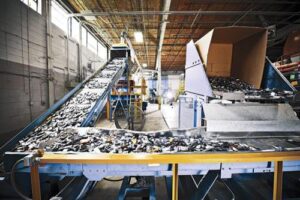
As the market grapples with these deficits, the role of recycling and urban mining is expected to grow. However, even with improved scrap recovery, the primary mine supply will need to increase significantly. Operators are increasingly looking toward future remote and autonomous mining technologies to improve efficiency and unlock lower-grade deposits that were previously uneconomical.

Conclusion: A Strategic Mineral for the Intelligence Age
The 2026 surge in copper prices is a clear signal that the metal has moved beyond its traditional role as a construction material to become a strategic asset for the digital and intelligence age. For investors and policymakers, the focus is now on securing long-term supply chains.
The “criticality” of copper is no longer a theoretical debate. As AI infrastructure continues to strain the global grid, the competition for refined copper will likely intensify. Companies that have secured their position in the supply chain, particularly those leading the transition in critical minerals stocks, are well-positioned for this new market reality.
As the industry moves into the second half of 2026, all eyes will be on the major mining hubs in Chile, Peru, and the Democratic Republic of Congo to see if supply can begin to close the gap: or if the AI-driven “copper squeeze” is just getting started.