By Penny Laneford | January 15, 2026

LONDON : Copper just smashed through every price ceiling in the books.
The red metal hit a staggering $13,310 per metric ton on the London Metal Exchange in early January 2026, obliterating previous records and sending shockwaves through global commodity markets. The surge represents a jaw-dropping 52% climb from approximately $8,700 per ton at the start of 2025: a rally that shows zero signs of cooling off.
For miners, traders, and anyone remotely connected to the energy transition, this isn’t just another price spike. It’s a fundamental reshaping of the copper market, driven by an unlikely culprit: the insatiable appetite of artificial intelligence.
The AI Factor No One Saw Coming
Here’s the thing about data centers: they eat copper for breakfast.
Every server rack, every cooling system, every mile of cabling connecting these massive facilities to the grid requires substantial quantities of the metal. And with tech giants racing to build out AI infrastructure at a pace that borders on frantic, copper demand from this sector alone has transformed market dynamics.

Goldman Sachs analysts note that “massive spending on artificial intelligence gave prices an extra boost” throughout 2025, a trend that accelerated dramatically as the new year began. The bank’s research indicates that investment in AI and data centers has become a primary demand driver for industrial metals across the board.

The numbers tell the story. Copper posted roughly a 40% gain through 2025, then tacked on another 6% in just the first two weeks of January 2026. That kind of momentum doesn’t come from traditional demand sources alone.
Tin, often viewed as a proxy for computing sector activity, surged 30% since the start of 2026: a parallel rally that reinforces just how aggressively the tech sector is pulling on metal supplies.
Renewable Energy Piles On
AI isn’t operating in isolation here.
The global push toward renewable energy continues to compound copper demand pressures. Solar installations, wind farms, and electric vehicle infrastructure all require significantly more copper than their fossil fuel equivalents. A single wind turbine can contain up to 4.7 tons of copper. Electric vehicles use roughly four times more copper than conventional cars.
This convergence: AI buildout happening simultaneously with the green energy transition: creates what industry analysts describe as a “demand supercycle” for the metal.
The implications extend far beyond commodity trading floors. Mining operations worldwide face mounting pressure to increase output, even as grade quality at existing mines continues to decline and new project development timelines stretch into the decade-plus range.
For context on how zero-carbon initiatives are reshaping mining equipment strategies, the equipment playbook itself is being rewritten in real time.
Supply Side Crunch
Demand alone doesn’t explain $13,310 copper.
Major supply disruptions at key mining operations have tightened global availability at precisely the wrong moment. Kamoa-Kakula in the Democratic Republic of Congo and Grasberg in Indonesia: two of the world’s most significant copper producers: have both experienced operational challenges that constrained output.
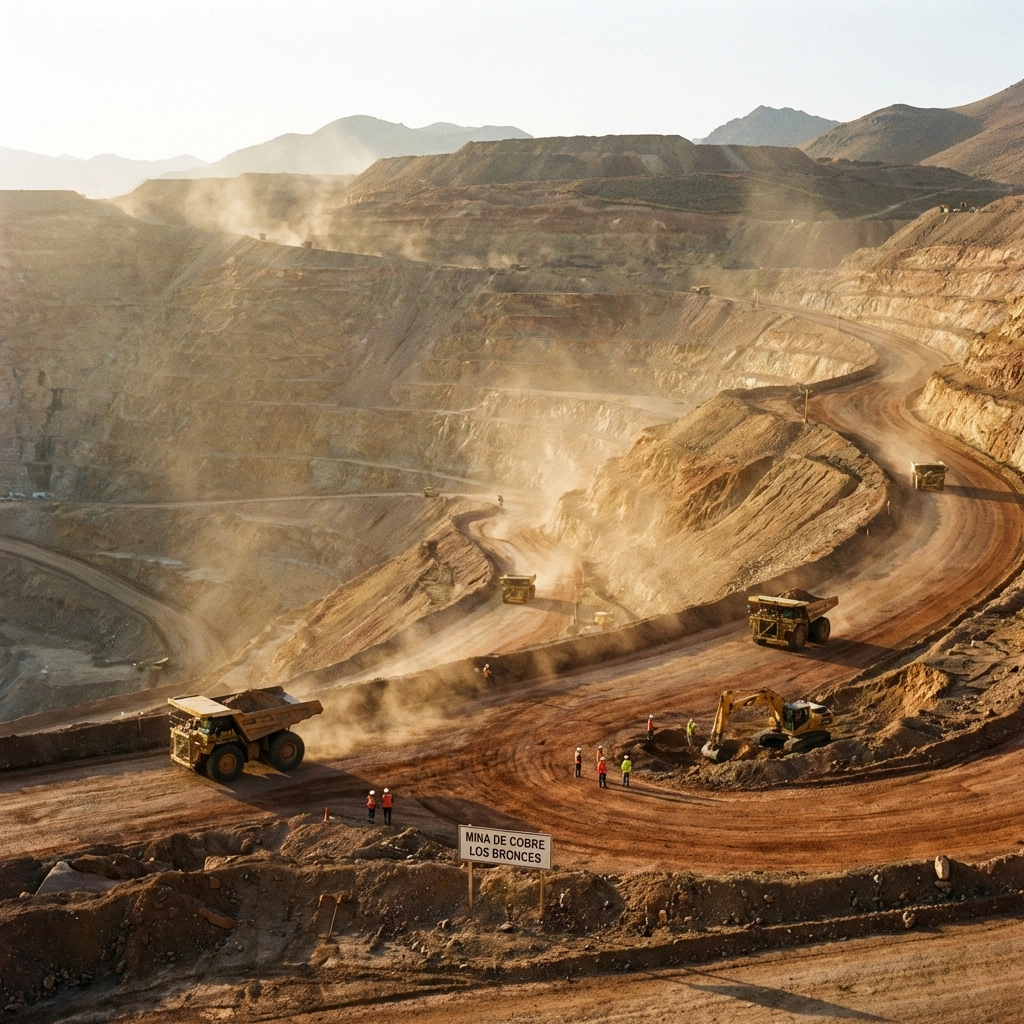
South America, traditionally the backbone of global copper supply, faces a perfect storm of problems. Extreme weather events have disrupted operations across Chile and Peru. Labor strikes continue to plague multiple facilities. Political uncertainty in several key producing nations adds another layer of risk premium to every ton extracted.
Then there’s the tariff wildcard.
Fears of potential U.S. tariffs on refined copper have triggered aggressive stockpiling stateside, redirecting global shipments toward American warehouses and tightening supply elsewhere. Traders have scrambled to position inventory ahead of any policy changes, creating artificial scarcity in non-U.S. markets.
This geopolitical chess match adds a risk premium that has nothing to do with actual supply-demand fundamentals: yet it moves prices just the same.
The Goldman View: Surplus With a Catch
Not everyone sees physical tightness driving this rally.
Goldman Sachs Research expects the global copper market to remain in a 160,000-tonne surplus throughout 2026. The bank forecasts prices averaging $10,710 in the first half of the year, with a trading range between $10,000 and $11,000 per ton through most of the period.
That forecast sits meaningfully below current spot prices: suggesting either Goldman is wrong, or the market is pricing in substantial risk premiums beyond pure supply-demand math.
The bank attributes sustained elevated prices to “risk premiums and strategic positioning” rather than physical tightness. In plain English: traders are paying up for copper not because it’s actually scarce right now, but because they’re terrified it might be soon.

This distinction matters enormously for miners weighing capital allocation decisions. A rally built on physical shortage justifies aggressive expansion. A rally built on fear-driven positioning could reverse sharply if geopolitical tensions ease or demand growth disappoints.
The $15,000 Question
Looking further out, Goldman Sachs has penciled in copper reaching $15,000 per ton by 2035: a target that seemed ambitious when first proposed but looks increasingly conservative given current trajectories.
The math supporting that forecast centers on structural supply-demand imbalances that won’t resolve quickly. New copper mines take 15-20 years to develop from discovery to production. Meanwhile, demand growth from electrification, renewable energy, and now AI infrastructure shows no signs of slowing.
Grade quality at existing mines continues declining, meaning operators must move more earth to extract the same amount of metal. Energy costs for extraction rise accordingly. Permitting challenges in developed markets extend project timelines further.
All of which suggests copper’s current price environment: however volatile in the short term: reflects genuine long-term scarcity dynamics rather than purely speculative froth.
What This Means for the Mining Sector
For copper producers, $13,310 prices translate directly to margin expansion and enhanced project economics. Operations that were marginal at $8,000 copper now generate substantial cash flow. Exploration budgets are expanding. M&A activity is accelerating as majors seek to lock in future supply.
For consumers: from automakers to construction firms to tech companies building out AI infrastructure: the calculus grows more challenging. Higher input costs ripple through supply chains. Alternative materials gain relative attractiveness. Recycling economics improve.
The strategic implications extend to national policy as well. Countries dependent on copper imports face balance of payments pressures. Resource-rich nations find themselves with enhanced geopolitical leverage. Strategic mineral policies increasingly dominate trade discussions.
The Road Ahead
Copper’s record-breaking rally represents more than a commodity price move. It signals a fundamental shift in how the global economy values the materials underlying electrification and digitalization.
Whether current prices prove sustainable or overshoot fair value, the structural forces driving copper demand: AI buildout, renewable energy transition, electric vehicle adoption: aren’t going away. If anything, they’re accelerating.
For an industry accustomed to boom-bust cycles, the current environment presents both unprecedented opportunity and significant execution risk. The miners who navigate this moment successfully will shape the next decade of the energy transition.
The ones who don’t will watch from the sidelines as copper reshapes the world without them.
This story develops from London Metal Exchange trading data and analyst reports. Additional reporting on mining sector developments available at Skillings Mining Review.