By Penny Laneford | January 15, 2026

WASHINGTON : The United States and Australia are throwing billions at a problem that’s been festering for years: China controls the critical minerals game, and the West is finally scrambling to catch up.
A sweeping bilateral framework signed in October 2025 commits a combined $8.5 billion to mining and processing projects across both nations, marking the most aggressive move yet to break Beijing’s stranglehold on materials essential to everything from electric vehicles to advanced weapons systems. Australia is backing that up with a $1.2 billion Critical Minerals Strategic Reserve: essentially a war chest of metals the country can tap when supply chains go sideways.
The timing is no accident. Trade tensions between Washington and Beijing have reached a fever pitch in early 2026, with new tariffs and export controls reshaping how minerals flow across borders. For mining executives and policymakers alike, the message is clear: the era of cheap, China-dependent supply chains is over.
The $13 Billion Bet
The numbers tell the story. The US-Australia Framework targets a pipeline of mining and processing projects valued at approximately $13 billion, with both governments pledging at least $1 billion in financing within six months to jumpstart operations in their respective territories.
More Read



“This isn’t about tomorrow: it’s about next month,” one industry analyst familiar with the negotiations told Skillings Mining Review. “Both countries are operating like there’s a clock running out.”
Australia’s Strategic Reserve operates through national offtake agreements and selective stockpiling, while the US leverages its existing National Defense Stockpile infrastructure. The combination creates redundancy that neither country could achieve alone.
More Read

Initial focus targets three priority areas: antimony, gallium, and rare-earth elements. Gallium recovery operations in Western Australia have been fast-tracked, alongside rare earth separation facilities designed to process heavy rare earths like dysprosium and terbium: materials the defense sector can’t function without.
China’s Grip on the Market
Here’s the uncomfortable truth Western governments have danced around for two decades: China dominates critical minerals production and refining at a level that borders on monopolistic.
Beijing controls roughly 60% of global rare earth mining and nearly 90% of rare earth processing. For gallium: critical for semiconductors and telecommunications: China accounts for over 95% of global production. Lithium processing? China handles about 65% of the world’s supply, even as Australia and Chile mine the bulk of the raw material.
That concentration creates vulnerabilities that keep defense planners up at night. A single policy shift in Beijing: or worse, an escalating trade conflict: could choke supply lines for industries worth trillions.

China hasn’t been shy about flexing this leverage. Export controls on gallium, germanium, and graphite implemented in 2023 and 2024 sent shockwaves through global markets. Prices spiked. Manufacturers scrambled. The message landed: resource nationalism isn’t theoretical anymore.
“The refining bottleneck is the real issue,” said Margaret Chen, a minerals economist at the Colorado School of Mines. “You can dig lithium out of the ground in Australia or Nevada, but if it has to go through China to become battery-grade material, you haven’t actually solved anything.”
Tariffs, Export Controls, and Market Chaos
The US-China trade war has entered a new phase in 2026, with protective tariffs on both sides reshaping the economics of mining investment.
Washington’s latest round of tariffs targets Chinese battery materials and processed rare earths, adding 25% to 45% levies on products that US manufacturers have relied on for years. The Biden administration’s Inflation Reduction Act already pushed automakers to source battery materials from allied nations, but enforcement has tightened considerably.
Beijing’s response has been predictable and effective: export controls on critical minerals, processing restrictions, and investment reviews that slow Western access to Chinese mining expertise.
For companies caught in the middle, the calculus has changed overnight. Projects in Australia, Canada, and Africa that looked marginally economic two years ago now attract serious capital. Meanwhile, operations dependent on Chinese processing face existential questions about their supply chains.
“Every boardroom conversation I’m in starts with the same question: where does this material actually come from, and can we get it somewhere else?” said David Torres, managing director at a mid-tier lithium producer with operations in Western Australia.
The Lithium and Copper Squeeze
Lithium and copper sit at the center of the stockpiling push, driven by demand that shows no signs of slowing.
Electric vehicle sales continue climbing globally, with battery demand projected to grow sixfold by 2030. Lithium prices have whipsawed over the past two years: crashing in 2024 as oversupply hit the market, then recovering sharply as EV adoption in China and Europe accelerated faster than expected.
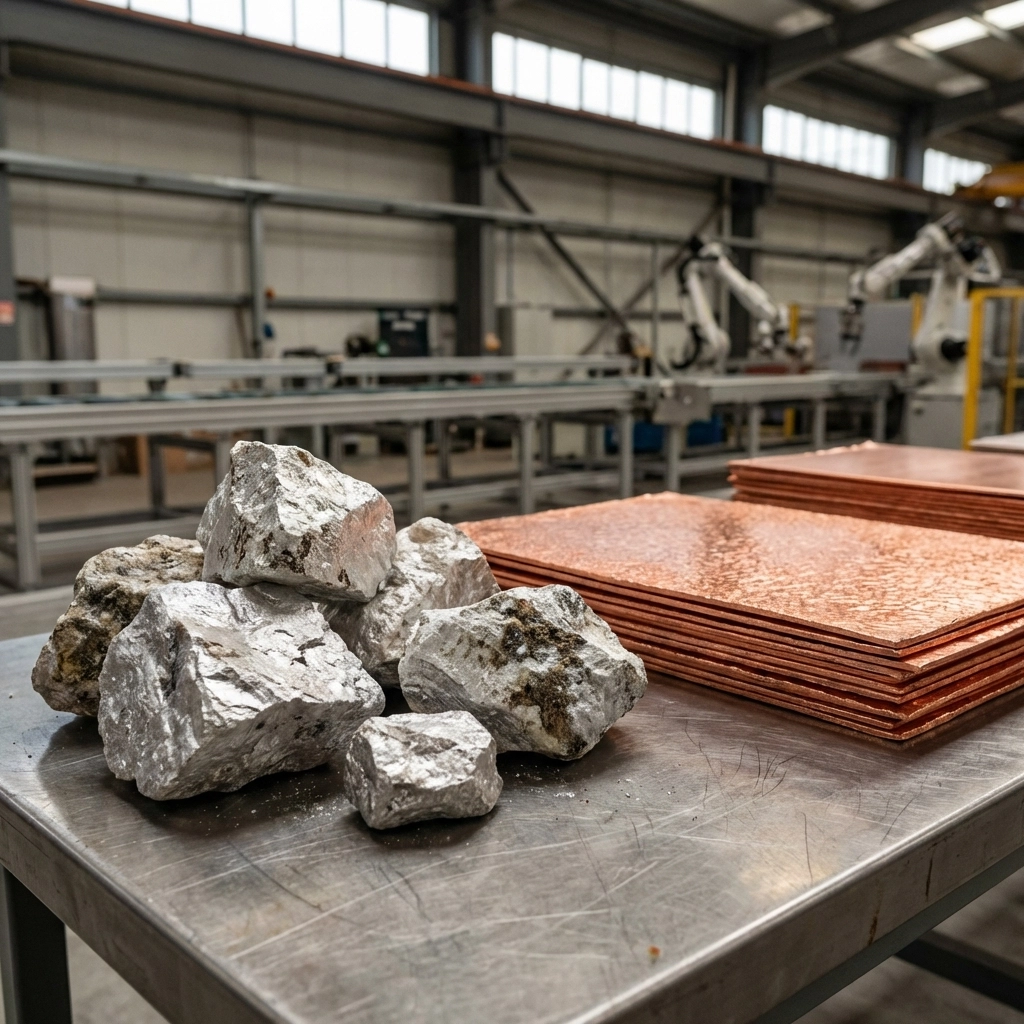
Australia remains the world’s largest lithium producer by mine output, shipping roughly 55% of global supply. But most of that material ships to China for processing: a dependency both Canberra and Washington want to break.
New processing facilities in Western Australia and Texas aim to close that gap. The US Department of Energy has committed $3 billion to domestic lithium processing through various loan programs, while Australia’s Critical Minerals Facility in Kwinana is ramping up to produce battery-grade lithium hydroxide without Chinese involvement.
Copper presents a different challenge. Demand is surging: driven by EVs, renewable energy infrastructure, and the explosive growth of AI data centers: but new mine supply isn’t keeping pace. Copper prices hit all-time highs in recent months, and analysts expect the deficit to widen through the decade.
Related coverage on how green technology is reshaping mining equipment offers additional context on the infrastructure investments driving metal demand.
The Defense Dimension
Buried in the policy language is a reality that rarely makes headlines: critical minerals aren’t just about EVs and smartphones. They’re about weapons.
Rare earths like neodymium and samarium go into guidance systems, precision munitions, and fighter jet engines. Antimony hardens ammunition. Gallium enables radar and electronic warfare systems. Without reliable domestic supply, defense contractors face production delays that could compromise national security.
The US-Australia Critical Minerals Supply Security Response Group, established under the October framework, provides rapid response coordination for exactly these scenarios. Co-chaired by the US Secretary of Energy and Australia’s Minister for Resources, the group can mobilize resources when supply chains face disruption from geopolitical events, natural disasters, or facility failures.
Both countries have also committed to developing authorities for reviewing critical minerals asset sales on national security grounds: a direct response to Chinese investment in Western mining operations over the past decade.
What Comes Next
The stockpiling race won’t end with one agreement or one budget cycle. Industry observers expect additional bilateral frameworks with Canada, the European Union, and potentially Japan and South Korea in coming months.
Mining companies positioned in allied nations stand to benefit from the capital flows. Exploration budgets are ticking up. Permitting timelines: historically a bottleneck in both the US and Australia: face political pressure to accelerate.

For the broader mining sector, the implications cut both ways. Geopolitical fragmentation creates opportunities in some markets and risks in others. Companies with diversified supply chains hold an advantage; those dependent on single-source suppliers face questions they can’t easily answer.
“The industry spent thirty years optimizing for cost,” said Chen. “Now it’s optimizing for security. Those are very different problems.”
The $8.5 billion US-Australia commitment represents a down payment on that transition. Whether it’s enough: and whether it comes fast enough( remains the open question as 2026 unfolds.)