By Charles Pitts

The narrative surrounding the global energy transition has, until recently, been one of unbridled optimism. However, as we approach mid-2026, many institutional and private investors are discovering that a critical minerals portfolio built on 2022 assumptions is no longer delivering. While the long-term structural demand for lithium, copper, nickel, and rare earths remains undisputed, the mechanism of the market has fundamentally shifted from a supply-demand commodity cycle to a high-stakes, policy-driven geopolitical contest.
According to recent data from J.P. Morgan, lithium demand is projected to grow 16% year-over-year in 2026, yet many lithium-heavy portfolios are still underwater from the 2024 price reset. The disconnect lies in a failure to account for jurisdictional resilience, midstream processing bottlenecks, and the rising “reliability premium.”
Here are the 10 reasons your critical minerals portfolio may be underperforming: and how to recalibrate for the 2026 market environment.
1. Over-Concentration in the “Lithium Lottery”
Many portfolios formed between 2021 and 2023 were heavily weighted toward early-stage lithium explorers. While lithium remains essential, the market has matured. The “easy money” from speculative exploration has vanished, replaced by a focus on integrated producers. As noted in the Skillings Lithium Market Reset analysis, the winners in 2026 are companies with low-cost brine operations or those with secured offtake agreements with Western OEMs.
More Read
2. Neglecting the “Copper Core”
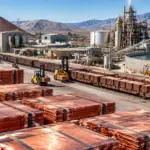
If lithium is the “hype,” copper is the “heart” of the energy transition. Many investors seeking high-beta returns ignored copper due to its perceived “boring” industrial status. This was a mistake. Copper remains the primary bottleneck for grid upgrades, AI data centers, and EV infrastructure. With demand expected to rise 2.6% in 2026 and inventories at historic lows, copper is increasingly viewed as the stabilized anchor of any resilient minerals portfolio. The 2026 Copper Supercycle is not just a forecast; it is an operational reality.


3. Underestimating “Jurisdictional Risk” (The Resource Nationalism Factor)
A project with 5% copper grade is worth zero if it can never be permitted or if its license is revoked. We have seen this play out recently with the Slovakia antimony license revocation. In 2026, the market is paying a premium for “Safe-Haven Ore.” Portfolios over-leveraged in jurisdictions with volatile regulatory environments are seeing higher discount rates applied by analysts.
More Read
4. Ignoring the Midstream and Refining Pivot
Mining is only half the battle. China still controls the vast majority of global processing for graphite and rare earths. A portfolio that only includes upstream miners is exposed to the “processing squeeze.” Smart capital is moving into midstream refining and processing facilities in the US, Canada, and Australia, supported by government grants and loans aimed at decoupling from Chinese supply chains.
5. Failure to Account for the “Reliability Premium”
In 2026, pricing logic is shifting from quantity-based to reliability-based. End-users (like Tesla, Ford, or Siemens) are willing to pay a premium for minerals that are ESG-compliant and sourced from stable partners. If your portfolio companies aren’t meeting these Tier-1 standards, they are likely selling into the spot market at a discount rather than securing high-value, long-term contracts.
6. Missing the Government Co-Investment Wave
We are in an era of “State-Led Mining.” The US Department of Energy and EU-backed agencies are now taking equity stakes and providing billions in low-interest loans to de-risk critical projects. A project with government backing has a significantly higher chance of reaching production than a standalone junior. Investors who ignore these “policy-anointed” winners are fighting against the current of global industrial policy.

7. Technology Substitution Risk (LFP and Sodium-Ion)
The battery world moves fast. The rise of Lithium Iron Phosphate (LFP) batteries has already cooled the demand for high-grade nickel and cobalt. Similarly, the emergence of sodium-ion batteries for stationary storage could impact low-end lithium demand. A portfolio that doesn’t track these “Silicon-Nuclear Nexuses” or AI-energy shifts is at risk of holding stranded assets.
8. The “17-Year Gap”: Underestimating Permitting Timelines
According to the World Economic Forum’s 2026 report, Making Critical Minerals Bankable, it takes an average of 17 years to bring a mine from discovery to production. Portfolios that expected “near-term production” from juniors discovered in 2022 are now facing the reality of a decade of capital raises and dilution. In 2026, the focus has shifted to “Brownfield” expansions: increasing production at existing mines rather than waiting for “Greenfield” miracles.
9. The 2026 China Export Control Cliff
China’s export controls on gallium, germanium, and graphite have created a volatile shadow market. While a temporary truce was reached in 2025, that agreement is scheduled to expire in late 2026. Portfolios without exposure to alternative supply chains (like the Great Antimony Squeeze) are highly vulnerable to the next round of geopolitical trade volleys.
10. Neglecting the Circular Economy (Recycling)
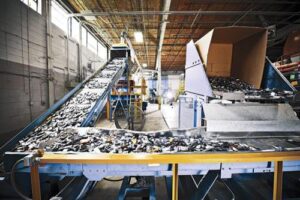
By late 2026, several commercial-scale battery recycling facilities will come online in the US and Europe. While primary mining will always be necessary, the “secondary supply” from recycling is becoming a measurable part of the market. Companies that integrate recycling or “urban mining” into their business model are showing lower volatility and better ESG scores, making them more attractive to institutional ESG funds.
Data Snapshot: 2026 Critical Mineral Projections
| Commodity | Projected 2026 Demand Growth (YoY) | Key Driver | Inventory Status |
|---|---|---|---|
| Lithium | +16% | EV Adoption & Grid Storage | High (Working through 2024-25 glut) |
| Copper | +2.6% | AI Data Centers & Grid Expansion | Critically Low |
| Nickel | +4.2% | High-Performance EV Batteries | Moderate (Supply concentration risks) |
| Uranium | +5.5% | SMR Deployment & AI Power | Low (Structural Deficit) |
Source: Skillings Mining Intelligence & J.P. Morgan Global Research.
How to Fix Your Portfolio for 2026
To reposition for the remainder of the year and into 2027, investors should consider a “Bimodal Strategy”:
- The Stabilizer (60-70%): Focus on producing, dividend-paying miners with multi-asset exposure. Prioritize copper and low-cost lithium brine producers. Ensure these companies have strong AISC (All-In Sustaining Cost) management to survive price volatility.
- The Policy Play (30-40%): Target mid-tier companies with significant government backing, secured offtake agreements with Western OEMs, and operations in “preferred jurisdictions” (NAFTA, Australia, select EU).

The era of blindly throwing capital at anything with “Lithium” in its name is over. The 2026 critical minerals market rewards technical excellence, geopolitical savvy, and operational discipline. As the Global Mining Outlook 2026 suggests, the supercycle is still very much alive: it just requires a more sophisticated lens to navigate.