Key Takeaways

- Trump’s executive order revives deep-sea mining law dormant since the 1980s.
- TMC USA submits first commercial permit under the U.S. seabed mining code.
- NOAA tasked with 60-day turnaround despite complex environmental stakes.
- Critics warn of legal vacuum as U.S. bypasses International Seabed Authority.
Trump Order Sets Off Deep-Sea Mining Race
President Donald Trump’s April executive order has triggered the most aggressive U.S. push into deep-sea mining in over four decades. The order directs the National Oceanic and Atmospheric Administration (NOAA) to expedite licenses and permits for companies targeting critical minerals on the ocean floor—setting a 60-day window for approvals under the Deep Seabed Hard Mineral Resources Act (DSHMRA).
The administration positions the directive as a response to U.S. supply chain vulnerabilities and China’s dominance in rare minerals. But critics say it marks a unilateral challenge to multilateral seabed governance.
TMC USA Leads the Charge
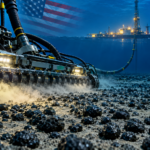
Within days, TMC USA—a U.S. unit of The Metals Company—filed for two exploration licenses and one commercial recovery permit. The permit targets a 25,160-square-kilometer section of the Clarion-Clipperton Zone (CCZ), estimated to contain millions of tonnes of battery-grade metals.
“With these applications, we offer a shovel-ready path to critical minerals,” said Gerard Barron, CEO of TMC. He claimed the resource could support U.S. infrastructure and clean energy expansion.
More Read

TMC is the first company to test the U.S. mining code beyond exploration, an unprecedented step in the modern era.

A Regulatory Shortcut?
The NOAA proposal under White House review revises parts 970 and 971 of its mining regulations to enable streamlined commercial permit processing. Officials say all statutory requirements will be met. Yet NOAA’s refusal to disclose details, combined with its short review timeline, has drawn fire.
“You can’t responsibly evaluate a mining proposal of this scale in that timeframe,” said Matthew Gianni of the Deep Sea Conservation Coalition.
More Read

Historically, NOAA has only issued exploratory licenses, both granted in the 1980s to Lockheed Martin.
Going It Alone on the Global Stage
The U.S. is not a party to the United Nations Convention on the Law of the Sea and has never recognized the International Seabed Authority’s jurisdiction over its nationals. Most coastal states operate under ISA frameworks, which have yet to approve any commercial permits.
“This could set a precedent for mining without international oversight,” said Kristina Gjerde of the IUCN. “It risks a regulatory vacuum.”
China, meanwhile, holds more ISA exploration contracts than any other country. Experts fear that U.S. unilateralism may accelerate competitive mining with reduced environmental controls.
Strategic Gamble or Environmental Gamble?
The executive order also calls for the Departments of Defense and Energy to explore offtake agreements and mineral stockpiling. Environmental advocates warn that no amount of domestic regulation can replicate the environmental safeguards built into multilateral governance.
Whether NOAA’s decision becomes a model for responsible resource recovery or a precedent for chaotic ocean exploitation may depend on how it handles TMC’s application—expected to be ruled on by July.