Key Takeaways
- Indonesia’s license cancellations create fresh nickel volatility, stressing the global EV battery supply chain.
- Despite analyst talk of oversupply, near-term disruptions and long-term geographic concentration raise red flags.
- Electric vehicle demand remains strong, but sourcing risks and alternative battery chemistries are reshaping the outlook.
Indonesia’s sudden cancellation of key nickel mining licenses has exposed a critical fault line in the electric vehicle sector: the extreme dependence on a single country for a battery metal that powers long-range cars.

A Political Crackdown with Global Ripples
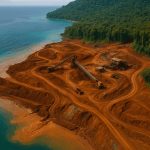
The order, signed by President Prabowo Subianto, canceled four major mining operations in the Raja Ampat archipelago. It followed a Greenpeace report linking over 500 hectares of deforestation to nickel extraction activities. While framed as a conservation move, the revocation sent tremors through metals markets already wary of supply risks.
Indonesia holds more than 20 million tons of nickel—22% of global reserves—and produces 65% of the world’s supply. Greenpeace welcomed the move but said it “falls short of real systemic change.”
The EV Sector’s Hidden Vulnerability
Nickel is prized for its ability to increase EV battery energy density, extending vehicle range. Demand has surged from 1.1 million tons in 2000 to 3.7 million tons in 2023. It’s projected to hit 5.5 million tons by 2030, fueled by electric vehicles, renewable storage, and stainless steel applications, according to the International Renewable Energy Agency.
China, the Philippines, and Indonesia together dominate supply, with China relying on the region for 90% of its laterite ore.
More Read

Oversupply? Not Quite.
Some analysts, including those cited in Reuters, see a near-term nickel glut as LFP (lithium iron phosphate) batteries gain traction. These chemistries don’t require nickel, and China, controlling 90% of LFP production, is rapidly scaling adoption.

Still, the sudden removal of four Indonesian producers—among the five largest—complicates the oversupply narrative.
EV Sales: Still Climbing
Electric vehicle sales remain strong. The IEA expects global 2025 sales to approach 20 million units. In the first half alone, EV deliveries topped 7 million, up 28% year-on-year.
- China: 4.4 million units, market leader.
- India: EVs made up 4% of May car sales, up from 2.6% last year.
- Germany: Battery EV registrations rose 43% in the first four months of 2025.
- U.S.: Sales up 4%; Canada down 20%. General Motors climbed to No. 2 in U.S. EV sales.
Strategic Risk: Geographic Bottlenecks
According to the U.S. Geological Survey, the top three mining countries—Indonesia, the Philippines, and New Caledonia—will control 83% of output by 2030. On the refining side, Indonesia, China, and Japan will process 73% of global nickel.
“It’s a systemic risk,” said an analyst at the Energy Transition Institute. “One flood, one regulation, one strike in Indonesia—and it’s a global shock.”
What Comes Next?
Battery makers and car companies are weighing alternatives: nickel recycling, shifting supply chains to places like New Caledonia, and broader adoption of LFP technology. Each route comes with cost and performance trade-offs.
One thing is clear: nickel is no longer just a commodity. It’s a strategic asset in the EV arms race—and a glaring vulnerability.
FAQ Block
Q: Why is nickel so important for electric vehicles?
A: Nickel increases battery energy density, enabling EVs to travel farther on a single charge.
Q: What triggered Indonesia’s nickel license cancellations?
A: A Greenpeace report citing deforestation and ecosystem damage in Raja Ampat prompted presidential intervention.
Q: Are we facing a global nickel shortage?
A: Not immediately, but the concentration of supply in a few countries makes the system fragile.