By Charles Pitts

Most mining juniors are operating on a diet of “hopium” and legacy drill results. They punch holes in the ground, pray for a hit, and burn through retail capital while waiting for a miracle.
That’s not what’s happening in South Australia.
The Gawler Craton is notoriously difficult. It’s “elephant country”: home to some of the largest copper and gold deposits on the planet: but those elephants are buried under hundreds of meters of cover. You can’t just walk onto a site and find an outcrop. You have to see through the earth.
Barton Gold and SensOre just fundamentally changed the math on how that’s done. By forming an exclusive R&D partnership to deploy SensOre’s AI-driven Discriminant Predictive Targeting (DPT) across a massive 60,000 square kilometer area, Barton isn’t just looking for gold; they are consolidating the intellectual property required to own the region.
More Read

The strategic calculus here isn’t subtle: Barton already owns the only mill for miles. Now, they own the AI brain that tells them where the next feed for that mill is hiding.

The AI Advantage: Seeing Through the Cover
Exploration under cover is the industry’s greatest technical hurdle. In Western Australia, you can practically trip over mineralization. In South Australia’s Gawler Craton, you’re looking for needles in a haystack that’s been buried under a thick layer of sediment.
SensOre’s DPT system is the solution to this “blind” exploration problem. It’s an AI and machine learning platform that digests billions of geological data points: geophysics, geochemistry, historical drilling: to identify mineral “fingerprints.”
More Read

But here is the uncomfortable truth: AI is only as good as its training data. SensOre originally built its module for Western Australian conditions. Adapting that technology to the specific geological quirks of the Gawler Craton is a heavy lift. Barton is putting up the cash: A$45,000 for regional mapping and up to A$350,000 for refinement: to ensure the AI understands South Australia’s unique “buried” signatures.
In exchange, Barton gets 10 years of exclusivity. Ten years.
For a decade, SensOre cannot compete with Barton to acquire gold or copper targets in this 60,000 sq km zone. That is a massive competitive moat. While other explorers are still squinting at 2D maps, Barton will be using a machine-learned “X-ray” to pick the best targets before anyone else even knows they exist.
The $100M Magnet: Why Infrastructure Wins
In the mining business, discovery is only half the battle. Processing is where the real money is made: or lost.
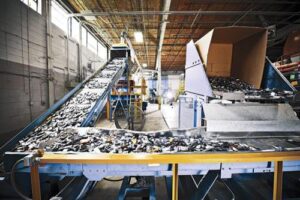
Barton Gold holds a strategic ace that almost no other junior in the region can claim: the Central Gawler Mill. To build a mill of that scale from scratch in 2026? You’re looking at a replacement cost of at least $100 million.
That’s not a typo. $100 million.
Between inflation, supply chain snarls, and the excruciatingly slow permitting process for new tailing dams and processing facilities, building new infrastructure is a nightmare. This makes Barton’s existing, permitted infrastructure a literal magnet for M&A activity.

The Central Gawler Mill has historical recovery efficiencies of 94%. It’s sitting there, ready to be the hub for a regional “hub-and-spoke” production model. If you are a junior explorer in the Gawler Craton and you find a deposit, you have two choices: spend five years and $100M+ trying to build your own mill, or talk to Barton.
The strategic consolidation is already visible. Barton controls approximately 15% of the Gawler Craton. They aren’t just a mining company; they are becoming the regional landlord.
Copper-Gold Dominance in a High-Value Market
The timing of this partnership isn’t accidental. Gold is currently riding a wave of geopolitical instability and central bank buying. We’ve seen analysts like JPMorgan predict $6,300 gold in a “perfect storm” scenario. Meanwhile, copper is the lifeblood of the global energy transition.
Barton is sitting on 1.1 million ounces of gold in combined Mineral Resources. But the “copper” part of this partnership is the real kicker for the majors. The Gawler Craton is the same jurisdiction that hosts BHP’s Olympic Dam and Prominent Hill. It is Iron Oxide Copper Gold (IOCG) territory.
When you combine AI-driven exploration (targeting) with existing infrastructure (the mill), you create a platform that is incredibly attractive to mid-tier and major producers. They don’t want to do the messy, high-risk work of early-stage exploration. They want “plug-and-play” assets. Barton is building exactly that.
A Tier-1 Jurisdiction in a Volatile World
Jurisdiction matters now more than ever. We’ve seen Nevada reclaim its crown as a top mining jurisdiction, but South Australia is right there in the top tier. It has a stable government, a clear regulatory framework, and a long history of supporting the minerals sector.
Compare this to the volatility we see in South America or Africa. For a major looking to de-risk their portfolio, a consolidated copper-gold play in South Australia is a dream scenario.

And the consolidation trend is accelerating. We’ve seen similar moves across the globe, from Lundin Gold’s silver stream deals to Seabridge Gold’s massive capital raises for B.C. projects. The market is rewarding companies that control large land packages and have clear paths to production.
The Financials: Royalties and R&D
The deal structure is clever. SensOre isn’t just a service provider; they have skin in the game. If the DPT system predicts a target that goes into production, SensOre gets a royalty.
This aligns the incentives perfectly. SensOre is incentivized to make the AI as accurate as possible. Barton is incentivized to drill those targets and get them into the mill.
The Phase I regional prospectivity mapping is already underway. This isn’t a “wait and see” story for 2028. This is happening now. By the time the rest of the market realizes how effectively Barton has ring-fenced the most prospective parts of the Gawler Craton, it will be too late to buy in cheap.
The Bottom Line: M&A Inevitability
Let’s be blunt: Barton Gold is positioning itself to be acquired.
You don’t consolidate 15% of a Tier-1 craton, secure exclusive AI exploration rights, and maintain a $100M mill infrastructure just to stay a junior forever. You do it to become so vital to the region that a major like BHP, Rio Tinto, or even a gold mid-tier has to buy you to secure their own future in the Gawler Craton.
The “hub-and-spoke” model is the most efficient way to mine in South Australia. Barton owns the hub. SensOre is providing the GPS to find the spokes.
The Gawler Craton has always been a region of high risk and high reward. By deploying machine learning to mitigate the risk of exploration under cover, Barton has shifted the odds significantly in their favor. In a world where critical mineral stockpiles are under scrutiny, owning the processing infrastructure is the ultimate power move.
Welcome to the new era of exploration. It’s digital, it’s consolidated, and it’s happening in South Australia.