By Mo Shine and Charles Pitts

Gold Fields just posted record 2025 earnings. Cash flow is strong. The portfolio is performing. And CEO Mike Fraser is already talking about the next deal.
That’s not restlessness. That’s geology.
Every producing mine is a depleting asset. Reserves don’t replenish themselves. And in an industry where it takes 10-15 years to bring a new discovery into production, waiting until your mines are mature is strategic suicide. Fraser knows this. Which is why M&A isn’t an opportunistic side bet for Gold Fields: it’s the structural foundation of the company’s growth strategy.
Why Resource Replacement Drives Deal Activity
Gold Fields operates under a brutally simple math problem: mines run out.
More Read
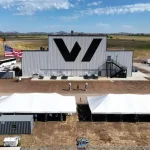
The company produces roughly 2.3 million ounces of gold annually across nine operating assets. Those assets have finite reserves. Without continuous resource replacement, production profiles decline, cash flow compresses, and the business eventually ceases to exist as a producer.

M&A solves for this faster than organic exploration alone. A single acquisition can add years: sometimes decades: of mine life in a fraction of the time it takes to drill, permit, finance, and construct a greenfield project. It’s not about growth for growth’s sake. It’s about longevity.
Fraser has been explicit about this. Gold Fields views M&A and exploration as complementary tools in a broader resource replacement mandate. The 204% increase in exploration spending for 2025 underscores the company’s commitment to both pathways. But exploration carries geological risk. M&A carries execution risk. Different tools. Same objective.
More Read
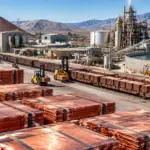

Western Australia: The Consolidation Platform
Gold Fields operates four mines in Western Australia: Agnew, Granny Smith, St Ives, and: following the 2025 acquisition of Gold Road Resources for A$3.7 billion: Gruyere.
Those four assets account for roughly half of the company’s global production. That concentration creates leverage.
Fraser has signaled that Western Australia remains a priority target for further bolt-on acquisitions. The logic is straightforward: shared infrastructure, established permitting pathways, existing workforce and supply chains, and operational synergies that reduce the all-in sustaining cost profile.
The Gold Road deal exemplifies this strategy. Gold Fields already held a 50% stake in Gruyere. Acquiring the remaining 50% gave the company full control over mine planning, exploration upside across the broader tenement package, and the ability to optimize capital allocation without partner friction.
Western Australia’s regulatory environment is also relatively stable compared to other jurisdictions. That matters in an industry where geopolitical risk increasingly shapes portfolio decisions. When you’re deploying billions in M&A capital, predictability has value.
Geographic Diversification: South America and Canada
Western Australia provides scale and operational efficiency. But concentration creates exposure.
Gold Fields is actively searching for longevity in South America and Canada: regions that offer both resource endowment and jurisdictional balance. The company’s 2024 acquisition of Osisko Mining for C$2.16 billion expanded its Canadian position, adding the high-grade Windfall project in Quebec to a portfolio that already included the Salares Norte project in Chile.
South America represents a more complex calculus. Chile and Peru offer world-class geology. They also come with social license challenges, permitting delays, and heightened community engagement requirements. Gold Fields operates Salares Norte in Chile and Cerro Corona in Peru, giving it operational experience navigating those dynamics.

Canada offers a different risk-return profile: higher upfront capital costs, longer winters, and labor constraints, but stable governance and established mining codes. The Windfall project is currently under construction, with first production targeted for 2027. It’s a long-cycle bet on a high-grade underground asset in a safe jurisdiction.
Fraser’s comments about seeking longevity in these regions aren’t abstract. They’re about building a portfolio that can absorb shocks: commodity price volatility, permitting delays, labor disruptions: without collapsing production guidance.
Portfolio Quality Over Portfolio Size
Not all ounces are created equal.
Gold Fields has been equally aggressive on the divestment side, selling assets that no longer fit its portfolio criteria. The company offloaded its South Deep mine in South Africa in 2024, exiting a high-cost, capital-intensive operation in favor of reallocating that capital toward higher-margin projects.
This isn’t empire building. It’s portfolio curation. M&A enables Gold Fields to continually upgrade the quality of its asset base: acquiring mines that lower the company’s average all-in sustaining cost, extend reserve life, or provide exploration upside.
The strategic calculus here isn’t subtle: buy assets that improve your cost curve, sell assets that don’t. Repeat until you have a portfolio capable of generating returns through multiple commodity cycles.
Structural Cost Inflation and the Case for Scale
Mining costs are rising. Labor, energy, reagents, equipment: every input category is under inflationary pressure. Lower-grade ore bodies that were economically viable at $1,200 gold are marginal at $1,800 gold when your cost base has inflated by 30%.
Scale provides a partial hedge. Larger operations can amortize fixed costs across higher throughput. Shared infrastructure between adjacent mines reduces duplication. Consolidation within a region enables workforce optimization and supply chain efficiency.

This dynamic is particularly pronounced in mature mining districts like Western Australia’s Goldfields region, where multiple mid-tier producers operate adjacent tenements with overlapping infrastructure. Consolidation eliminates redundancy and improves unit economics.
Gold Fields has the balance sheet to be a consolidator. Net debt sits at manageable levels. Cash generation from operations remains strong. And with gold prices holding above $2,600 per ounce, the company has the financial flexibility to pursue accretive deals without stretching leverage ratios.
Record Earnings Create M&A Optionality
Gold Fields’ record 2025 earnings weren’t luck. They were the product of higher gold prices, operational discipline, and portfolio optimization.
Those earnings do two things. First, they validate the strategic decisions Fraser and his team have made over the past several years. Second, they create optionality for future M&A.
Strong cash flow reduces reliance on equity financing for acquisitions, which minimizes dilution to existing shareholders. It also provides dry powder for opportunistic deals when market conditions shift. If commodity prices correct or a distressed seller emerges, Gold Fields can move quickly.
That optionality is why Fraser remains open to further M&A opportunities despite having recently closed two major transactions. The window for accretive dealmaking doesn’t stay open indefinitely. When asset valuations are reasonable and financing conditions are favorable, companies with strong balance sheets and clear strategic mandates have an advantage.
What Longevity Looks Like
Longevity in gold mining isn’t about discovering the next Witwatersrand. It’s about continuously replacing depleted reserves with new production, managing costs through operational efficiency and strategic consolidation, and maintaining geographic diversification to insulate against regional shocks.
Gold Fields’ M&A strategy addresses all three. The 204% increase in exploration spending supports organic reserve replacement. The focus on Western Australia enables cost reduction through consolidation. And the expansion into South America and Canada builds portfolio resilience.
Fraser isn’t chasing headlines. He’s managing depletion curves. And in an industry where the average mine life is 10-15 years, that’s not optional strategy. It’s existential necessity.
The next deal is already being evaluated. Because in gold mining, standing still means going backward.