Tungsten rarely makes headlines. Yet the metal sits deep inside some of the systems that underpin modern military power.

Its extreme density, hardness and high-temperature performance make it valuable for aerospace, munitions, armour, machining and other defence applications. The U.S. Department of Defense has described tungsten as an essential alloying metal for aerospace, ground vehicles, munitions and other defence systems.
The supply problem is straightforward.
The United States has no commercial tungsten mine production today. The last commercial U.S. tungsten mining ended in 2015. China, meanwhile, remains the dominant producer.
That gap is now attracting billions of dollars in government-backed commitments and private investment.
More Read
The latest move is a $450 million U.S. Department of War investment in The Elmet Group, including about $150 million earmarked for Blue Moon Metals’ Springer Tungsten Complex in Nevada.

The deal is not simply about reopening a mine.
It is an attempt to rebuild a tungsten supply chain that stretches from ore to refined material and finished defence components.
More Read
Why Tungsten Matters to Defence
Tungsten is unusually dense and resistant to heat and wear.
Those properties make tungsten and tungsten-based materials useful in applications where strength, density and durability matter.
The U.S. military has a long history of using tungsten alloys in high-density applications. Defence Department technical material documents the development of tungsten-based kinetic-energy penetrators, while current DoD programs identify tungsten as an important material for munitions and aerospace systems.
But defence is only part of the market.
USGS data show that roughly 60% of U.S. tungsten consumption has historically gone into cemented carbide products used for cutting and wear resistance. These applications serve construction, metalworking, mining and oil and gas drilling.
That makes tungsten a dual-use industrial material as well as a defence mineral.
The U.S. Lost Its Mine Supply in 2015
The break in the domestic supply chain did not happen overnight.
U.S. tungsten mining declined sharply after earlier price crashes. By 2015, commercial mine production had stopped.
USGS reported that there was no commercial tungsten production in the United States from 2015 through 2019. At the same time, it identified tungsten deposits across states including Nevada, Alaska, Arizona, California, Colorado, Idaho and Montana.
The result was a country with known tungsten resources but no operating commercial mine.
That distinction matters.
Having deposits underground is not the same as having a functioning supply chain. A mine needs capital, permits, infrastructure, processing capacity and customers willing to support long-term production.
China Built the Dominant Position
China now sits at the centre of the global tungsten market.
USGS estimates that China accounted for about 83% of global mined tungsten production in 2023. Its tungsten reserves represented about 52% of the global total in the same dataset.
The 2026 USGS Mineral Commodity Summary also identifies China as the world’s leading producer, importer and consumer of tungsten concentrates.
The concentration became more significant in 2025 as tungsten prices rose sharply following Chinese export controls on selected tungsten products. USGS reported that Rotterdam prices for APT increased from $331 to $675 per metric ton unit during 2025.
For U.S. manufacturers, the issue is therefore not simply where tungsten ore is mined.
It is who controls the material as it moves through the processing chain.
APT Is the Missing Link
This is where the Springer project becomes strategically important.
Tungsten ore does not go directly from a mine into a missile, aircraft or cutting tool.
It must move through several processing stages.
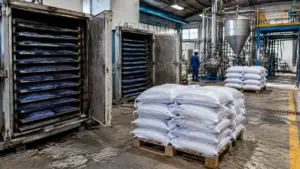
One important intermediate is ammonium paratungstate, or APT. APT is a major feedstock for producing tungsten oxides and other downstream tungsten materials.
Springer historically included an APT plant with potential capacity of up to 4,000 tonnes per year.
Blue Moon, Elmet and Australia’s EQ Resources now plan to restart and expand that processing capacity through a joint venture. The mine and mill are targeted to restart in Q4 2027, while the APT plant is expected to resume operations in the second half of 2028.
That makes Springer more than a mining project.
It is designed to reconnect U.S. tungsten mining with North American conversion capacity.
The $150 Million Springer Bet
Under the new agreement, Elmet plans to allocate about $150 million to the Springer transactions.
The package includes a $25 million equity investment in Blue Moon and a $50 million tungsten concentrate prepayment facility.
Elmet also plans to contribute $75 million to a joint venture that will own and operate the APT plant. EQ Resources is expected to hold 10% of the JV, while Blue Moon retains an interest and control of the mine and mill. An additional $25 million has been identified as standby funding if required.
The structure is important for another reason.
It gives the mine a defined downstream relationship rather than leaving production dependent solely on future spot-market buyers.
The Pentagon Is Funding More Than a Mine
The Springer investment is only one part of the larger Elmet transaction.
The Department of War has committed $450 million to Elmet. More than $165 million is earmarked for its manufacturing facilities in Maine, Michigan and Ohio.
Elmet says those investments will expand production of tungsten powder and heavy-alloy products used in defence and industrial applications.
The company is also establishing Elmet Refining and Trading to coordinate tungsten sourcing, refining and delivery across a broader supply network.
That creates a vertically connected model:
Mine → Concentrate → APT → Tungsten materials → Components → Defence systems
The objective is not to replace every foreign source immediately.
It is to create more points of supply outside China’s dominant position.
The $2 Billion Stockpile Adds Another Layer
The U.S. government is also rebuilding its National Defense Stockpile.
Elmet Technologies has received an indefinite-delivery, indefinite-quantity contract from the Defense Logistics Agency with a ceiling of up to $2 billion.
The contract covers tungsten ores, concentrates and sodium tungstate. It includes a guaranteed funded commitment of $150 million.
Importantly, Elmet says it does not intend to begin stockpile deliveries until additional supply becomes available through new mining, offtake and processing investments.
That approach links stockpile replenishment to new production rather than simply redirecting existing material away from industrial users.
The Real Test Is Beyond the Mine
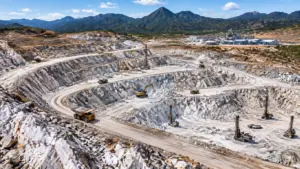
The Springer restart addresses one of the biggest weaknesses in the U.S. tungsten chain: the absence of domestic mine production.
But the larger challenge is building a competitive chain all the way through processing and manufacturing.
That requires capital at every stage.
It also requires stable demand, technical expertise, qualified facilities and long-term contracts.
The U.S. is now putting public and private money behind those links.
Whether the strategy succeeds will depend less on the headline size of the investment than on whether those separate pieces begin operating as one supply chain.
For tungsten, the strategic race is no longer simply about finding ore.
It is about rebuilding the industrial system that turns that ore into material the United States can use.