Look, when the two giants of the mining world start passing notes in class again, you pay attention. Rio Tinto and Glencore are back at the negotiating table, circling a potential $260 billion all-share mega-merger that would create the largest mining company on the planet. And the reason they’re doing it comes down to one word: copper.

This isn’t some opportunistic land grab. This is two companies staring down a future where copper demand is projected to jump 50% by 2040 and realizing that building new mines from scratch just isn’t going to cut it anymore. The math doesn’t work. The timelines don’t work. So they’re doing what miners have always done when the ground gets tough, they’re consolidating.
The Copper Crunch Is Real
Here’s the thing about copper right now: prices have hit record levels, supply disruptions keep piling up, and the easy deposits are already spoken for. Every data center, every EV, every wind turbine, every solar panel, they all need copper. Lots of it. And the pipeline of new projects that can actually deliver significant tonnage? It’s thin. Really thin.
Rio Tinto knows this better than most. Beyond their current flagship projects, the Simandou iron ore behemoth in Guinea and the Oyu Tolgoi copper complex in Mongolia, their development pipeline gets pretty modest pretty fast. Smaller projects, longer timelines, higher risk. That’s not a recipe for keeping up with demand that’s about to go vertical.
Glencore, on the other hand, is sitting on exactly what Rio needs. The crown jewel here is Glencore’s 44% stake in Chile’s Collahuasi mine, one of the most productive copper operations on Earth. Glencore’s currently the world’s sixth-largest copper producer, and they’ve got plans to double their copper output to around 1.6 million tonnes by 2035. That’s the kind of scale Rio can’t build on its own, at least not in any reasonable timeframe.
More Read

Why Building New Mines Is a Fool’s Errand Right Now
Let’s talk about why acquiring beats building in 2026. Developing a major new copper mine from scratch takes somewhere between 15 and 20 years these days. You’ve got exploration, feasibility studies, environmental permits, community consultations, infrastructure builds, and about a thousand other hurdles before you even start moving dirt.
And that’s assuming everything goes smoothly, which it never does. Permitting delays, legal challenges, political instability, local opposition, ESG scrutiny, any one of these can add years and billions to your timeline. Meanwhile, copper demand keeps climbing and your competitors are locking up the good assets.
More Read
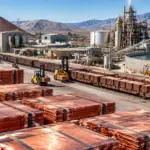
Acquisition sidesteps all of that. You’re buying operating mines with proven reserves, existing infrastructure, trained workforces, and established relationships. Sure, you pay a premium. But you’re also buying time, and in a market racing toward supply deficits, time might be the most valuable commodity of all.
BlackRock has been beating this drum for a while now, predicting sector consolidation as the logical response to structural supply constraints. When the world’s largest asset manager says “buy, don’t build,” the industry tends to listen.
The AI and Energy Transition Double Whammy
Two massive structural forces are colliding to supercharge copper demand, and neither one is going away anytime soon.
First, there’s the energy transition. Every serious decarbonization pathway requires obscene amounts of copper. EVs use about four times as much copper as conventional vehicles. Offshore wind turbines need roughly 8 tonnes each. Grid upgrades to handle renewable intermittency require copper everywhere. The International Energy Agency keeps revising their copper demand forecasts upward, and they’re still probably underestimating.
Second: and this one’s newer: there’s the AI data center explosion. These facilities are copper monsters. Between the electrical systems, cooling infrastructure, and connectivity requirements, a single hyperscale data center can require thousands of tonnes of copper. And we’re building them at a pace nobody anticipated even two years ago.

Amazon, Google, Microsoft: they’re all scrambling to secure “low-carbon” copper supplies for their buildouts. Rio Tinto just inked a deal to supply AWS data centers with copper specifically because Amazon needs to lock down supply chains before the squeeze gets worse. That’s the market we’re in now. Tech giants competing with automakers competing with utilities competing with governments: all chasing the same red metal.
The Deal Mechanics and the Coal Problem
So what does this merger actually look like? We’re talking an all-share deal valued around $260 billion that would combine Rio’s bulk commodities expertise and project execution track record with Glencore’s broader base metals exposure and trading capabilities. The combined entity would command top-tier global copper production from day one, with serious leverage across mined supply, concentrate flows, and metal marketing.
But there’s a catch. Actually, there are several catches.
Rio Tinto exited coal in 2018 under pressure from ESG-focused investors. It was a big deal at the time: a major miner walking away from thermal coal entirely. Glencore, meanwhile, still holds coal assets. That creates an obvious portfolio alignment problem.
The good news? Glencore’s recent restructuring spun off their coal operations into a separate company, making divestiture much more feasible. The bad news? It still has to happen, and it still adds complexity to an already complex transaction.
Then there’s regulatory scrutiny. A merger of this scale in copper markets is going to attract serious attention from competition authorities in multiple jurisdictions. Market concentration concerns are legitimate: this deal would create a copper giant with significant pricing power. Regulators in the EU, UK, Australia, and probably a few other places will want extensive concessions before signing off.

The Shadow of BHP
And we can’t ignore the 800-pound gorilla lurking in the background. BHP could absolutely complicate this situation by launching a rival bid. They’ve got the balance sheet for it, and they’ve been aggressive about copper growth.
That said, BHP just went through the embarrassing failure of their Anglo American pursuit, and they’ve got their own copper growth options in Argentina that demand capital and attention. Another contested mega-deal might be more than even BHP’s appetite can handle right now.
Still, if Rio-Glencore talks drag out or hit snags, don’t be surprised if BHP shows up to create some chaos.
The Clock Is Ticking
Under UK takeover rules, Rio Tinto and Glencore have until February 5, 2026 to either announce a firm offer or walk away from discussions entirely. That’s barely two weeks from now.
Two weeks to sort out the coal problem. Two weeks to align on valuation. Two weeks to figure out management structure, regulatory strategy, and a hundred other details that can sink deals like this.
The smart money says they’ll either announce something concrete by the deadline or ask for an extension. Walking away entirely seems unlikely given how much strategic sense this combination makes for both parties.
Either way, the broader trend is clear. Mining consolidation is accelerating, and copper is the prize everyone’s chasing. If Rio and Glencore can’t get this deal done, someone else will make their own move. The scramble for critical minerals supply isn’t slowing down: it’s just getting started.
For an industry that’s spent decades focused on operational efficiency and cost discipline, this is a different kind of game. It’s not about extracting more value from existing assets anymore. It’s about controlling the assets that will matter most in a world running on electricity. And right now, that means copper.
We’ll know a lot more in two weeks. Until then, pass the popcorn.
Penny Laneford covers mining industry developments for Skillings Mining Review.