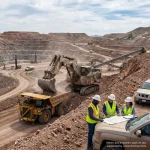
A heavy haul truck maneuvers through a large-scale open-pit copper mine, representing the essential physical infrastructure underpinning the AI boom.


By Charles Pitts
The global technology sector is undergoing a fundamental transformation in how it views its physical foundations. For decades, companies like Amazon, Microsoft, and Google operated under the assumption that the global commodity markets would always provide the copper, lithium, and rare earth elements needed to build their servers and devices.
By 2026, that assumption has officially expired.
The “Hyperscaler Land Grab” marks a new era where Silicon Valley’s titans are no longer just downstream customers; they are becoming mining’s newest financiers. Driven by the insatiable resource demands of AI infrastructure and a desperate need to de-risk supply chains from geopolitical volatility, tech giants are bypassing traditional commodity markets to sign direct offtake agreements and invest in mining technology.
More Read
The AI-Copper Nexus: Why Amazon is Buying Ore
The clearest signal of this shift came when Amazon Web Services (AWS) entered a direct two-year offtake agreement with Rio Tinto. The deal focuses on copper produced through Rio Tinto’s Nuton program: a bioleaching technology that extracts copper from low-grade waste rock with a significantly lower carbon footprint than traditional smelting.

For Amazon, this isn’t just an ESG play. A single large-scale data center requires tens of thousands of metric tons of copper for busbars, transformers, and the massive electrical grids that power GPU clusters. With refined copper supply growth expected to slow to less than 1% in 2026, creating a projected 150,000-ton deficit, the tech giants are realizing that the biggest threat to their “cloud” is actually in the ground.
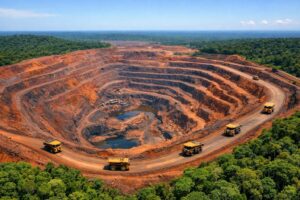
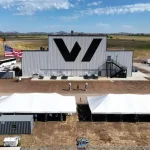
Advanced copper leaching facilities are becoming critical strategic assets for tech companies securing high-purity cathode for data center components.

More Read

Microsoft and the Rise of “Urban Mining”
While Amazon focuses on primary extraction, Microsoft is leading the charge in the circular economy. The company recently invested in Cyclic Materials, a firm specializing in recovering rare earth elements (REEs) from e-waste.
Rare earths are the “vitamins” of the tech industry, essential for high-performance magnets used in everything from disk drives to the cooling fans of AI servers. By investing in “urban mining,” Microsoft is attempting to build a closed-loop supply chain that bypasses the complex and often politically charged REE mining sector. This strategy is essential as 2026 becomes a pivotal year for unseating dominant global processors and building domestic resilience.
AI Exploration: Fixing the 19-Year Lag
The mining industry has a notorious “speed to market” problem. On average, it takes 17 to 19 years for a copper discovery to move from exploration to full production. For a tech company planning its next five years of GPU deployments, this timeline is unacceptable.
To solve this, tech billionaires like Bill Gates and Jeff Bezos have backed KoBold Metals, an exploration company using AI and machine learning to find critical mineral deposits that traditional geology might miss. By applying the “hyperscaler” mindset: massive data sets and rapid iteration: to mineral exploration, these companies claim they can reduce discovery time and costs by 30-40%.
Table: Key Hyperscaler Mining & Mineral Engagements (2024–2026)
| Tech Giant | Target Mineral | Engagement Type | Key Partner/Investment |
|---|---|---|---|
| Amazon | Copper | Direct Offtake | Rio Tinto (Nuton) |
| Microsoft | Rare Earths | Venture Investment | Cyclic Materials |
| Clean Energy/Grid | Strategic PPA | Fervo Energy (Geothermal/Lithium) | |
| Bezos/Gates | Copper/Lithium/Cobalt | Exploration Equity | KoBold Metals |
| Tesla | Lithium | Direct Refining | Tesla Lithium Refinery (Texas) |
The 2026 Outlook: From Financier to Operator-Adjacent
The trend we are seeing in 2026 is the transition of tech companies from “silent partners” to “operator-adjacent” entities. They are no longer content with just providing the software for mines; they are providing the capital and the technology to unlock the ore itself.
The U.S. government has accelerated this movement, with the Department of Energy announcing over $1 billion in 2025 for mining and recycling technology. This public-private alignment is creating a new class of “industrial-tech” conglomerates.

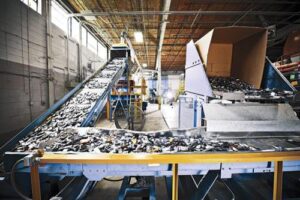
Modern mineral processing plants are increasingly utilizing modular, high-efficiency designs favored by tech-backed mining ventures.
Why it Matters for Mining Professionals and Investors
For traditional mining operators, the arrival of hyperscale capital is a double-edged sword. On one hand, it provides much-needed liquidity and high-valuation exit opportunities for junior miners with high-quality projects. On the other hand, tech companies bring a different set of expectations: they demand higher ESG transparency, lower carbon intensity, and faster project timelines than the industry is traditionally used to.
Investors should watch for direct, long-term offtake agreements as the primary signal of value. When a hyperscaler signs a deal, they aren’t just buying the metal; they are de-risking the project’s financing and ensuring it moves to the front of the development queue.
Geological data analysis is being revolutionized by AI-driven algorithms, a sector heavily funded by Silicon Valley venture capital.

Conclusion: The New Physical Reality
The hyperscaler land grab is the ultimate validation that we have entered the “Physical Century.” Software is no longer enough to win the AI race; you need the hardware, and the hardware needs the atoms. As we look toward the remainder of 2026, expect more tech-mining mergers, more direct investments in processing facilities, and a complete re-ordering of the global mining finance landscape.
The cloud, it turns out, is firmly rooted in the pit.