By Charles Pitts
The Nevada gold mining landscape is undergoing a structural shift as mid-tier producers move to consolidate high-grade underground assets with centralized processing. At the center of this transition is i-80 Gold Corp., which recently released its Q1 2026 operational and financial results. For investors and operators watching the gold price forecast 2026 outlook, i-80’s progress serves as a litmus test for the “hub-and-spoke” model’s viability in the world’s most prolific mining jurisdiction.
Following a massive recapitalization effort in early 2026, the company has declared itself “fully funded” for its Phase 1 and Phase 2 development plans. With a clear trajectory toward 200,000 ounces of annual production by 2028, i-80 Gold is positioning itself as a rare high-grade, Nevada-pure-play producer with independent processing capabilities.
The Recapitalization: Solving the Mining Finance Puzzle
One of the primary hurdles for developers in the 2025–2026 window has been the cost of capital. Despite gold prices hovering in the $4,500 to $5,200 per ounce range throughout the first quarter, the capital-intensive nature of building out refractory processing has sidelined many peers.
More Read
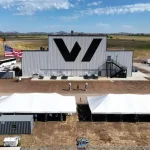
In Q1 2026, i-80 Gold successfully closed approximately US$787.5 million in strategic financing. This package, which brought the company’s total capital raised to over US$1 billion, included:

- A US$250 million NSR royalty with Franco-Nevada, providing an immediate US$225 million injection with an additional US$25 million contingent on milestones at the Mineral Point (Ruby Hill) oxide project.
- A US$250 million gold prepay facility led by National Bank of Canada and Macquarie. This facility includes a US$100 million accordion option, offering significant liquidity as the company ramps up underground development.
This recapitalization effectively removes the “funding risk” overhang that has historically weighed on the stock, allowing management to focus exclusively on execution across its four primary Nevada sites.
The Hub: Lone Tree’s Path to Commissioning
The cornerstone of i-80’s strategy is the Lone Tree facility. Located strategically along the I-80 corridor, Lone Tree is one of only two facilities in Nevada: alongside Nevada Gold Mines: capable of processing refractory ore via an autoclave.
More Read


During the Q1 2026 earnings call, the board confirmed the formal construction decision to refurbish the Lone Tree autoclave. As of March 31, 2026, the company had committed approximately US$31 million in capital toward this refurbishment, with roughly 50% of the total project capex expected to be committed by mid-year.
Early works are already underway, managed by the engineering firm Hatch. These include demolition of outdated equipment, electrical upgrades, and building repairs. Once commissioned in 2028, Lone Tree will act as the “hub” for ore trucked from “spoke” mines across the region, eliminating the need for expensive toll-milling agreements that currently eat into margins.
The Spokes: Granite Creek, Ruby Hill, and McCoy-Cove
i-80 Gold’s Phase 1 production target relies on three high-grade underground refractory deposits. Each “spoke” is currently at a different stage of the mining lifecycle:
1. Granite Creek: The Early Producer
Granite Creek is currently the company’s lead refractory underground source. Throughout Q1 2026, the site continued its ramp-up phase. While the company is currently utilizing third-party processing for this ore, the transition to Lone Tree in 2028 is expected to significantly lower the All-In Sustaining Costs (AISC).
2. Ruby Hill (Archimedes): High-Grade Momentum
The Archimedes underground project at Ruby Hill is arguably the most exciting asset in the current portfolio. In April 2026, i-80 released spectacular assay results from its Upper Archimedes drilling program, including intercepts of 24.6 g/t Au over 23.6 meters.
Construction of the Archimedes underground mine is advancing on schedule, with first production expected in Q4 2026. This timing is critical, as it provides a second source of high-grade feed to support the 2026–2027 production bridge.
3. McCoy-Cove: The High-Grade Anchor
McCoy-Cove remains in the technical de-risking and development stage. With grades historically among the highest in Nevada, McCoy-Cove is designed to be the final major spoke for Phase 1. Development of the exploration decline continues, with the goal of bringing the site into the production sequence as Lone Tree nears full commissioning.
Production Roadmap and Key Metrics
To understand the scale of the transformation, we can look at the projected production growth through the early 2030s. The company is essentially building a “junior” version of Nevada Gold Mines, focusing on high-margin underground ounces.
Table 1: i-80 Gold Production Targets (2026–2032)
| Phase | Expected Timeline | Annual Production Target (oz Au) | Core Assets |
|---|---|---|---|
| Current (2026) | 2026 | ~50,000 | Granite Creek, Ruby Hill (Q4) |
| Phase 1 | 2028 | 150,000 – 200,000 | Lone Tree Hub, Granite Creek, Archimedes, McCoy-Cove |
| Phase 2 | 2029–2030 | 300,000 – 400,000 | Hub expansion, Ruby Hill Oxide (Mineral Point) |
| Phase 3 | 2032+ | ~600,000 | Full platform build-out, potential M&A |
Data Source: i-80 Gold Q1 2026 Corporate Update and CEO Guidance.
Macro Context: Gold Price Forecast 2026 Outlook
The success of i-80’s recapitalization is closely tied to the broader gold market. As of May 2026, the metal has established a strong base in the mid-$4,000s. Institutional analysts from Goldman Sachs and J.P. Morgan have recently revised their year-end gold price forecast 2026 targets to the $5,400–$6,000 range.

Several factors are driving this bullish sentiment:
- Central Bank Accumulation: Emerging market central banks continue to diversify reserves away from the US dollar, maintaining record-level net purchases.
- Geopolitical Premium: Ongoing trade tensions and regional conflicts have cemented gold’s status as the ultimate “safe haven” asset.
- Inflationary Pressures: Despite aggressive rate cycles in 2024 and 2025, sticky inflation has kept real interest rates favorable for non-yielding assets like gold.
For mining stocks to watch in 2026, this macro backdrop provides a massive tailwind. Companies like i-80, which are transitioning from “developer” to “producer” during a price surge, often experience significant re-ratings as they begin to generate substantial free cash flow.
Operational Risks and the Road Ahead
While the Q1 2026 results show a company that has successfully navigated the “Valley of Death” in mining finance, risks remain. The refurbishment of the Lone Tree autoclave is a complex engineering feat. Any delays in commissioning or cost overruns at Lone Tree would force i-80 to rely longer on toll-milling, which would squeeze near-term margins.
Furthermore, the underground ramp-up at Archimedes must meet its Q4 2026 production target to ensure the company hits its full-year guidance. However, with the backing of Franco-Nevada and a strengthened balance sheet, i-80 has more “margin for error” than it did twelve months ago.
Conclusion: A Nevada Mid-Tier in the Making
i-80 Gold is no longer just an exploration story. The Q1 2026 results confirm a company that is systematically building the infrastructure required to become a significant force in Nevada. By securing independent processing and funding its multi-mine strategy, i-80 is de-risking its path to becoming a 200,000-ounce producer.
As the industry grapples with the 2026 lithium forecast oversupply and shifting China critical minerals strategies, the stability and high-grade nature of Nevada gold assets remain a cornerstone for diversified mining portfolios. For investors looking for leverage in a $5,000+ gold environment, i-80’s hub-and-spoke model is one of the most compelling narratives in the sector.
For more in-depth analysis on global mining trends and market intelligence, subscribe to the Skillings Mining Review.