Kazatomprom just locked in the largest uranium supply agreement in its history. The deal with India’s Department of Atomic Energy represents more than 50% of the company’s total booked asset value.

That’s not a minor contract extension. That’s a structural realignment of global nuclear fuel flows.
The world’s largest uranium producer : responsible for roughly 20% of global output : has effectively pre-committed a material portion of its future production to a single state-backed buyer. And the terms? Those remain sealed behind India’s insistence on confidentiality.
A Deal That Requires Shareholder Sign-Off
Under Kazakh law, any transaction exceeding 50% of a company’s asset book value triggers a mandatory shareholder vote. Kazatomprom has called an extraordinary general meeting to secure approval, though no date has been set yet.
The agreement involves direct physical delivery of natural uranium concentrates in the form of U₃O₈. Pricing remains undisclosed. Volume commitments remain undisclosed. Delivery schedules remain undisclosed.
More Read

What’s public is the scale. And the scale changes the conversation.


This isn’t Kazatomprom diversifying its customer base. This is India securing long-term supply in a market that’s already running tight. The strategic calculus isn’t subtle: lock in material now, before the next wave of reactor construction pushes spot prices higher.
More Read
Production Numbers Tell Half the Story
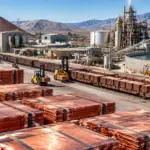
Kazatomprom posted 67.2 million pounds of uranium concentrate production in 2025, up 10% from 2024. The company is targeting another 9% increase in 2026.
That’s aggressive expansion. And it’s still not enough.
Analysts at Teniz Capital characterize the current demand environment as a “second nuclear renaissance.” Their forecast: mine output will cover between 74% and 90% of current demand. The gap gets filled by secondary sources : decommissioned warheads, stockpile drawdowns, enrichment tails reprocessing.
Those sources are finite. And they’re getting smaller.
Meanwhile, India isn’t the only government racing to expand nuclear capacity. The International Energy Agency projects global nuclear generation capacity will need to more than double by 2050 to meet net-zero targets. Every gigawatt of new capacity requires fuel. And primary production hasn’t kept pace with that pipeline.

Kazatomprom’s production increases look impressive in isolation. But when you compare them against the buildout schedules in India, China, France, and the U.S., the arithmetic gets uncomfortable fast.
India’s Nuclear Ambitions Create Structural Demand
India currently operates 8.1 GW of nuclear capacity. The government’s stated target: 100 GW by 2047.
That’s not incremental growth. That’s a 12-fold expansion over two decades.
Building that capacity requires securing fuel supply years in advance. Long-term contracts with producers like Kazatomprom become strategic imperatives, not procurement formalities. India doesn’t want to compete for spot market volumes when it’s racing to bring 20-plus reactors online.
The Kazatomprom deal likely represents a multi-year commitment structured to align with India’s construction timeline. That means a significant portion of Kazatomprom’s incremental production : the 9% increase planned for 2026, and potentially more beyond that : is now effectively off the table for other buyers.

This is how structural deficits get locked in. Supply gets pre-committed to state-backed programs. Spot markets tighten. Utilities without long-term contracts start paying premiums. And prices adjust upward until either demand moderates or new mines come online.
New mines take years. Demand isn’t moderating.
The Global Supply Picture Keeps Tightening
Uranium isn’t like copper or lithium, where speculative demand can pull forward and crash back. Nuclear fuel cycles operate on years-long planning horizons. Utilities order fuel 18 to 24 months before it loads into a reactor. Reactor construction timelines stretch across decades.
What that means: today’s contract commitments shape market dynamics three to five years out.
Kazatomprom’s deal with India removes optionality from the system. Every pound committed to India is a pound not available for utilities in Europe, East Asia, or North America. And those utilities are facing their own demand pressures.
France is restarting its nuclear program after years of underinvestment. The U.S. has multiple advanced reactor projects moving through licensing. China continues to build conventional reactors at a pace that dwarfs the rest of the world combined.
All of them need uranium. And primary production : even with Kazatomprom ramping up : isn’t expanding fast enough to cover the gap.

Teniz Capital’s projection that mine output covers only 74% to 90% of demand isn’t a worst-case scenario. It’s the baseline. The market has been relying on secondary supplies to close the gap for years. But warhead downblending programs have largely wound down. Stockpiles that utilities built up during the post-Fukushima demand slump are depleting.
What’s left is a market where incremental supply gets harder to secure and long-term contracts become strategic assets.
What This Means for Uranium Prices
Kazatomprom’s deal won’t show up in spot price indices immediately. Long-term contracts typically get priced at negotiated rates that don’t reflect real-time market dynamics. But the deal does remove supply from the spot market, and that creates upward pressure over time.
When utilities that don’t have long-term contracts need to secure volumes, they turn to the spot market. If Kazatomprom’s production is already committed to India, those utilities bid against each other for whatever secondary supply is available. Prices respond.
Uranium spot prices have already climbed from their post-Fukushima lows. The rally accelerated in 2024 and 2025 as reactor restarts and new construction projects firmed up demand forecasts. Kazatomprom’s India deal reinforces the structural case for further upside.

This isn’t speculative momentum. This is supply and demand arithmetic playing out in a market where supply takes years to adjust and demand is government-mandated. India’s 100 GW target isn’t a corporate aspiration that can get revised downward if margins compress. It’s national energy policy.
And national energy policy doesn’t negotiate with spot markets.
Shareholder Approval and What Comes Next
Kazatomprom’s extraordinary general meeting will determine whether the deal moves forward. Shareholder approval seems likely : the company wouldn’t have called the meeting without confidence in the outcome : but the vote formalizes a strategic shift.
Kazatomprom is moving away from a model where production gets allocated across a diversified customer base and toward one where large, long-term government contracts anchor the revenue base. That reduces exposure to spot price volatility, but it also reduces optionality if market conditions shift.
For India, the deal secures fuel supply during the most capital-intensive phase of its nuclear buildout. For Kazatomprom, it locks in revenue visibility at a time when uranium markets are tightening.
For everyone else competing for uranium supply, the deal is a reminder that the biggest volumes are getting locked up years before they hit the market. The second nuclear renaissance that analysts keep referencing isn’t just about new reactors. It’s about who controls the fuel supply to run them.
And increasingly, that’s being decided through bilateral deals between producers and state buyers. Not in spot markets. Not at the margins.
The Kazatomprom-India agreement is just the latest example. It won’t be the last.