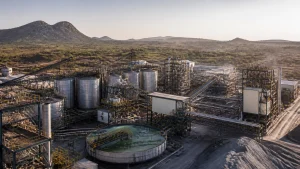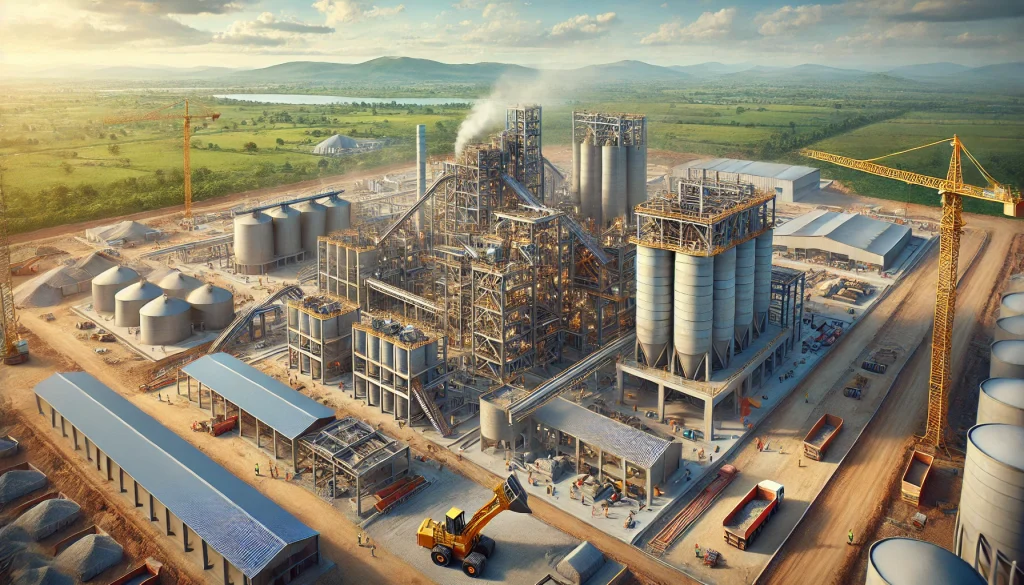
Kenya is taking decisive steps to transform its mining sector, initiating plans to restrict the export of valuable minerals in their raw form. The country is banking on value addition to boost its economy and improve job creation, a strategy exemplified by the ongoing construction of a gold and granite processing plant valued at approximately Sh5.8 billion. This project, expected to be completed by mid-next year, could mark a turning point in Kenya’s mineral policy as the government aims to capture more revenue from its natural resources.

A Strategic Move to Retain Value
Elijah Mwangi, Kenya’s Principal Secretary for Mining, emphasized that this policy shift is driven by the need to increase government revenue. Currently, Kenya, like many African nations, exports minerals such as gold and gemstones in their raw forms, losing significant value that could be realized through local processing. With the completion of the gold and granite processing plants—located in Kakamega and Vihiga Counties, respectively—Kenya aims to export refined and processed minerals, enhancing its position in global markets.
Gold, gemstones, and granite will be the first batch of minerals to undergo value addition at the plants, marking a significant departure from Kenya’s historical export practices. By processing these materials domestically, the government hopes to capture a greater share of the profits that have traditionally been realized overseas.
Africa’s Broader Push for Mineral Value Addition
Kenya is not alone in this endeavor. The country joins a growing list of African nations tightening regulations on the export of unrefined minerals, a move prompted by concerns over revenue loss. For years, African countries have exported raw materials while processing occurred abroad, yielding limited benefits for the continent. According to a report by McKinsey, Africa could earn between USD 200 million and USD 2 billion in additional annual revenue by 2030 and create up to 3.8 million jobs by building a competitive mineral processing and manufacturing sector.
The continent’s mineral wealth is vast, holding 92% of the world’s platinum reserves, 56% of cobalt, 54% of manganese, and 36% of chromium. These materials are critical to the production of green technologies, such as electric vehicle (EV) batteries and wind turbines, making them highly valuable on the global stage.
The Economic Impact of Raw Mineral Export Bans
Several African countries have implemented similar policies to promote local processing. Ghana, Tanzania, and the Democratic Republic of Congo (DRC) have imposed restrictions on the export of raw minerals such as gold, diamonds, and copper, aiming to keep more of the value chain on the continent. This strategy has increased revenues and spurred local job creation in processing industries.

However, the approach has not been without challenges. Benedikt Sobotka, CEO of Eurasian Resources Group (ERG), cautions that bans on raw mineral exports do not automatically translate into economic benefits. Several African nations, after implementing similar policies, were forced to backtrack due to insufficient infrastructure to support large-scale processing. In some cases, the lack of local processing capacity resulted in bottlenecks, reducing overall production.
Kenya faces similar risks. While the construction of the processing plants represents a significant investment, the country will need to address its broader infrastructure deficits to fully capitalize on value addition. Without reliable power, transport networks, and skilled labor, the ability to process minerals at scale may remain constrained.
Kenya’s Gold Processing Hub: A Multibillion-Shilling Deal
The Kakamega gold refinery, a centerpiece of Kenya’s new mining strategy, is a multibillion-shilling project backed by a consortium of private investors. The plant is expected to process gold sourced from across the region, increasing Kenya’s foothold in the global gold market. Kenya is following in the footsteps of African gold powerhouses such as Ghana and Mali, where local refining industries have become integral to national economies.
In 2016, Africa exported US$15.1 billion worth of gold to the UAE alone, a stark increase from the US$1.3 billion exported in 2006. However, a significant portion of these exports bypassed official channels, resulting in lost revenue for African governments. By establishing local refineries, Kenya aims to capture tax revenues that have historically slipped through the cracks.
Challenges and Future Outlook
While Kenya’s new mineral export policy holds promise, its success will depend on the government’s ability to maintain investor confidence and build the necessary infrastructure to support local processing industries. Critics argue that African countries have often been too quick to adopt export bans without considering the broader implications for their economies. In particular, the lack of local processing facilities could limit the immediate impact of such policies, leading to economic disruptions.
Nonetheless, with rising global demand for minerals essential to green technologies, the potential rewards are significant. If Kenya can successfully implement its value addition strategy, it may position itself as a key player in the global mineral supply chain, reducing its dependency on raw material exports and generating new sources of revenue.