By Charles Pitts

TBILISI, Georgia : Krakatoa Resources (ASX: KTA) shares surged 9.1% on Friday following the company's report of high-grade visual antimony mineralization at its Zopkhito project in the Republic of Georgia. The explorer identified intervals containing up to 50% stibnite, the primary ore of antimony, as it nears the completion of a drilling campaign aimed at establishing a maiden JORC-compliant resource.
The discovery comes at a critical juncture for the global antimony market, which has seen prices escalate and supply chains tighten following export restrictions from major producers like China. Antimony is a vital component in military applications, including munitions, infrared sensors, and flame retardants, as well as in the burgeoning sector of liquid metal batteries for grid-scale energy storage.
Visual Mineralization and Drilling Success
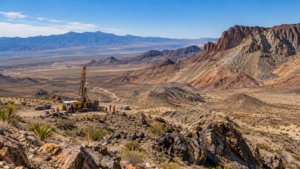
The recent drilling at Zopkhito has focused on confirming the depth and strike extent of known high-grade veins. Krakatoa reported that 12 of 15 surface diamond drill holes and seven of nine underground core holes successfully intercepted visible stibnite mineralization.
The highlight of the recent core inspections was a 2.86-meter interval where geologists estimated a stibnite content of approximately 50%. While visual estimates are not a substitute for laboratory assays, the presence of massive and semi-massive stibnite confirms the continuity of the high-grade system identified in historical Soviet-era records.
More Read



"The visual results from both the surface and underground drilling are exceptionally encouraging," said a spokesperson for Krakatoa. "Seeing 50% stibnite in core suggests that Zopkhito is living up to its reputation as one of the highest-grade antimony systems globally. We are moving as quickly as possible to translate these visual hits into a formal resource."
The Zopkhito project covers 1,779 hectares in a region with a long history of mining. Historical estimates, though not yet JORC-compliant, previously suggested a resource of 225,000 tonnes at 11.6% antimony, containing roughly 26,000 tonnes of metal. For comparison, the global average grade for antimony deposits typically hovers around 1.3%, making Zopkhito a significant outlier in terms of potential profitability and concentration.
More Read

Strategic Context and Market Reaction
The 9.1% jump in Krakatoa’s share price reflects investor appetite for non-Chinese sources of critical minerals. Antimony has recently moved into the spotlight as Western nations scramble to secure domestic and "friend-shored" supplies. This trend is mirrored in other major mining jurisdictions, such as Teck’s Trail expansion in Canada, which is also targeting increased antimony output.
Antimony’s role as a "defense metal" cannot be overstated. It is used to harden lead in bullets and armor-piercing rounds, is essential for the production of night-vision goggles, and acts as a stabilizer in explosives. As geopolitical tensions remain elevated, the strategic stockpiling of antimony has become a priority for defense departments in the United States and Europe.

The Republic of Georgia offers a strategic vantage point for European markets. The country has worked to modernize its mining code and attract Western investment, positioning itself as a reliable alternative to supply chains currently dominated by the BRICS nations.
Metallurgical Progress and Operational Timeline
Beyond the drilling success, Krakatoa has also reported favorable results from initial metallurgical test work. Simple flotation processes have successfully produced an antimony concentrate grading approximately 56% Sb, with recoveries reaching as high as 87%.
"Achieving high recoveries through simple flotation is a major de-risking milestone," noted an independent industry analyst. "It indicates that the stibnite at Zopkhito is clean and amenable to standard processing techniques, which keeps capital expenditure forecasts manageable."
The company is currently awaiting final assay results from the lab in Turkey. These assays will be the foundation for the maiden JORC Resource, which is expected to be released in the coming quarters. Concurrent with the resource estimation, Krakatoa is exploring the gold potential at Zopkhito, as historical data indicates the presence of over 800,000 ounces of gold co-existing with the antimony veins.

Outlook for 2026
As we move through 2026, the antimony market is expected to remain in a structural deficit. Demand from the defense sector is projected to remain high as NATO members continue to replenish munitions stocks. Simultaneously, the energy transition is driving new demand for antimony in high-capacity solar panels and long-duration storage batteries.
Krakatoa Resources’ success at Zopkhito positions the company as a potential key player in this tight market. With drilling continuing and a maiden resource on the horizon, the project is one of the most closely watched critical minerals developments in the Caucasus.
Social Media Snippet:
Krakatoa Resources (ASX: KTA) reports high-grade visual stibnite discovery at the Zopkhito project in Georgia. Share price up 9.1% as drilling reveals intervals of up to 50% antimony mineralisation. A strategic win for Western supply security. #MiningNews #Antimony #CriticalMinerals #ASX #KrakatoaResources