Category: Articles

Lithium’s comeback story is finally getting interesting again. After nearly two brutal years of oversupply hell that sent prices cratering and forced Australian producers to mothball operations left and right, the white gold of the energy transition is staging what looks like a genuine recovery, and the Pilbara is paying attention.
Here’s the thing though: the “quadruple” narrative floating around needs some serious context. Prices have climbed, yes. But we’re talking about a recovery from rock-bottom lows, not some moonshot that’s going to make everyone rich overnight. The numbers tell a more nuanced story, and if you’re making investment decisions based on hype alone, you might want to pump the brakes.
The Price Picture: Recovery, Not Revolution
Let’s get into the weeds on what’s actually happening with lithium pricing right now.
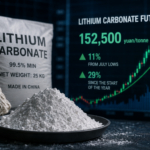
Lithium carbonate was trading around $11,600 per tonne in early December 2025. As of late January 2026, Chinese spot prices have pushed up to roughly 181,500 CNY/T: that’s approximately $25,000 USD depending on your exchange rate. Solid gains? Absolutely. But this is recovery from the 2024 crash, not some unprecedented surge.
Analyst forecasts for 2026 are all over the map. Conservative estimates from outfits like Benchmark Mineral Intelligence peg prices somewhere in the $12,000 to $17,000 per tonne range. The bulls: including Ganfeng Lithium’s chairman: think we could see 150,000 to 200,000 yuan per ton (roughly $21,000 to $28,000 USD) if global demand rises 30-40% this year.


The catch? That bullish scenario requires demand growth that isn’t guaranteed. And if supply increases faster than consumption: which is entirely possible given how much capacity came online during the boom years: prices could actually drift lower through 2026.
So when someone tells you prices have “quadrupled,” ask them: quadrupled from when, exactly? From the absolute bottom of the 2024 crash? Sure, maybe. From 2022 highs? Not even close.
Why Prices Are Climbing Now
The fundamentals have genuinely shifted, and that’s worth paying attention to.
Fastmarkets is projecting the lithium market could flip from a small surplus in 2025 to a deficit of around 1,500 tonnes lithium carbonate equivalent by 2026. That’s not a massive shortfall, but it’s the first structural deficit in years: and markets price in expectations, not just current reality.
Global lithium consumption is forecast to rise 13.5% to 1.48 million metric tonnes LCE in 2026. The usual suspects are driving demand: electric vehicles continue their march toward mainstream adoption, and grid-scale energy storage is quietly becoming one of the biggest demand drivers in the mix. Every utility company scrambling to balance intermittent renewables needs batteries, and those batteries need lithium.
The supply side is where things get complicated. Production from Australia, China, and South America is expected to grow about 10% annually. But here’s the kicker that should worry Australian producers: China is expected to overtake Australia as the world’s largest lithium producer by 2026.
That’s a massive structural shift. Australia has dominated hard-rock lithium production for years, but Chinese domestic production: combined with their stranglehold on processing: is reshaping the competitive landscape in ways that aren’t necessarily bullish for Pilbara operations.
Australian Mines: The Restart Calculus
The math on restarting mothballed Australian operations is getting more attractive, but it’s not a slam dunk.

When lithium prices crashed through 2023 and 2024, junior and mid-tier producers got hammered. Operations went on care and maintenance. Expansion projects got shelved. The survivors hunkered down and waited for better days.
Those better days might be arriving: but “might” is doing a lot of heavy lifting in that sentence.
The economics of restarting a mothballed mine aren’t as simple as flipping a switch when prices hit a certain level. You’ve got rehiring costs, equipment maintenance that’s been deferred, permitting issues that may have changed, community relationships that need rebuilding. And you’ve got to believe prices will stay elevated long enough to justify all that capital expenditure.
Current pricing levels are approaching the threshold where restart conversations become serious. But smart operators are watching the supply-demand balance with extreme caution. Nobody wants to restart at $15,000 lithium only to see another supply glut push prices back to $8,000 by mid-2027.
The China Factor
You can’t talk about lithium in 2026 without talking about China, and frankly, the picture isn’t great for Western producers.
China controls the vast majority of global lithium processing capacity. Even when Australian mines dig the rock out of the ground, it overwhelmingly ships to China for conversion into battery-grade materials. That structural dependency hasn’t changed, despite years of hand-wringing about supply chain security.
And now China is ramping domestic lithium production to the point where they’re about to become the world’s largest producer of raw material too. African projects backed by Chinese capital are coming online. South American operations with Chinese offtake agreements are expanding.

For Australian producers, this creates a competitive squeeze that higher prices alone won’t solve. You’re competing against operations with lower labor costs, shorter supply chains to the processing facilities, and often more favorable regulatory environments.
The strategic imperative for Australian lithium is increasingly clear: you need to move up the value chain, or you’re going to get squeezed out. Integrated mining-to-processing operations, or at minimum long-term partnerships with Western battery manufacturers, are becoming essential rather than optional.
What Smart Money Is Watching
If you’re tracking the lithium rebound for investment purposes: and plenty of readers here are: there are a few signals worth monitoring closely.
EV adoption rates in China and Europe. These two markets drive the bulk of lithium demand growth. Any slowdown in EV sales growth immediately hits lithium demand forecasts.
Grid storage deployment. This is the sleeper demand driver that doesn’t get enough attention. Utility-scale battery installations are growing faster than most analysts predicted, and that’s incremental demand that’s somewhat independent of the EV cycle.
New supply timelines. Several major projects in Argentina, Chile, and Africa are scheduled to come online through 2026-2027. If they hit their timelines, the supply picture loosens. If they face delays: which is common in mining: prices could run harder than forecasts suggest.
Chinese processing capacity utilization. Watch how aggressively Chinese converters are running. High utilization rates signal tight markets; spare capacity signals the opposite.
The Bottom Line
Lithium is recovering. That’s real. Australian mines are absolutely running the numbers on potential restarts, and some will likely pull the trigger if prices hold current levels through Q2.
But the “quadruple” framing obscures as much as it reveals. We’re recovering from a crash, not entering a new supercycle: at least not yet. The structural challenges facing Australian producers haven’t disappeared, and China’s growing dominance of both production and processing is a headwind that higher prices alone won’t overcome.
For more coverage of critical minerals markets and mining sector developments, explore our ongoing coverage at Skillings Mining Review.
The lithium story in 2026 is bullish, cautiously. But caution is the operative word. Anyone who lived through the 2022-2024 boom-bust cycle should know better than to extrapolate current trends into the infinite future. This market humbles people who get too confident.
Stay sharp out there.