By Salini Krishnan
Lundin Mining is increasing its exposure to the Vicuña District on the Chile-Argentina border, deepening its position in one of the most closely watched copper-gold regions in South America as major miners seek long-life assets tied to future metals demand.
The company’s strategy centers on expanding its stake in key projects in the district, where large-scale deposits and growing industry interest have elevated Vicuña’s importance in the global pipeline of undeveloped copper supply. The move underscores Lundin Mining’s view that the district could play a central role in its long-term growth profile.
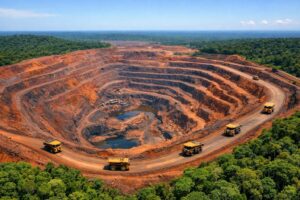
The Vicuña District has emerged as a focal point for operators and investors because of its combination of scale, grade potential and location across two established mining jurisdictions. The region hosts several large copper-gold systems that have drawn sustained investment as producers look for projects capable of supporting multi-decade mine lives.
More Read
For Lundin Mining, increasing its footprint in Vicuña adds exposure to a district that could become increasingly significant as the industry confronts tighter copper market fundamentals, slower discovery rates and rising competition for advanced-stage development assets. Copper remains a core material for power grids, electrification infrastructure and energy transition technologies, while gold can strengthen project economics and financing flexibility.

The company’s push in Vicuña also reflects a broader trend among diversified miners toward district-scale positioning rather than single-asset ownership. That approach can offer operating synergies across exploration, infrastructure, processing and permitting, particularly in high-altitude regions where logistics and capital intensity can shape project outcomes.
Analysts and industry participants have been watching the district closely for signs of how ownership structures, development sequencing and cross-border coordination may evolve. Projects in the area face the typical challenges associated with large Andean developments, including water management, infrastructure requirements, permitting complexity, community engagement and execution risk at altitude.
More Read
Even so, the strategic case for the district remains strong. Large copper-gold projects with expansion potential are increasingly difficult to find, and Vicuña has been viewed as one of the few regions capable of moving the needle for a mid- to large-cap producer’s future production base.
Lundin Mining’s increased exposure does not eliminate those risks, but it does signal confidence that the district’s resource potential can justify sustained capital commitment. For the company, the bet is that Vicuña’s copper-gold endowment can help anchor its next decade of growth in a market where quality development inventory is becoming harder to secure.
For the wider market, the move adds to evidence that strategic competition for future-facing copper assets is intensifying, particularly in jurisdictions and districts that can offer scale, optionality and long-life production potential.