By Sonny Jimerson
KENORA, Ontario : MetalQuest Mining Inc. has significantly increased its exposure to one of Canada’s most high-profile critical mineral districts, announcing the expansion of its Fishhook Polymetallic-Critical Metals Project in Northern Ontario’s Ring of Fire. The company confirmed on April 7, 2026, the staking of 294 additional mining claims, effectively doubling down on its exploration strategy in a region increasingly vital to the global battery metal supply chain.
The new acquisition, known as the Fishhook Extension, covers approximately 5,880 hectares (14,500 acres) of contiguous ground. This expansion brings the total Fishhook project footprint to 1,388 mining claims across approximately 28,000 hectares (69,000 acres). The move solidifies MetalQuest’s position as a major landholder in the James Bay Lowlands, where exploration for nickel, copper, and platinum group metals (PGM) has intensified following renewed interest in domestic critical mineral security.
Strategic Positioning in the Fishtrap Intrusive Complex
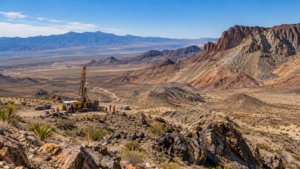
The Fishhook Project is situated on the western margin of the Fishtrap Intrusive Complex, a geological formation considered highly prospective for both volcanogenic massive sulphide (VMS) and nickel-copper-platinum group metal (Ni-Cu-PGM) mineralization. By securing the Fishhook Extension, MetalQuest has locked in additional ground along the strike of known geophysical and geological trends.
More Read

Exploration in the Ring of Fire has historically been focused on the “Eagle’s Nest” deposit, but junior explorers like MetalQuest are now shifting their attention toward secondary intrusive complexes that exhibit similar magnetic and electromagnetic signatures. The Fishhook Extension was specifically targeted to cover extensions of these signatures that suggest the presence of large-scale mineralizing systems.

Geological surveys indicate that the area possesses the necessary “plumbing” for the deposition of critical metals. The presence of mafic-to-ultramafic rocks within the Fishtrap Intrusive Complex provides a favorable environment for Ni-Cu-PGM deposits, while the associated volcanic-intrusive belt is a primary target for VMS-style mineralization, which often contains copper, zinc, and silver.

More Read

Infrastructure and the Kenora Field Operations Hub
As exploration activities ramp up, MetalQuest is addressing the logistical challenges inherent in Northern Ontario’s remote environment. To support the expanded Fishhook and ROF-1 projects, the company hosted an open house on April 11, 2026, at its newly established field operations office and core facility in Kenora, Ontario.
The Kenora facility serves as a strategic nerve center, providing the necessary infrastructure for core logging, sample storage, and crew mobilization. “Establishing a permanent presence in Kenora allows for more efficient management of our field programs and demonstrates our long-term commitment to the region,” a company representative noted during the opening.
The facility is equipped with modern diagnostic tools and provides a central location for geologists to review data from the ongoing spring exploration programs. This operational backbone is essential for managing a land package that now totals over 62,800 hectares when combined with the holdings of partner New Age Metals Inc.
Regional Context: The Ring of Fire in 2026
The expansion comes at a time when Ontario’s critical minerals strategy is moving from policy to execution. The Ring of Fire has long been heralded as a multi-generational mining camp, but development has historically been slowed by infrastructure hurdles. However, the 2026 outlook for the region is increasingly bullish as provincial and federal funding for all-season road access continues to progress.
Market analysts suggest that the scale of MetalQuest’s footprint is a defensive and offensive move. By securing 28,000 hectares at Fishhook, the company is not only increasing its chances of a major discovery but also positioning itself as a primary player in any future regional consolidation.
The Ring of Fire is currently a focal point for modern mining technologies, with operators looking at ways to minimize environmental footprints in the sensitive James Bay Lowlands. MetalQuest’s exploration model utilizes advanced airborne geophysics to narrow down targets before ground-based drilling, reducing the need for extensive initial surface disturbance.

Comparison of Project Assets
The Fishhook Project represents MetalQuest’s second major acquisition in the district. Its first, the ROF-1 Project, consists of 1,034 claims covering approximately 20,800 hectares. The synergy between these two projects allows the company to apply geological learnings from one to the other, streamlining the exploration process.
| Project Component | Claims | Hectares (Approx.) | Primary Targets |
|---|---|---|---|
| Fishhook Original | 1,094 | 22,120 | Ni-Cu-PGM, VMS |
| Fishhook Extension | 294 | 5,880 | Strike Extensions |
| Total Fishhook | 1,388 | 28,000 | Polymetallic |
| ROF-1 Project | 1,034 | 20,800 | Ni-Cu-PGM |
| Joint Venture Total | 3,067 | 62,800 | Regional Scale |
Data source: MetalQuest Mining corporate filings and April 2026 announcements.
Market Implications for Junior Explorers
The consolidation of land in the Ring of Fire reflects a broader trend among junior mining companies to secure large-scale acreage ahead of potential M&A activity. As major producers seek to replenish their copper and nickel pipelines, districts with proven geological potential and improving infrastructure are seeing the most significant investment.
For investors, the MetalQuest expansion signals a high-conviction play on the Fishtrap Intrusive Complex. While the Ring of Fire remains a frontier district, the sheer volume of claims held by the MetalQuest and New Age Metals partnership creates a significant barrier to entry for other juniors.
“The strategy here is scale,” says an industry analyst. “In a district like the Ring of Fire, you want enough ground to cover the entire geological system. MetalQuest now has that at Fishhook.”

Technical Outlook and Next Steps
With the staking of the Fishhook Extension complete, MetalQuest is moving into the next phase of its 2026 exploration program. The company’s technical team is currently integrating the new claim data with existing geophysical surveys to refine drill targets.
Priority will be given to electromagnetic (EM) conductors that align with the newly identified strike extensions. These conductors are often indicative of semi-massive to massive sulphide mineralization. Success in these initial phases would likely trigger a more aggressive diamond drilling campaign later in the year.
As the mining industry transitions toward more data-driven exploration, MetalQuest is utilizing AI-enhanced geophysical modeling to interpret the complex magnetic data of the Fishtrap Complex. This approach aims to differentiate between barren magnetic rocks and those hosting potential economic mineralization.
Environmental and Social Governance (ESG)
Operating in the Ring of Fire requires a sophisticated approach to community relations and environmental stewardship. The region is home to several First Nations communities, and the path to development is contingent on meaningful engagement and partnership. MetalQuest has expressed its commitment to working within the existing regulatory frameworks and engaging with local stakeholders as the Fishhook Project advances.
The establishment of the Kenora office is also seen as a step toward localized economic benefit, providing jobs and utilizing local services for exploration support. For more information on navigating the complexities of the modern mining sector, industry professionals often look to guides on starting and scaling operations in high-stakes jurisdictions.
Conclusion
MetalQuest Mining’s expansion to 28,000 hectares at the Fishhook Project is a clear indicator of the company’s intent to lead the next wave of discovery in the Ring of Fire. By securing the Fishtrap Intrusive Complex’s most prospective strike extensions and establishing a robust logistical base in Kenora, the company has positioned itself to capitalize on the increasing global demand for nickel, copper, and PGMs.
As the 2026 field season progresses, the results from Fishhook will be closely watched by the industry as a bellwether for the remaining untapped potential of Northern Ontario’s critical mineral belts.