By Salini Krishnan

The Nasdaq debut of The Metals Royalty Company (TMCR) in early 2026 represents a pivotal experiment in the evolution of mining finance. By transposing the traditional royalty model: a staple of terrestrial precious metals for decades: to the unproven and controversial deep-sea frontier, the company is attempting to bridge the massive capital gap between theoretical maritime resources and commercial production.
At the heart of the venture is a royalty interest in the Nauru Ocean Resources Inc. (NORI) project, a subsidiary of The Metals Company (TMC). As the international community watches the International Seabed Authority (ISA) finalize the rules for the “blue economy,” TMCR’s listing serves as a high-stakes barometer for investor appetite in the next generation of critical minerals.
The Birth of a Maritime Royalty Leader
The Metals Royalty Company (TMCR) entered the public markets with a clear value proposition: provide investors with exposure to the multi-trillion-dollar polymetallic nodule resource without the direct operational liabilities that have plagued early movers in the space.
In terrestrial mining, the royalty model is cherished for its simplicity. A royalty company provides upfront capital to a developer in exchange for a percentage of future revenue or production. This insulates the royalty holder from capital expenditure overruns, environmental remediation costs, and operational mismanagement, while maintaining exposure to commodity price surges.
More Read
CEO Brian Paes-Braga, a veteran of the resource finance sector, has positioned TMCR as a stabilizing force. By securing royalties on the NORI-D area in the Clarion-Clipperton Zone (CCZ), the company is banking on the eventual extraction of nickel, cobalt, copper, and manganese: minerals essential to the global battery revolution.

De-risking the Abyssal Plain
The fundamental challenge for deep-sea mining has always been the risk-to-reward ratio. While the grades of polymetallic nodules are unprecedented: often three to four times the grade of remaining terrestrial deposits: the technical and regulatory hurdles are equally massive.
Paes-Braga has argued that the royalty structure is the only logical way for many institutional investors to touch the sector. “We are providing a conventional mining finance mechanism for an unconventional environment,” Paes-Braga noted in a recent interview. By focusing on the royalty stream, TMCR attempts to “de-risk” the abyss for shareholders who are wary of the $131 million in existing royalty liabilities and the high burn rates typical of maritime exploration.
More Read


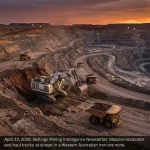
Caption: The intersection of government policy and critical mineral demand is driving new financing models in 2026.
Technical Frontiers and the “Collector” Problem
Despite the financial engineering, the underlying asset: the NORI project: must still function. Deep-sea mining requires deploying advanced collection vehicles four to five kilometers beneath the ocean surface. These vehicles must traverse the seabed, vacuuming up nodules while minimizing the disturbance of sediment plumes.
Current deep-sea mining technology has undergone significant testing, but commercial scale remains the final frontier. The technical risk involves the vertical transport system (VTS), which must pump the collected ore thousands of meters to a surface vessel. Any mechanical failure at these depths can lead to catastrophic delays and environmental risks that could trigger regulatory shutdowns.
TMCR’s thesis relies on the fact that these nodules are essentially “rocks lying on the seafloor,” requiring no drilling or blasting. From a processing perspective, this simplicity is a major draw. However, the logistical complexity of operating a fleet of ships in the middle of the Pacific Ocean remains a significant variable that the royalty model, while shielded from direct cost, still depends upon for revenue generation.

Caption: A futuristic rendering of a deep-sea collection vehicle at work on the abyssal plain.
The ISA Regulatory Knot
The most significant headwind for TMCR and the broader maritime mining industry is the International Seabed Authority (ISA). Headquartered in Jamaica, the ISA is tasked with creating the “Mining Code”: the regulatory framework that will govern how, where, and when companies can begin commercial extraction in international waters.
The 2026 outlook for the ISA is a mix of cautious optimism and intense scrutiny. Member states are balancing the need for critical minerals to meet climate goals against the vocal opposition of environmental groups and some sovereign nations calling for a moratorium.
For TMCR, the timing of the ISA’s final regulations is everything. Without a finalized code, the NORI project cannot transition from exploration to exploitation. This regulatory uncertainty has historically depressed the valuations of deep-sea players. By listing on the Nasdaq, TMCR is signaling a bet that the regulatory “knot” is finally beginning to loosen, or at least becoming predictable enough to value.
Environmental Stewardship vs. Supply Chain Demands
The debate surrounding deep-sea mining is often framed as a zero-sum game: ocean health versus the green energy transition. Critics argue that the abyssal plains are some of the least understood ecosystems on Earth and that mining could cause irreversible damage.
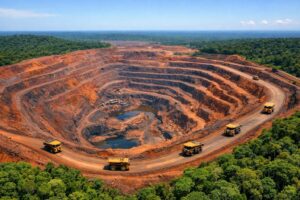
However, proponents, including Paes-Braga and the leadership at TMC, argue that the environmental cost of deep-sea mining is significantly lower than terrestrial alternatives. They point to the lack of tailings, the absence of child labor (a major issue in Congolese cobalt), and the significantly lower carbon footprint of ship-based operations compared to massive open-pit mines in the rainforest.
This ESG (Environmental, Social, and Governance) narrative is central to TMCR’s market positioning. As Western nations look to break the monopoly on critical mineral processing and sourcing, deep-sea nodules represent a massive, non-terrestrial source of supply that does not rely on the resource nationalism seen in other regions.

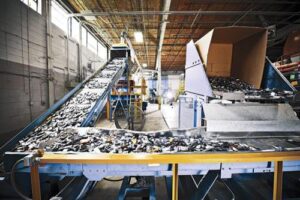
Caption: Advanced processing technology will be required to handle the unique composition of polymetallic nodules.
The 2026 Outlook: Risks and Base Case
As we move through 2026, the performance of TMCR will likely follow a distinct path based on three key drivers:
- ISA Milestones: Any progress toward the finalization of the Mining Code will act as a major catalyst for TMCR’s stock price. Conversely, any extended delay or the adoption of more stringent environmental taxes could dampen the “royalty upside.”
- TMC Operational Success: While TMCR is not an operator, its value is tethered to The Metals Company’s ability to demonstrate that its collector technology can operate continuously for months, not just days.
- Commodity Price Stability: The royalty model shines when nickel and cobalt prices are high. With the per geijer rare earths and other terrestrial projects coming online, the global supply-demand balance will dictate the urgency of maritime production.
The Base Case: TMCR will likely trade as a “leveraged bet” on the deep-sea sector. Because it lacks the operational overhead of a miner, it should theoretically maintain higher margins and a more stable floor than the operators themselves. However, it remains a binary investment: if the industry never moves to production, the royalty is worth zero.
Conclusion
The Metals Royalty Company is a bold attempt to bring institutional rigor to a frontier industry. By using a tried-and-true financing model, Brian Paes-Braga is offering a bridge for investors who believe in the necessity of deep-sea minerals but fear the operational “black hole” of the ocean floor.
Whether the model works depends less on the math of the royalty and more on the engineering of the collectors and the diplomacy of the ISA. For now, the Nasdaq debut of TMCR marks the official arrival of maritime mining in the mainstream financial arena.
Market Snapshot: Critical Minerals (April 12, 2026)
| Commodity | Price (USD/mt) | 24h Change | 2026 YTD |
|---|---|---|---|
| Nickel | $22,450 | +1.2% | +8.5% |
| Cobalt | $34,200 | -0.4% | -2.1% |
| Copper | $9,850 | +0.8% | +11.3% |
| Manganese | $1,920 | +0.2% | +3.4% |
Support independent mining intelligence. Subscribe to the Skillings Mining Review for daily deep-dives and market-moving analysis.