By Charles Pitts

In the high-stakes race to secure non-Chinese rare earth supply chains, the Caldeira Project in Minas Gerais, Brazil, has emerged as a global tier-one contender. Meteoric Resources (ASX: MEI) recently announced a staggering 246% increase in the “Measured” category of its Mineral Resource Estimate (MRE), signaling a definitive shift from exploration success to development-ready certainty.
With the Measured resource now standing at 128 million tonnes (Mt) at an industry-leading grade of 2,815 parts per million (ppm) Total Rare Earth Oxide (TREO), Meteoric has effectively de-risked the geological foundation of what is widely considered the world’s most significant ionic clay deposit outside of China. This update arrives at a critical juncture in July 2026, as western OEMs scramble to decouple from opaque processing networks and seek out “green” rare earth oxides (REO) with high magnet-metal concentrations.
The Magnitude of the 246% Surge
The jump in Measured resources is not merely a quantitative win; it is a qualitative transformation of the project’s economics. By converting 11 Mt to 102 Mt in key deposits like Capão do Mel, Figueira, and Soberbo, Meteoric has provided the engineering team with a high-confidence “starter pit” that will likely underpin the first decade of production.
Across the entire project, the global MRE now stands at a massive 1.6 billion tonnes at 2,317 ppm TREO. For context, most hard-rock rare earth projects struggle with complex beneficiation and lower recovery rates, whereas Caldeira’s ionic clay geology allows for a simplified, low-cost processing route.
More Read

Key Resource Breakdown (2026 Update)
| Category | Tonnage (Mt) | TREO Grade (ppm) | Magnet REO (%) |
|---|---|---|---|
| Measured | 128 | 2,815 | 21.6% |
| Indicated | 642 | 2,240 | 22.1% |
| Inferred | 830 | 2,110 | 22.3% |
| Global Total | 1,600 | 2,317 | ~22.0% |
The “magnet” portion of this basket: specifically Neodymium (Nd), Praseodymium (Pr), Terbium (Tb), and Dysprosium (Dy): is what drives the project’s valuation. These elements are essential for the high-performance permanent magnets used in electric vehicle (EV) motors and offshore wind turbines. The Measured resource alone contains approximately 609 ppm of these critical magnet oxides.


Decoding the Ionic Clay Advantage
To understand why Caldeira is referred to as the “Ionic Clay King,” one must look at the metallurgy. Traditional hard-rock deposits, such as those found in Australia or the United States, require energy-intensive crushing, grinding, and high-temperature cracking to liberate the rare earths.

In contrast, ionic clay deposits: historically dominated by Southern Chinese producers: adsorb the rare earth elements onto the surface of clay minerals. This bond can be broken using a simple salt-leach process (using ammonium sulfate or similar reagents) at ambient temperatures and near-neutral pH.
Why it matters for 2026:
- Lower Opex: No need for massive grinding circuits or sulfuric acid roasting.
- Environmental Footprint: Brazil’s regulatory environment is increasingly favoring “low-impact” mining. Meteoric’s ability to use modular leaching plants and progressive rehabilitation aligns with the ESG mandates of European and North American buyers.
- Speed to Market: The simplified flowsheet reduces the lead time for refinery construction, a critical factor as the global rare earth recovery market expands.
Comparative Analysis: Caldeira vs. Western Peers
Meteoric’s recent resource jump places it in a rare bracket of developers. While MP Materials and Lynas remain the heavyweights of the hard-rock world, Meteoric is positioning itself as the low-cost alternative.
In the ionic clay space, peers like Serra Verde (also in Brazil) have already moved into production, but the scale of Caldeira is unparalleled. At 1.6 billion tonnes, Caldeira’s resource is large enough to supply a significant percentage of global magnet REO demand for over 50 years. The grade of 2,815 ppm in the Measured category is particularly notable, as many Chinese ionic clay operations have seen grades decline below 800 ppm after decades of extraction.

The Road to Production: 2026 Timeline
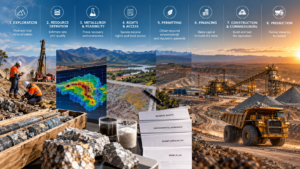
The completion of the 246% Measured resource conversion is the final geological hurdle before the delivery of the Definitive Feasibility Study (DFS). Meteoric’s management has signaled that the DFS will focus on a phased development approach, likely starting with a 5-million-tonne-per-annum (Mtpa) operation.
Strategic Milestones
- Q3 2026: Finalization of the DFS, incorporating the new high-grade Measured resource.
- Q4 2026: Environmental Impact Assessment (EIA) approval and construction permit submission.
- 2027: Expected commencement of plant construction in Minas Gerais.
The project benefits from Brazil’s established mining infrastructure. The Poços de Caldas region, where the project is located, is a historical mining hub with ready access to power, water, and skilled labor. This “brownfield” advantage significantly reduces the capital intensity compared to “greenfield” projects in remote parts of Africa or the Canadian Arctic.

Navigating Geopolitical and Market Risks
Despite the stellar resource update, Meteoric faces the same headwinds as the rest of the critical minerals sector. Rare earth prices have historically been volatile, often influenced by Chinese export quotas and stockpiling strategies.
Furthermore, the “ionic clay” tag comes with its own set of technical challenges. Ensuring consistent recoveries across various clay horizons and managing the water balance in a tropical environment are operational risks that the DFS must address. However, by moving 128 Mt into the Measured category, Meteoric has given its engineers a far more predictable orebody to work with.
For investors and mining professionals, the Caldeira update is a signal that Brazil is ready to challenge China’s monopoly on heavy rare earths. The high concentration of Dysprosium and Terbium: elements usually found in much lower quantities in hard-rock mines: makes Caldeira a strategic asset for any nation looking to build an independent magnet supply chain.
Conclusion: A Tier-One Asset in the Making
The 246% jump in Measured resources at Caldeira is more than a headline number; it is a confirmation of the project’s world-class status. With 128 Mt of high-grade clay now “bankable,” Meteoric Resources has moved from a speculative explorer to a serious industrial player.
As we look toward the remainder of 2026, the focus will shift from the drill rig to the balance sheet. Offtake agreements with major EV manufacturers and the finalization of the DFS will be the next catalysts. In a world desperate for critical minerals, the “Ionic Clay King” of Brazil appears well-positioned to wear the crown.