By Charles Pitts

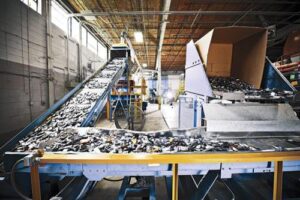
NASARAWA, Nigeria : In a move that signals a fundamental shift in Africa’s critical minerals strategy, Nigeria has officially commissioned the Diamond New Energy lithium processing plant in Nasarawa State. The facility, now the largest of its kind in West Africa, boasts a processing capacity of 6,000 tonnes per day (TPD), representing a major push by the Nigerian government to move downstream in the global battery supply chain.
The inauguration, led by Vice President Kashim Shettima on behalf of President Bola Tinubu, marks a turning point for Nigeria’s solid minerals sector. For decades, the nation’s mineral wealth was largely exported as raw ore, leaving the bulk of economic value to be captured by refineries in Asia and Europe. The new $250 million plant in the Endo community of Nasarawa is designed to end that cycle, processing raw lithium ore into high-value concentrates locally.
“The commissioning of this plant is not just about the numbers; it is about the vision of a Nigeria that processes what it produces,” Vice President Shettima stated during the ceremony. “We are no longer content with being a mere source of raw materials. We are becoming a hub for value addition and industrialization.”
Capacity and Scale: A Regional Heavyweight
The Diamond New Energy facility is expected to process approximately 3 million tonnes of lithium ore annually at full capacity. This scale positions Nigeria as a formidable player in the global critical minerals market, particularly as demand for lithium-ion batteries continues to surge for electric vehicles (EVs) and grid-scale energy storage.
More Read

The project was developed through a partnership between the Nasarawa State Government and Diamond New Energy Company Ltd., a Chinese-backed firm. The involvement of Chinese technical partners: including entities linked to Jiuling and Canmax: brings significant global expertise to the site. Combined, these partners represent a substantial portion of global lithium production, ensuring that the Nasarawa output meets international specifications for battery-grade materials.


Policy Pivot: The End of Raw Exports
The plant’s commissioning is the most visible result to date of the Nigerian Ministry of Solid Minerals Development’s new “Value-Add” policy. Under the leadership of Minister Dele Alake, the federal government has tightened regulations on the export of raw minerals, requiring companies to establish local processing plants as a condition for mining licenses.
More Read
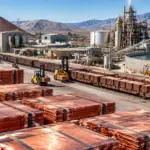
This policy mirrors similar moves made by other resource-rich nations, such as Zimbabwe and Namibia, which have also moved to ban raw lithium exports to capture more of the downstream profit. By forcing local processing, Nigeria aims to insulate its economy from the volatility of raw commodity prices while building a skilled domestic workforce.
“This is the beginning of a new era,” said Minister Dele Alake. “We are sending a clear signal to the world: Nigeria is open for business, but only on terms that benefit our people through jobs, technology transfer, and industrial growth.”
Economic Impact: 1,000 Jobs in Nasarawa
Beyond its geopolitical significance, the plant is a major economic engine for Nasarawa State. Operations have already created over 1,000 direct jobs, with another 2,000 indirect roles expected in logistics, maintenance, and auxiliary services. For the Endo community, the facility represents the most significant industrial investment in the region’s history.
Local infrastructure, including roads and power connectivity, has seen incremental improvements to support the plant’s high-energy requirements. The state government has emphasized that the project includes community development agreements aimed at ensuring environmental safeguards and local hiring quotas are met.

Geopolitical Context: The Global Lithium Race
The rise of Nigeria’s lithium processing capacity comes at a time of intense global competition for critical minerals. While much of the focus has been on the “Lithium Triangle” in South America: fueling recent market speculation in Argentina: Africa is rapidly emerging as the next major frontier for hard-rock lithium extraction.
Nigeria’s entry into the processing space is strategically timed. As Western and Chinese automakers race to secure long-term supply agreements, the ability to source processed concentrates directly from Africa reduces shipping costs and simplifies logistics. However, the heavy involvement of Chinese capital in the Diamond New Energy plant also highlights the continuing dominance of Beijing in the global battery supply chain, a factor that Western policymakers are closely monitoring.
| Metric | Diamond New Energy Plant Details |
|---|---|
| Location | Nasarawa State, Nigeria |
| Daily Capacity | 6,000 Metric Tonnes (Ore) |
| Annual Capacity | ~3 Million Metric Tonnes |
| Investment Value | $250 Million |
| Direct Employment | 1,000+ Workers |
| Primary Output | Lithium Concentrates |
Challenges and 2026 Outlook
Despite the successful commissioning, several hurdles remain for Nigeria’s mining sector. Infrastructure deficits, particularly in reliable power and rail transport, continue to pose operational risks for large-scale industrial projects. Furthermore, while the current plant focuses on primary concentrate, the eventual goal for the Nigerian government is to reach the chemical-grade refining stage, producing lithium carbonate or hydroxide locally.
The 2026 outlook for lithium prices remains a critical factor for the plant’s long-term profitability. While prices stabilized in early 2026 following the volatility of previous years, the global transition to EVs ensures that demand for high-quality spodumene and its derivatives will remain high.
As the Diamond New Energy plant ramps up to full capacity, it serves as a litmus test for Nigeria’s industrial ambitions. If successful, it could pave the way for similar value-added projects in the country’s gold, copper, and iron ore sectors, potentially transforming Nigeria from an oil-dependent economy into a diversified mineral powerhouse.

For investors and industry operators, the message from Nasarawa is clear: the era of “dig and ship” in West Africa is nearing its end. The focus has moved squarely to local processing, and those willing to invest in the region’s downstream infrastructure are likely to find the most favorable regulatory environment.
About the Author: Charles Pitts is the Founder and Chief Automation Officer of SMR OPS 100K and a long-time observer of global mining logistics and industrial automation.