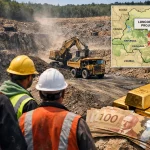
Rio Tinto has locked down majority control of Nemaska Lithium, acquiring a 53.9% stake in the Canadian lithium producer and pushing the Quebec government's ownership down to 46.1%. The move gives the London-based mining giant direct operational command over one of North America's most strategic lithium projects at a moment when battery metals supply chains have become a geopolitical chess match.

This isn't Rio's first bite at Nemaska. The company initially secured a 50% stake through its $6.7 billion acquisition of Arcadium Lithium in March 2025. But 50% doesn't give you the keys. Now it does.
With majority control locked in, Rio Tinto assumes full operational management of Nemaska Lithium. That means Rio's processes, Rio's standards, and Rio's timeline across development, operations, and sales. Quebec's Investissement Québec remains a significant shareholder but no longer drives strategy.

The Bécancour-Whabouchi Complex
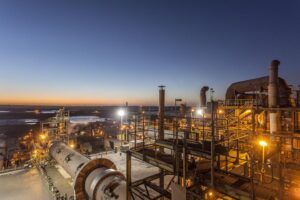
Nemaska Lithium operates two critical pieces of infrastructure: a lithium hydroxide processing plant in Bécancour and a spodumene mine in Quebec's Eeyou Istchee James Bay region. The Bécancour facility represents the downstream value-add, converting raw spodumene concentrate into battery-grade lithium hydroxide. The mine supplies the raw feed.
More Read

Construction at Bécancour reached 60% completion by the end of 2025. Commissioning activities are scheduled to begin this year, with first production targeted for 2028. Once operational, the plant will have an annual capacity of 32,000 tonnes of lithium hydroxide: enough to supply roughly 640,000 electric vehicles annually, assuming standard battery chemistries.

That production timeline matters. The lithium market outlook through 2028 shows a widening supply-demand imbalance as EV adoption accelerates faster than new supply comes online. Rio Tinto is positioning itself to capture margin during that window.
Quebec committed up to $200 million in equity investments to support the project's development. Rio Tinto, meanwhile, plans to inject more than $300 million into its Quebec lithium operations in 2026 alone. That's serious capital deployment, signaling Rio's view that Nemaska isn't a speculative bet but a core pillar of its battery metals strategy.
More Read

Feed Strategy Under Review
Rio Tinto is currently evaluating two potential spodumene sources for the Bécancour plant: its Galaxy mine in Western Australia and Nemaska's Whabouchi mine in Quebec. The company expects to finalize this evaluation by the end of June 2026.
The choice isn't trivial. Sourcing spodumene from Galaxy would require shipping concentrate across the Pacific, adding logistics costs and supply chain complexity. Whabouchi, on the other hand, sits roughly 200 miles north of Bécancour: a regional supply chain that aligns with Quebec's push for vertical integration within provincial borders.

But Whabouchi isn't online yet. The mine remains in advanced development, and Rio will need to balance capital allocation between bringing Whabouchi into production and potentially leveraging its existing Australian operations for near-term feed security. That 180-day evaluation clock is already ticking.
The strategic calculus here isn't subtle. Rio Tinto is building an integrated lithium business on Canadian soil, leveraging Quebec's hydroelectric power grid and mining-friendly regulatory environment. That's a hedge against resource nationalism in other jurisdictions and a play on North American critical minerals sourcing as Western governments prioritize domestic supply chains.
Critical Minerals Race Heats Up
Rio Tinto's move on Nemaska fits a broader pattern: mining majors are aggressively consolidating control over battery metals assets as the energy transition accelerates. BHP's $6.4 billion pursuit of OZ Minerals. Glencore's circling of Teck Resources' copper assets. Now Rio locking down lithium hydroxide capacity in Quebec.
The common thread? Major miners no longer view critical minerals as a cyclical commodity play. They're treating these assets as strategic infrastructure with 20-year demand visibility. That changes bidding behavior. It changes capital discipline. And it puts pressure on smaller developers who suddenly face competition from balance sheets measured in the hundreds of billions.
Quebec's lithium strategy depends on projects like Nemaska delivering production this decade. The province has positioned itself as North America's battery metals hub, leveraging cheap hydropower and proximity to U.S. manufacturing centers. But strategy only works if projects get built. Rio Tinto's operational expertise and capital firepower materially increase the odds that Bécancour reaches commercial production on schedule.

The Investissement Québec Dynamic
Quebec's government retains significant ownership through Investissement Québec, the province's investment arm. That 46.1% stake isn't a passive position. It reflects Quebec's policy of maintaining meaningful ownership in strategic resource projects while partnering with operators who can deliver technical execution.
This model has worked for Quebec in other sectors: aerospace, technology, forestry. In mining, the calculus is similar: retain upside exposure and policy influence while outsourcing operational risk to partners with global-scale expertise. Rio Tinto fits that profile.
The $200 million equity commitment from Quebec signals continued provincial support for Nemaska's development. But make no mistake: Rio Tinto now controls decision-making. That includes production ramp timelines, offtake agreements, and expansion planning.
For context, Quebec's lithium mining sector includes several other advanced projects: Sayona's North American Lithium operation (already producing), Patriot Battery Metals' Corvette project, and Critical Elements' Rose project. Nemaska's scale and integration make it a cornerstone asset, but the province is diversifying its exposure across multiple operators.
2026 Investment Cycle
Rio Tinto's commitment to invest more than $300 million in Quebec lithium operations in 2026 represents a material acceleration in capital deployment. That figure includes continued construction at Bécancour, engineering work on Whabouchi, and likely front-end engineering design (FEED) studies for potential expansion scenarios.
That level of spending places Nemaska among Rio Tinto's top-tier capital projects globally. For comparison, Rio spent roughly $1.2 billion on its Oyu Tolgoi copper mine expansion in Mongolia during 2025. Allocating a quarter of that figure to a single lithium project in Canada underscores how seriously Rio is taking the battery metals pivot.
The investment also creates regional economic multipliers. Quebec's engineering and construction sector will capture a significant portion of that capital spend. And once operational, Bécancour will employ several hundred workers in a province where mining represents a key pillar of economic activity outside Montreal.

Supply Chain Sovereignty
The Nemaska deal fits neatly into North American supply chain policy objectives. The U.S. Inflation Reduction Act and Canada's Critical Minerals Strategy both prioritize domestic sourcing of battery materials. A lithium hydroxide plant in Quebec, supplied by a Quebec mine, processed by a company with strong Western ties: that's the kind of vertical integration policymakers have been pushing for.
China currently dominates lithium refining, controlling roughly 70% of global hydroxide production capacity. Western automakers and battery manufacturers have spent the past three years scrambling to diversify their supply bases. Projects like Nemaska represent critical pieces of that puzzle.
Rio Tinto's takeover also removes a layer of execution risk for potential offtake customers. Smaller developers often face financing hurdles and operational delays. Rio's involvement provides credibility that this project will reach production: and that it will produce to specification.
That credibility has value. EV manufacturers and battery producers need long-term supply contracts, not aspirational timelines. Rio Tinto can offer that certainty in a way that junior developers cannot.
What Happens Next
Rio Tinto's immediate priorities include finalizing the spodumene sourcing strategy by mid-2026 and maintaining construction momentum at Bécancour. The company will also likely begin early offtake discussions with potential customers, though formal sales agreements typically don't get signed until projects approach mechanical completion.
The broader lithium market remains volatile. Prices crashed in 2023 and 2024 as Chinese supply flooded the market and EV demand growth disappointed relative to bullish projections. But structural deficits are projected to emerge in the 2027-2030 window as demand accelerates and new supply struggles to keep pace.
Rio Tinto is playing the long game. The company doesn't need lithium prices to spike next quarter. It needs a position in a market where supply will be structurally tight for a decade. Nemaska delivers that exposure.
For Quebec, Rio's majority stake represents validation of the province's critical minerals strategy. The risk now shifts to execution: bringing Bécancour online on schedule and ensuring Whabouchi can supply consistent, high-grade feed.
And for the broader mining sector, the message is clear: the race for critical minerals control is accelerating. Major miners are consolidating positions while capital is still available and before geopolitical risks multiply further.
Rio Tinto just moved a major piece on the board. The question is who moves next: and what assets remain available for consolidation before the supply chain gets locked down entirely.