By Charles Pitts
The closing of Wheaton Precious Metals’ $4.3 billion silver streaming agreement with BHP on the Antamina mine in Peru marks a definitive shift in how the world’s largest mineral deposits are funded. In an era where traditional commercial banks have grown increasingly cautious due to geopolitical volatility and rigid ESG mandates, streaming companies are effectively operating as the new “central banks” of the mining industry.
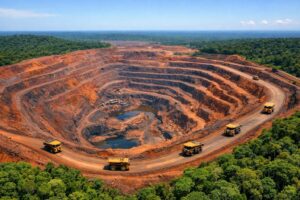
This transaction, which finalized on April 1, 2026, is the largest precious metals streaming deal by upfront consideration in history. It provides BHP with an immediate multi-billion dollar capital injection while securing Wheaton a decades-long production profile in one of the world’s most productive copper-zinc mines. For the broader industry, the Antamina deal serves as a template for mega-project financing, demonstrating how production-contingent capital can replace or supplement traditional debt in an increasingly expensive interest rate environment.
The Mechanics of the $4.3 Billion Deal
The scale of the Wheaton-BHP agreement is unprecedented. Under the terms of the transaction, Wheaton has secured the rights to 33.75% of the payable silver from BHP’s stake in the Antamina mine. This allocation remains in place until 100 million ounces have been delivered, after which the stream drops to 22.5% for the remaining life of the mine.
More Read

Financially, the deal is structured to provide high-margin cash flow regardless of short-term price fluctuations. Wheaton paid an upfront cash consideration of $4.3 billion, funded through a combination of cash on hand and a newly expanded credit facility. In exchange, Wheaton will make ongoing payments to BHP equal to 20% of the spot silver price for every ounce delivered.

With silver prices trading at elevated levels due to surging demand from the solar and electric vehicle (EV) sectors, the economics of this stream are compelling. By fixing the cost at 20% of spot, Wheaton insulates itself from the inflationary pressures that have plagued traditional mining operations, where labor, fuel, and reagent costs have soared.
Why Streamers are the New Central Banks
For much of the 20th century, a project of Antamina’s scale would have relied on a syndicate of commercial banks and institutional bondholders. However, the financing landscape in 2026 is vastly different. Several factors have pushed streamers to the forefront of mega-project finance:
More Read

- Covenant-Free Capital: Traditional debt comes with restrictive financial covenants: debt-to-equity ratios and cash flow coverage requirements: that can trigger defaults during operational hiccups or market downturns. Streaming agreements are production-contingent; if the mine doesn’t produce, the streamer doesn’t get paid. This aligns the financier’s interests with the operator’s survival.
- Technical Sophistication: Unlike bank credit officers, the leadership at firms like Wheaton consists of geologists and mining engineers. They provide “smart capital” that understands the technical risks of deep-pit mining or complex metallurgy, allowing them to underwrite deals that traditional lenders would reject as too risky.
- Speed and Certainty: Equity raises can be dilutive to shareholders, and bank syndication can take 12 to 18 months. The Antamina deal was negotiated and closed in a fraction of that time, providing BHP with capital certainty for its pivot toward copper and potash.
BHP’s Strategic Repositioning
For BHP, the decision to divest a significant portion of its silver production is a tactical move to prioritize “forward-facing” commodities. While silver is essential for the energy transition, Antamina is primarily a copper and zinc asset. By monetizing the silver byproduct today, BHP gains $4.3 billion to accelerate its other Tier-1 projects without taking on new debt or diluting its equity base.
This “capital recycling” strategy is becoming standard among the majors. By selling streams on byproducts (silver, gold, or cobalt), base metal producers can lower their overall cost of capital. This trend was recently mirrored in smaller scales elsewhere, such as the China-Ecuador gold-copper deal, where immediate liquidity was prioritized over long-term byproduct exposure.

Comparison: Streaming vs. Traditional Finance (2026 Outlook)
The following table illustrates why streaming has moved from a niche funding source to a primary pillar of mining finance.
| Feature | Streaming Agreement | Traditional Bank Debt | Equity Financing |
|---|---|---|---|
| Repayment | Metal delivery (Contingent) | Fixed cash payments | None (Dividends) |
| Dilution | Zero | Zero | High |
| Covenants | Minimal/None | Highly Restrictive | None |
| Operational Risk | Shared | Borne by Operator | Shared |
| Cost of Capital | Mid-High (Linked to Metal) | Moderate (Interest) | Highest (Opportunity Cost) |
The “Antamina Effect” on Silver Supply
The Antamina deal also highlights the growing scarcity of high-quality silver assets. Because most silver is produced as a byproduct of copper, lead, and zinc mining, the global silver supply is relatively inelastic. Wheaton’s $4.3 billion bet is essentially a long-term wager that silver prices will remain structurally higher as industrial demand outpaces mine supply.
Analysts at Skillings Mining Intelligence have noted that the “lithium floor strategy” and similar moves in critical minerals are forcing a revaluation of how we price long-term supply. Wheaton’s willingness to lock in a 25-plus year production profile suggests they see a permanent supply deficit in the precious metals market, driven by the energy nexus.

Risk Analysis: Geopolitics and Concentration
While the Antamina stream is a cornerstone asset, it does not come without risks. The transaction concentrates a significant portion of Wheaton’s capital in Peru, a jurisdiction that has seen fluctuating regulatory environments in recent years. However, the involvement of BHP: a counterparty with deep pockets and significant local experience: mitigates much of the operational risk.
Furthermore, the “step-down” structure (reducing the stream percentage after 100 million ounces) protects the long-term economics of the mine for BHP. This ensures that the operator remains incentivized to invest in mine-life extensions and technological upgrades, such as the autonomous haulage systems currently being deployed across the site.
Implications for Junior Miners and Developers
The success of the Wheaton-BHP deal will likely trickle down to the junior and mid-tier sectors. As streamers prove they can handle multi-billion dollar “cheques,” development-stage companies are increasingly looking to streams to fund the “Capex Gap”: the period between discovery and first production where traditional funding is hardest to find.
We are seeing a rise in “hybrid” financing models where a project is funded by 30% stream, 40% debt, and 30% equity. This balanced approach optimizes the weighted average cost of capital (WACC) while keeping the project de-risked for all stakeholders. Projects like Chile’s Dominga and other frontier assets are likely to follow this path as they navigate the complex 2026 regulatory landscape.
A New Era of Industry Liquidity
The Wheaton-BHP Antamina deal is more than just a transaction; it is a signal that the mining industry has found a way to fund its future without the permission of traditional banking institutions. By leveraging the inherent value of byproducts, mining companies are creating their own liquidity.
For investors, this shift offers a more stable way to gain exposure to the mining sector. Streaming companies provide the upside of commodity prices with the security of a diversified, low-risk cost structure. For the mining operators, it provides the freedom to build the massive, complex mines required to meet the world’s growing mineral needs. The silver stream era is no longer a niche: it is the new foundation of mega-project finance.