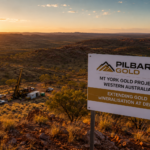
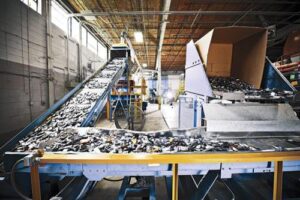
Copper-gold exploration landscape in northern Chile’s Atacama Region.

By Charles Pitts
For mining investors, the latest flow of transactions points to a market increasingly rewarding control of high-quality assets, visible development pathways and disciplined capital allocation. The common thread across this week’s developments is not simply commodity exposure. It is the way companies are using ownership, partnerships and corporate combinations to improve strategic position before the next phase of project spending.
Tintina Mines’ consolidation of the Dos Amigos copper-gold project, Bunker Hill Mining’s all-stock merger with Silver47, OceanaGold’s acquisition of Ausgold and Agnico Eagle’s investment in Radisson Mining Resources each offer a different valuation lens. Separately, reported discussions between Codelco and Pucobre over the Tovaku copper project show how partnerships are becoming central to Chile’s next generation of mine development.
Market snapshot
| Commodity | Direction | Catalyst | Investor read-through |
|---|---|---|---|
| Copper | Constructive bias | Supply growth remains dependent on permitting, project finance and partnerships | Ownership consolidation and strategic alliances may attract a premium for advanced projects |
| Gold | Supported but volatile | Strong producer cash flow and continued M&A activity | Low-cost operators and high-grade development assets remain differentiated |
| Silver | Positive structural interest | Silver’s industrial and critical-minerals profile is supporting US-focused consolidation | Production visibility matters as much as resource size |
| Lithium | Selective recovery | Project-level economics, jurisdiction and development timing remain decisive | Investors are likely to favor assets with credible cost and permitting pathways |
| Nickel | Mixed | Indonesian supply and processing policy continue to shape market expectations | Cost position and exposure to battery-grade production remain key |
| Uranium | Firm long-term outlook | Nuclear fuel demand is linked to reactor restarts, new builds and small modular reactor plans | Contract coverage and project execution are more important than headline spot-market moves |
Current verified prices are not included in this snapshot. For further context, see Skillings’ analysis of the copper market outlook, lithium price drivers and uranium demand from AI and SMR development.
More Read
Tintina takes full control of Dos Amigos
Tintina Mines has completed a strategic partnership transaction that consolidates 100% ownership of the Dos Amigos copper-gold project in Chile’s Atacama Region. The project was previously known as Domeyko Sulfuros.

According to the company’s announcement, the transaction released approximately C$91 million in subscription receipts. About C$55 million is earmarked for project advancement, while approximately C$36 million was used to acquire the remaining minority interest.
Tintina has launched a program of approximately 50,000 metres of drilling, with drilling expected to begin toward the end of September and continue into the first half of next year. About 40,000 metres is intended to support the conversion of inferred resources into the indicated category. The remaining drilling is planned for geotechnical, hydrogeological, waste-characterisation and condemnation work linked to feasibility and permitting.
More Read

The company is targeting an updated resource estimate in the second half of next year and feasibility results in 2028. Those milestones are important because the project’s current economic profile remains capital intensive. A previously disclosed preliminary economic assessment outlined a pre-tax NPV of US$560 million, an after-tax NPV of US$328 million, and a 26-year mine life. The study used copper and gold price assumptions of US$4.30 per pound and US$2,500 per ounce, respectively.
The PEA also estimated initial capital of approximately US$1.28 billion, with deferred and sustaining capital of about US$905 million. The central investment question is therefore not only resource size, but whether the next drilling, metallurgical and engineering stages can reduce execution uncertainty and establish a financeable development case.
Valuation lens: The disclosed PEA NPV is a project-level reference point, not an equity valuation. No current P/NAV was disclosed in the cited transaction reporting. Investors will need to assess the project NPV against Tintina’s updated share count, future financing requirements, ownership structure and the eventual feasibility-study assumptions.
Read the transaction report from MarketScreener.
Bunker Hill and Silver47 build a US silver platform
Bunker Hill Mining has agreed to acquire Silver47 Exploration in an all-stock merger that will create Bunker Hill Silver Corporation. The combined company is expected to remain listed on the TSX.
Under the arrangement, Silver47 shareholders will receive 0.1724 Bunker Hill shares for each Silver47 share. Existing Bunker Hill shareholders are expected to own approximately 57% of the enlarged company, with Silver47 shareholders holding the balance.
The transaction combines Bunker Hill’s mine in Idaho’s Silver Valley with Silver47’s exploration and development portfolio in Alaska, Nevada and New Mexico. Bunker Hill has described the merger as a way to create a US-focused silver and critical-minerals producer with an operating asset capable of supporting wider exploration.
The company expects annualised production of approximately 980,000 silver-equivalent ounces once the Bunker Hill mine begins commercial operations. That figure is targeted to increase to more than 2.5 million ounces in 2027, with a longer-term ambition of exceeding 5 million ounces a year.

Underground mine infrastructure in a US silver-producing district.
The investment case rests on the transition from exploration and construction risk toward operating cash flow. The main risks are equally clear: production ramp-up, financing discipline, permitting, dilution and the ability to convert a geographically dispersed portfolio into a coherent operating platform.
The all-stock structure limits immediate cash funding requirements, but it also makes the transaction dependent on the relative valuation of both companies. The exchange ratio, ownership split and closing conditions will be important indicators of how value is ultimately shared between the two shareholder groups.
Mining Weekly’s report provides the disclosed transaction terms.
OceanaGold expands into Australia through Ausgold
OceanaGold has agreed to acquire Ausgold for approximately A$776 million, or about US$553 million, giving the Canadian-listed producer control of the Katanning Gold Project in Western Australia.
The deal is structured around a scheme of arrangement. Ausgold shareholders are expected to receive 0.03365 OceanaGold shares for each Ausgold share. A capped cash alternative of approximately A$194 million is also available, subject to scale-back.
The offer represented a premium to Ausgold’s pre-announcement trading price and is expected to leave Ausgold shareholders with approximately 6% to 8% of the combined company, depending on the level of cash elections. Completion is targeted for December, subject to shareholder, court and regulatory approvals.
Katanning gives OceanaGold its first acquisition in Australia and adds a development project that the company expects could produce more than 100,000 ounces of gold annually for over 10 years, with first production targeted around 2029.
For OceanaGold shareholders, the transaction shifts the discussion from near-term production and cash flow toward capital allocation and development execution. Katanning’s value will depend on permitting, construction costs, operating assumptions and the price environment at the time of investment approval.
Valuation lens: The headline acquisition value is clear, but the cited reports do not disclose a transaction P/NAV. Investors will likely focus on the implied value of Katanning’s reserves and resources, expected capital intensity, dilution under the share-based structure and the project’s contribution to OceanaGold’s long-term production profile.
Read The Northern Miner’s coverage of the acquisition.
Agnico backs Radisson and the O’Brien project
Agnico Eagle is investing C$57.2 million in Radisson Mining Resources through the purchase of 53.4 million units priced at C$1.07 each. The investment gives Agnico an approximately 10.5% undiluted stake, rising to as much as 14.9% if the associated warrants are exercised.
The financing is intended to support underground exploration and development at the O’Brien gold project in Quebec’s Abitibi region. Radisson plans to develop an access ramp, underground workings, surface infrastructure and water-management facilities while continuing a fully funded 140,000-metre surface drill campaign.

Underground development and exploration work in Quebec’s Abitibi region.
O’Brien produced approximately 587,000 ounces of gold between 1926 and 1957. A 2025 preliminary economic assessment examined an 11-year underground mine with initial capital of approximately C$175 million and toll milling at the nearby Doyon facility. Using a US$3,300-per-ounce gold assumption, the study estimated an after-tax NPV of C$871 million at a 5% discount rate.
The Agnico investment also includes board representation and participation rights in future financings. Certain property transactions, royalties, streams and secured financings are restricted through the end of 2028.
Valuation lens: The transaction provides a market reference for Radisson’s equity, but it should not be treated as a direct P/NAV calculation. The project NPV is based on a specific economic study and price assumption, while the equity investment reflects strategic rights, jurisdictional familiarity and future exploration potential.
Read Canadian Mining Journal’s report on the investment.
Codelco-Pucobre talks put partnership value in focus
Codelco is reportedly close to signing a new agreement with Pucobre for the Tovaku copper project in northern Chile. The reported discussions remain preliminary: a joint venture has not yet been formally constituted, and the parties have not publicly disclosed final financing, construction or contracting terms.
Pucobre is understood to hold an option to acquire 60% of the mining rights, with Codelco retaining 40% if agreed investment thresholds, technical studies and environmental approvals are completed.
Tovaku is an oxide copper project with estimated capital requirements of approximately US$870 million and a planned production rate of around 46,000 tonnes of copper cathodes per year. Start-up has been discussed around 2035, while the project remains under environmental review.

Copper processing and logistics infrastructure in Chile.
The investment significance extends beyond Tovaku. Codelco’s willingness to work more closely with private-sector partners could affect how capital-intensive Chilean projects are advanced, financed and shared. It also creates a potential framework for other developers seeking strategic partners in the country.
Mining.com reported on the Codelco-Pucobre discussions.
Royalty and streaming structures remain a sector theme
The transactions also highlight the broader role of alternative capital in mining. Royalty and streaming agreements can provide developers with upfront funding without issuing the same amount of equity as a conventional financing. For producers, they can support construction or expansion while preserving access to traditional debt markets.
The trade-off is long-term. A royalty typically grants an investor a percentage of revenue or production, while a stream provides the right to purchase part of future metal output at an agreed price. These structures can reduce immediate dilution but also transfer a portion of future project economics to the financing provider.
Investors should therefore examine royalty and streaming obligations in any NAV assessment. Important variables include the percentage of production covered, purchase prices, escalation clauses, term, buyback rights and the impact on mine-life cash flow. No specific royalty or streaming transaction is being reported here; the point is that alternative capital should be assessed as a permanent claim on project economics rather than as cost-free funding.
What investors are watching
- Whether Tintina’s 50,000-metre program converts inferred material into a more financeable resource base.
- The final share count, closing conditions and production ramp-up assumptions in the Bunker Hill-Silver47 merger.
- OceanaGold’s capital plan for Katanning and the effect of the share-based consideration on per-share growth.
- Radisson’s underground access program, exploration results and progress toward a feasibility-level study at O’Brien.
- Whether Codelco and Pucobre formalise the Tovaku partnership and disclose a credible financing and construction framework.
- How royalty, streaming and strategic investment structures affect project-level P/NAV and future shareholder dilution.
This newsletter is for information and analysis only. Forward-looking production, timing and economic figures are company targets or study assumptions and remain subject to financing, permitting, technical performance, commodity prices and other risks.