By Charles Pitts

Since 1912, Skillings Mining Intelligence has served as the definitive record for the global extraction industry. For 114 years, we have documented the transition from the steam-shovels of the Mesabi Range to the autonomous fleets of the Pilbara. Today, as we navigate the mid-point of 2026, the industry is undergoing a pivot as profound as the shift to electrification itself.
The narrative of “volume at all costs” has been superseded by a strategic focus on reliability and jurisdictional security. We are no longer simply in a commodities cycle; we are in a “Scarcity Pivot,” where the value of a mineral is determined less by its spot price and more by its availability within allied supply chains. This week’s intelligence digest examines the emerging scarcity in bismuth and titanium, the intensifying synergy between AI and energy metals, and the activist-driven M&A surge redefining the “Buy vs. Build” era.
Market Snapshot: June 4, 2026
| Commodity | Spot Price (USD) | 24h Change | 2026 YTD | Sentiment |
|---|---|---|---|---|
| Copper (LME) | $10,540 / t | +1.2% | +14.5% | Bullish |
| Uranium (U3O8) | $102.45 / lb | +0.8% | +18.2% | Strong Bullish |
| Gold (LBMA) | $2,415 / oz | -0.3% | +9.1% | Neutral |
| Bismuth (99.99%) | $14.20 / lb | +2.5% | +32.0% | Extreme Scarcity |
| Titanium Sponge | $9.80 / kg | +0.4% | +6.4% | Strategic Accumulation |
The Scarcity Pivot: Bismuth and Titanium
While the 2020s were defined by the lithium and cobalt rush, 2026 has introduced a new front in critical mineral scarcity: Bismuth and Titanium. These metals, once considered secondary or niche, are now central to the Western “Reliability Premium” strategy as global trade blocs continue to fragment.
Bismuth: The Niche Squeeze
Bismuth has emerged as a primary “tail-risk” metal. Because it is almost exclusively produced as a byproduct of lead and copper mining, its supply is inelastic; a spike in demand does not easily trigger new production. In 2026, the market has seen acute tightening as its role in non-toxic soldering and high-performance metallurgical additives expands.
More Read

Australia’s recent classification of bismuth as a high-priority critical mineral highlights the geopolitical anxiety surrounding its supply. With production concentrated in a handful of jurisdictions, Western operators are increasingly looking at tailings-recovery projects to bridge the gap. For investors, bismuth represents a market where minor policy shifts: such as export quotas or regional tariffs: can trigger outsized price volatility.

Titanium: Reliability over Volume
Titanium, essential for the aerospace and defense sectors, is facing a structural shift. The 2026 outlook for titanium is defined by a flight to “allied supply.” While global feedstock capacity remains stable, the processing of high-purity titanium sponge is highly concentrated.
As defense spending remains at historic highs across the OECD, the “reliability premium” has become a tangible fiscal reality. Contracts are being signed with a focus on provenance rather than the lowest bid. We are seeing a marked increase in capital expenditure directed toward Western sponge production facilities and high-grade alloy plants, aimed at decoupling from East Asian supply chains.
More Read


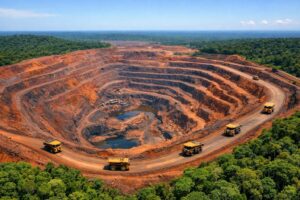
The scale of modern open-pit operations is increasingly dictated by the demand for specialized metallurgical feedstocks.
The AI-Energy Nexus: Copper and Uranium Synergy
The most significant driver of mineral demand in 2026 remains the AI-Energy Nexus. The rapid deployment of massive AI data center campuses has created a symbiotic demand cycle for copper and uranium: metals that provide the “nervous system” and the “heart” of the digital economy.
Copper: The Grid’s Nervous System
Data centers are no longer just buildings; they are GW-scale power consumers. Each new campus requires a massive expansion of grid infrastructure, including substations, transformers, and heavy-duty cabling: all of which are copper-intensive.
The copper market is currently pricing in a decade-long deficit. Unlike the EV-driven demand of the early 2020s, which was sensitive to consumer sentiment, AI-driven grid demand is institutional and non-discretionary. This provides a harder floor for copper prices, even in periods of broader economic cooling.
Uranium: The 24/7 Powerhouse
To power these data centers without compromising decarbonization goals, Big Tech has pivoted toward nuclear energy. This has accelerated the uranium price forecast for 2026, with the spot price firmly establishing a “utility floor” above $100/lb.
We are seeing a trend of “Power-as-a-Service” agreements where technology giants provide the financing for reactor life extensions or the development of Small Modular Reactors (SMRs) in exchange for long-term power purchase agreements (PPAs). This shift has fundamentally changed the risk profile of uranium miners, transforming them from speculative resource plays into essential energy infrastructure partners.

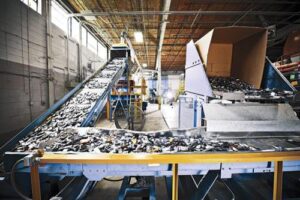
Underground development in high-grade uranium basins is accelerating to meet the baseload power requirements of the global AI expansion.
The M&A Connector: The ‘Buy vs. Build’ Strategy
The difficulty of permitting new “greenfield” mines in 2026 has tilted the corporate strategy toward “Buy vs. Build.” Tier-one assets in safe jurisdictions are now trading at historic premiums, as seen in the recent maneuvers surrounding Cameco and Northern Star Resources.
Cameco and the Cigar Lake Strategic Stake
Cameco’s recent activity in the Athabasca Basin serves as a blueprint for the 2026 M&A environment. By increasing its stake in the Cigar Lake mine, Cameco has prioritized the consolidation of high-grade, proven production over the risks of exploration.
Cigar Lake is arguably the world’s most strategic uranium asset due to its grade and location in a top-tier jurisdiction. In a world where “security of supply” is the primary mandate for utilities, owning a larger share of a known, high-margin producer is seen as a lower-risk path to growth than discovering a new deposit that might take 15 years to reach production.
Northern Star and Elliott Management: The Activist Influence
In the gold and multi-commodity space, activist investors are increasingly taking the lead. The news that Elliott Management has taken a significant stake in Northern Star Resources highlights a new trend: the “Portfolio Reset.”
Activists are pushing for large miners to reconfigure their portfolios to capture the “critical mineral premium.” For companies like Northern Star, which operates in the highly favorable Australian jurisdiction, there is pressure to use their operational cash flow to acquire copper or critical mineral assets. The goal is to evolve from a pure-play gold miner into a diversified “Energy Transition” champion, a move that typically triggers a significant re-rating of the company’s valuation multiples.

The integration of real-time data and activist-driven strategy is reshaping how mining boards approach M&A and capital allocation.
2026 Weekly Outlook: The Road Ahead
As we look toward the remainder of June, we anticipate several key catalysts that will define the market:
- Inventory Squeeze: Monitor LME copper inventories; the current draw-down rate suggests a potential “no-offer” scenario in specific regional hubs by Q3.
- Permitting Reform: Keep a close watch on legislative updates in the US and Canada. Success in shortening the “discovery-to-production” timeline will be the only way to temper the current M&A heat.
- Bismuth Price Discovery: Expect increased volatility as more industrial consumers move to secure long-term offtake agreements outside of the spot market.
- Uranium Contracting: July is typically a heavy month for utility contracting. Watch for the $105 resistance level on the spot price.
The mining industry in 2026 is no longer a peripheral sector; it is the foundation of the energy transition and the digital revolution. At Skillings, we remain committed to providing the market intelligence necessary to navigate this era of strategic scarcity.

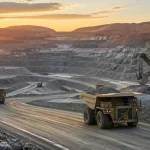
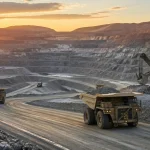
Operational resilience in remote environments remains the hallmark of tier-one mining assets in the 2026 landscape.