By Charles Pitts

The final week of June 2026 has marked a pivotal shift in the global mining news landscape. From the Iron Range of Minnesota to the high-tech corridors of Silicon Valley, the industry is witnessing a rare alignment of geopolitical policy, technological demand, and commodity resilience. As the mid-year mark approaches, the narrative is no longer just about recovery: it is about the rapid repositioning of assets to meet a world hungry for copper and the security of gold.
This week’s Power List highlights the most influential moves in the sector, focusing on the renewed push for domestic production in the United States and the structural demand drivers that are reshaping how investors view mining stocks to watch 2026.
1. The Minnesota Rebound: Antofagasta and the Twin Metals Reversal
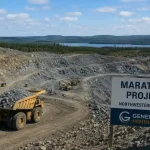
At the top of this week’s list is the dramatic policy shift in northeastern Minnesota. For years, the Duluth Complex: one of the world’s largest undeveloped polymetallic deposits: has been a battleground for environmentalists and industry proponents. However, June 2026 has brought a legislative surge that could finally unlock the Maturi deposit.
The U.S. House of Representatives recently advanced appropriations language that would effectively mandate the federal government to reissue mineral leases to Twin Metals Minnesota, a subsidiary of the Chilean mining giant Antofagasta. This move follows a 2026 congressional rollback of the 20-year mining ban in the Boundary Waters watershed, which previously froze nearly 225,000 acres of federal land.
More Read

For Antofagasta, the stakes are high. Twin Metals is designed as a modern underground mine, utilizing dry-stack tailings and zero-discharge water systems to mitigate environmental impact. With over 4.4 billion tons of ore containing copper, nickel, cobalt, and platinum group metals (PGMs), the project is a cornerstone of the U.S. strategy to secure a domestic supply chain for critical minerals.

However, the “Minnesota Rebound” faces a local hurdle. State regulators at the Department of Natural Resources (DNR) are currently reviewing a 1990 state lease that expires this year. Under the contract’s 36th-year clause, the state has the authority to cancel the lease if no active mining is occurring. The collision between federal pro-mining momentum and state-level regulatory scrutiny makes Minnesota the most critical jurisdiction for mining news this quarter.

More Read

2. The AI-Copper Surge: Data Centers Redefining Demand
The second most significant trend this week is the “Copper-AI Convergence.” While the energy transition has long been the primary driver for copper demand, the expansion of Artificial Intelligence (AI) data centers is now competing for the top spot.
In mid-2026, the intensity of copper usage in high-capacity data centers is becoming clearer to analysts. Large-scale language models and cloud computing infrastructure require substantial copper for power distribution, high-efficiency cooling systems, and server hardware. Analysts estimate that by 2030, AI-related infrastructure could account for up to 15% of global copper demand growth.
This structural shift has placed a premium on companies with high-quality, long-life copper assets. Producers like Antofagasta and First Quantum are being re-evaluated not just as mining companies, but as essential infrastructure providers for the global tech sector. The market is increasingly looking at the “copper-to-data-center” pipeline as a primary metric for valuation.
Table 1: Global Copper Market Snapshot (June 28, 2026)
| Metric | Current Value | 2025 Average | Forecast Q4 2026 |
|---|---|---|---|
| Copper Spot Price (LME) | $4.85 / lb | $3.95 / lb | $5.10 / lb |
| Global Visible Inventories | 185,000 mt | 210,000 mt | 160,000 mt |
| AI-Sector Demand Share | 4.2% | 1.8% | 5.5% |
| Supply Gap Estimate | -350,000 mt | -120,000 mt | -550,000 mt |
3. Gold’s Geopolitical Resilience: Alamos Gold and the Flight to Quality
While copper fuels the technology of the future, gold continues to serve its ancient role as a hedge against geopolitical volatility. In a world characterized by shifting trade blocs and currency fluctuations, Alamos Gold has emerged as a standout performer.
Alamos Gold’s strategic focus on low-risk jurisdictions: primarily Canada and Mexico: has made it a favorite among investors looking for stability. Their Island Gold and Young-Davidson mines in Ontario have continued to deliver consistent production growth and cost-efficiency. In June 2026, the company’s expansion projects are tracking ahead of schedule, reinforcing its reputation as a “safe haven” within the mining sector.
The resilience of gold prices near historical highs has provided a significant cash flow cushion for producers. For those identifying mining stocks to watch 2026, Alamos represents a disciplined approach to capital allocation in an otherwise volatile market. Unlike many of its peers, the company has avoided over-leveraging during price spikes, maintaining one of the strongest balance sheets in the mid-tier producer group.

4. First Quantum: Navigating the Global Stabilization
Fourth on our list is First Quantum Minerals, which has spent the first half of 2026 stabilizing its global operations after a period of intense regulatory uncertainty in Panama. The company’s focus has shifted toward operational excellence at its Zambian assets, specifically the Kansanshi and Sentinel mines.
First Quantum remains a bellwether for the global copper market. Its ability to navigate complex political landscapes is being tested once again as it looks for a “New Deal” in Panama that balances environmental protections with the economic necessity of the Cobre Panamá mine. The market remains cautiously optimistic, with many watching for a breakthrough in negotiations that could see the mine partially restart under a stricter environmental and social governance (ESG) framework.
The company’s resilience is a microcosm of the wider industry: facing headwinds from resource nationalism while being buoyed by the undeniable reality of the global metal deficit.
5. Policy and the 2026 Midterm Cycle: The Regulatory Landscape
Rounding out the Power List is the impact of the upcoming 2026 U.S. midterm elections on mining policy. Both parties have increasingly embraced “resource security” as a non-negotiable pillar of national defense. This bipartisan consensus is accelerating the permitting process for projects deemed critical to the “Energy-AI Nexus.”
We are seeing a trend where regulatory agencies are being pressured to provide faster, more predictable timelines for environmental reviews. This is not just happening in the U.S.; similar moves are being made in the European Union and Australia as the West attempts to de-risk its supply chains from Chinese dominance.
For investors, this means that “permitting risk” is becoming a quantifiable metric that can be modeled with more accuracy. Projects that align with national strategic interests: like the NewRange Copper Nickel project in Minnesota: are seeing increased support from both public and private financing sectors.

Summary: Mining Stocks to Watch 2026
As we head into the second half of the year, the “Smart Money” in the mining sector is focusing on three key themes:
- Jurisdictional Safety: High-quality assets in stable regions (Canada, USA, Australia) are commanding a premium.
- Tech-Commodity Linkage: Companies with high exposure to the copper-AI demand curve.
- ESG Integration: Miners that can prove they are part of the solution to the energy transition, not just a necessary evil.
The Minnesota Rebound is a clear signal that the appetite for domestic production has never been higher. While challenges remain, the combination of technological necessity and geopolitical urgency is creating a “perfect storm” for the mining industry in 2026.