By Charles Pitts

As the global gold market navigates the unprecedented heights of a $3,000 per ounce environment in mid-2026, the traditional hierarchy of the mining sector is undergoing a quiet but profound shift. For decades, the “bigger is better” mantra dominated investor sentiment, with senior producers commanding a premium for their scale and perceived stability. However, the gold price forecast 2026 outlook has revealed a different winner in the race for superior margins: the agile, low-capex mid-tier producer.
Nowhere is this shift more evident than in the resurgence of the Copperstone gold project in Arizona. Recently integrated into the Minera Alamos (TSX.V: MAI) portfolio following the acquisition of Sabre Gold Mines, Copperstone is becoming a case study in how specialized, mid-tier operators are outperforming the seniors by leveraging project economics that favor flexibility over brute force.
The $3,000 Margin Reality: Why Scale is Scaling Back
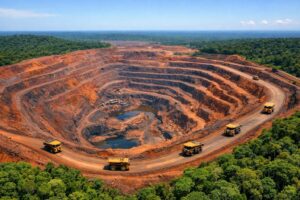
In the current high-gold environment, the primary challenge for senior producers is not the price of the metal, but the cost of sustaining it. Large-scale operations: those producing upwards of one million ounces per year: often struggle with the diminishing returns of aging, low-grade deposits. For these “majors,” the All-In Sustaining Cost (AISC) has been pushed upward by inflationary pressures in diesel, labor, and large-scale fleet maintenance.
Conversely, mid-tier producers like Minera Alamos have spent the last three years refining a “capital-light” model. By focusing on projects with lower initial capital expenditure (capex) and higher grades, these companies are capturing a larger percentage of the gold price surge as pure profit. While a senior producer might see its margins squeezed by a $1,600/oz AISC at a massive open-pit site, the Copperstone project is designed to operate with an AISC in the $1,260–$1,300/oz range.
More Read
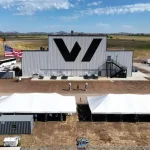

Precision drilling technology allows mid-tier operators to maintain high grades while minimizing waste.

Copperstone: A Blueprint for Capital Efficiency
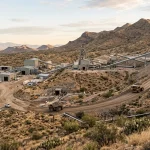
The Copperstone Advantage is rooted in its historical infrastructure. Located in La Paz County, Arizona, the mine is a past producer that already boasts two declines, 4,500 meters of underground development, and an existing processing plant. This “head start” allowed Minera Alamos to target a restart with an initial capex of just approximately US$36 million: a fraction of what it would cost to build a greenfield mine of similar grade today.
“The strategy isn’t just about finding gold; it’s about the speed to cash flow,” notes one industry analyst. “In a $3,000 market, every month you aren’t producing is a massive opportunity cost. The mid-tiers are getting to the ore faster.”
More Read
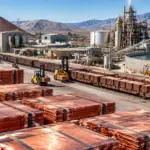
At Copperstone, the transition to mechanized cut-and-fill mining allows for high selectivity. This underground flexibility means the operation can pivot to higher-grade zones quickly if the market shifts, a level of agility that 100,000-ton-per-day open pits simply cannot match. With a 2026 production target of 40,000 ounces per year from Copperstone alone, Minera Alamos is positioning itself within a “three-mine” growth strategy aimed at exceeding 100,000 ounces of annual production across its portfolio.
Comparative Margin Analysis: Seniors vs. Mid-Tiers
To understand why Copperstone-style projects are among the mining stocks to watch 2026, one must look at the margin expansion. Below is a comparison of typical margin profiles in the current $3,000/oz gold environment.
| Metric | Typical Senior Producer (Tier 1) | Mid-Tier (Copperstone Model) |
|---|---|---|
| Annual Production | 1,000,000+ oz | 40,000 – 150,000 oz |
| Average AISC (2026) | $1,550 – $1,750/oz | $1,260 – $1,350/oz |
| Operating Margin ($3k Gold) | $1,250 – $1,450/oz | $1,650 – $1,740/oz |
| Capex per Ounce (New Build) | High ($2,000 – $3,000/oz) | Low ($800 – $1,000/oz) |
| Operational Agility | Low (Years to pivot) | High (Months to pivot) |
This data highlights a critical “margin gap.” The mid-tier producer is not just making more money per ounce; it is doing so with significantly less capital at risk. This is a core pillar of the 2026 royalty and margin revolution that Skillings has been tracking throughout the year.
The Role of Technology and Control
A significant part of the mid-tier success story involves the integration of real-time data and remote monitoring. Unlike the sprawling operations of the past, the “Copperstone-era” mine is lean.

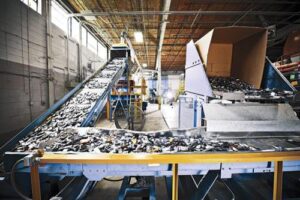
Real-time data integration allows smaller teams to manage complex underground logistics with high efficiency.
By utilizing condition-based maintenance and AI, mid-tier operators can predict equipment failures before they happen, keeping the AISC low even as labor and parts costs rise globally. For a project like Copperstone, where the processing plant and tailings facilities are already in place, these marginal gains in efficiency translate directly into the bottom line.
Geopolitical Stability: The Arizona Factor
In 2026, the “where” is as important as the “how much.” With geopolitical tensions affecting mining operations in West Africa and parts of South America, the appeal of a high-grade project in Arizona cannot be overstated. Arizona remains one of the premier mining jurisdictions globally, providing the regulatory certainty that investors crave in a volatile market.
The acquisition of Sabre Gold by Minera Alamos was as much a jurisdictional play as it was a resource play. By moving into the U.S., Minera has diversified its risk while gaining access to a project with over one million ounces of near-mine resource potential. This provides a clear path for mine-life extension beyond the initial 5.7-year plan outlined in the 2025 PEA updates.
2026 Outlook: Why Investors are Shifting
As we look toward the remainder of the year, the gold price forecast 2026 outlook remains robust, supported by central bank buying and a continued hedge against currency debasement. In this environment, the “Copperstone Advantage” becomes a benchmark for the sector.
Investors are moving away from companies that are “buying growth” through expensive M&A and toward those that are “building value” through operational excellence and low-capex restarts. Minera Alamos, with its focus on rapid payback (estimated at just 1.3 years at $2,000/oz gold, and even faster at $3,000), represents the new vanguard of gold production.

Existing infrastructure at Copperstone minimizes the environmental footprint and the capital required for a restart.
Conclusion: The New Margin Kings
The 2026 margin race is not being won by the companies with the most gold in the ground, but by those who can extract it most efficiently. The Copperstone project, under the stewardship of Minera Alamos, exemplifies the mid-tier’s ability to navigate high-gold environments with lower risk and higher relative returns.
For operators and investors alike, the lesson of 2026 is clear: in a world of $3,000 gold, capital efficiency is the ultimate competitive advantage. As the industry continues to evolve, expect the “Copperstone model” of low-capex, high-agility production to become the standard for the next generation of gold miners.
For more in-depth analysis on the gold sector and critical minerals, explore our latest market reports and stay ahead of the curve with Skillings Mining Intelligence.