By Charles Pitts

SASKATOON, Saskatchewan : In a move that further consolidates control over the world’s highest-grade uranium mine, Cameco Corporation and Orano Canada Inc. have reached an agreement to acquire the remaining minority interest in the Cigar Lake Joint Venture (CLJV) from TEPCO Resources Inc. for approximately C$115 million.
The transaction, announced this week, marks the complete exit of Tokyo Electric Power Company (TEPCO) from the northern Saskatchewan operation. Upon the deal’s expected close in the third quarter of 2026, the joint venture will be stripped down to just two partners, streamlining the governance and output allocation of a mine that accounts for a significant portion of global primary uranium production.
Consolidation in the Athabasca Basin
The acquisition of TEPCO’s 5% participating interest will be split proportionally between the two existing majors. Cameco’s ownership will increase to 57.418%, while Orano Canada will hold 42.582%. This consolidation follows a similar maneuver in 2022 when the partners absorbed the 7.875% stake previously held by Idemitsu Canada.
Industry analysts view this as a strategic play for supply security at a time when the uranium market is experiencing a structural reset. By eliminating minority partners, Cameco and Orano are positioning themselves to better manage the long-term production profile and marketing of Cigar Lake’s high-grade ore.
More Read

“Cigar Lake is a Tier-one asset in every sense of the word,” noted a Saskatoon-based resource analyst. “For Cameco and Orano, paying C$115 million to lock up the final 5% is less about immediate cash flow and more about total control over the delivery schedules of the highest-grade uranium on the planet.”


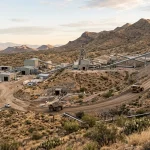
The Cigar Lake complex operates in the remote Athabasca Basin, requiring extensive infrastructure to manage extreme weather and geological conditions.
Asset Profile: The High-Grade Standard
Located approximately 660 kilometers north of Saskatoon, Cigar Lake is recognized globally for its extraordinary ore grades. While typical uranium mines operate with grades below 1%, Cigar Lake has historically boasted average grades of 14% to 15% U3O8.
More Read

However, the mine’s geological complexity is as legendary as its grade. The ore body is situated at the unconformity between the Athabasca Sandstone and the underlying basement rock, resting in a water-saturated environment. Extraction requires the “jet boring” mining method, which involves freezing the surrounding ground to prevent flooding before high-pressure water jets carve out the ore.
This technical difficulty makes operational control paramount. As the operator, Cameco has navigated several technical challenges over the mine’s lifespan, including water inflows that delayed initial production for years. The recent move to simplify the joint venture structure is expected to reduce administrative friction as the partners look toward the next phase of the mine’s life.
The Macro Driver: Supply Security and the Energy Nexus
The timing of the TEPCO exit coincides with a broader tightening of the uranium market. As global utilities seek to diversify away from Russian-enriched products and Kazakh supply remains subject to logistical and geopolitical bottlenecks, the Athabasca Basin has re-emerged as the premier “safe-haven” jurisdiction for nuclear fuel.
Furthermore, the rising demand for reliable, carbon-free baseload power: driven largely by the AI energy nexus and the massive power requirements of data centers: has fundamentally altered the valuation of producing mines. Uranium is no longer viewed merely as a commodity but as a strategic pillar of national energy security. This sentiment was echoed in recent policy shifts, such as Peru’s strategic pivot toward uranium as a national pillar.

Technicians use advanced drill jumbos and ground-freezing technology to access the water-saturated ore bodies unique to the Athabasca Basin.
Financial Implications and Valuation
The C$115 million price tag for a 5% stake provides a clear valuation benchmark for high-grade uranium production. At the current production rate of approximately 18 million pounds per year, a 5% stake represents roughly 900,000 pounds of annual U3O8.
For investors, the deal highlights the premium placed on “certainty of supply.” While exploration-stage projects in the basin are seeing increased interest, producing assets like Cigar Lake and McArthur River are the only ones capable of meeting the immediate needs of western utilities.
| Partner | Pre-Transaction Ownership (%) | Post-Transaction Ownership (%) | Change (Percentage Points) |
|---|---|---|---|
| Cameco Corporation | 54.547% | 57.418% | +2.871 |
| Orano Canada Inc. | 40.453% | 42.582% | +2.129 |
| TEPCO Resources Inc. | 5.000% | 0.000% | -5.000 |
| Total | 100% | 100% | 0 |
Table: Post-transaction ownership structure of the Cigar Lake Joint Venture.
Operational Outlook for 2026
As the deal moves toward its expected Q3 2026 closing, operations at the mine continue at full capacity. The ore from Cigar Lake is transported to Orano’s McClean Lake mill for processing. This integrated production chain: where one partner operates the mine and the other operates the mill: underscores the symbiotic relationship between Cameco and Orano.
The exit of TEPCO, a major Japanese utility, is also a telling indicator of the changing landscape for nuclear fuel procurement. While TEPCO remains a consumer, its shift away from direct asset ownership suggests a preference for long-term supply contracts over the operational and capital risks of minority joint-venture participation.

Consolidating ownership allows for more streamlined real-time data integration and operational decision-making between the two remaining partners.
Conclusion: A Two-Player Game
The consolidation of Cigar Lake into a two-partner venture represents the final chapter in the asset’s ownership evolution. For the mining industry, it signals that the era of fragmented minority interests in Tier-one assets is largely coming to an end. In an environment defined by high capital costs and technical complexity, control is the ultimate currency.
For Cameco and Orano, the deal solidifies their dominance in the Athabasca Basin. As they look toward the late 2020s, the ability to control nearly 20 million pounds of high-grade annual production from a single site provides a formidable competitive advantage in a world increasingly hungry for nuclear energy.