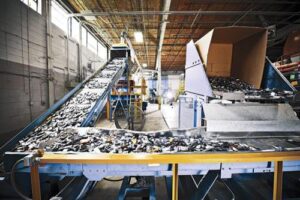
The uranium market enters mid-2026 in a state of high-tension equilibrium. For over a decade, the industry relied on a “buffer” of secondary supplies and utility stockpiles to mask a growing primary production deficit. That buffer has now evaporated. As we move through the 2026 fiscal year, the narrative has shifted from temporary supply disruptions to a permanent, structural scarcity that is redefining the global energy landscape.

With primary reactor demand projected at roughly 204 million pounds of U₃O₈ and world mine production struggling to clear 173 million pounds, the market is facing a staggering 30-million-pound deficit. This gap is no longer an abstract projection; it is a lived reality for utilities scrambling to secure long-term contracts in a market where the “low-cost” pounds of the 2010s are a distant memory.
The Kazatomprom bottleneck and production discipline
The concentration of uranium supply remains one of the most significant risks for global energy security. In 2026, two players: Kazatomprom and Cameco: continue to control approximately 86% of the output from major listed producers. Kazatomprom, the world’s largest producer, has maintained a stance of “supply discipline,” prioritizing value over volume.
The Kazakh state-owned giant is currently grappling with logistical hurdles, including the scarcity of sulphuric acid: a critical component for its in-situ recovery (ISR) mining operations. These operational constraints, combined with a strategic shift toward bilateral long-term arrangements with major consumers like India, have significantly reduced the volume of material reaching the spot market.
Similarly, Cameco has signaled “pipeline problems into the 2030s,” indicating that even the industry’s blue-chip producers are finding it difficult to ramp up production at the speed required by the nuclear renaissance. This lack of a rapid supply response has left the market vulnerable to price shocks, as any further disruption in Kazakhstan or Canada immediately amplifies the global deficit.
More Read

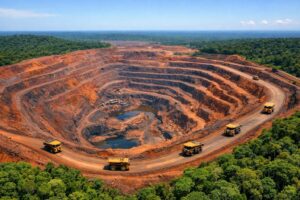
Modern open-pit operations are under pressure to increase throughput as primary deficits widen.

The drying up of secondary supply
Historically, the uranium market was balanced by “secondary supply”: a mix of government stockpiles, decommissioned nuclear weapons material (the Megatons to Megawatts program), and underfeeding at enrichment plants. By 2026, these sources have largely “dried up.”
Underfeeding, in particular, has reversed. For years, enrichers had excess capacity and could “underfeed” their plants, effectively creating “synthetic” uranium supply. With the global move away from Russian enrichment services and the resulting strain on Western capacity, the industry has transitioned to “overfeeding.” This shift means enrichers are now consuming more natural uranium to produce the same amount of enriched fuel, turning a former supply source into a source of additional demand.
More Read

Furthermore, utility inventories: once seen as a safety net: have been drawn down to critical levels. Utilities have not contracted at replacement rates since 2012, meaning they have been consuming fuel faster than they have been buying it. In 2026, the realization that these stocks cannot be easily replenished is driving a shift in buyer behavior.
Contracting cycles and utility anxiety
The result of this structural scarcity is a significant move in the term contract price. While spot prices remain volatile, the long-term contract price has reached sustained levels of $90 to $100 per pound: the highest since 2008. Utilities are no longer price-shopping; they are security-shopping.
The “term market” is where the real action is happening in 2026. Producers are refusing to sign large-volume contracts at low prices, insisting on floor prices that justify the massive capital expenditure required for greenfield development. Recent restarts, such as Uranium Energy Corp’s Burke Hollow project and Energy Fuels’ expansion at White Mesa, are helping at the margins, but they cannot replace the massive scale of traditional Tier-1 mines.

Operational efficiency is paramount as producers manage tight margins and supply constraints.
New supply: The 2028-2030 horizon
While the 2026 outlook is characterized by scarcity, the industry is not standing still. A “second wave” of projects is currently in development, but most are not expected to reach commercial production until the late 2020s or early 2030s.
Developers like NexGen, Deep Yellow, and Bannerman are advancing world-class assets, but the lead times for permitting, financing, and construction remain long. Analysts suggest that to meet the 250–300 million pounds of annual demand expected by the mid-2030s, the market may require sustained prices in the $125–$150 range to incentivize this next generation of mines.
In the near term, 2026 remains a “gap year” where demand growth: driven by the AI data center boom and global net-zero targets: outpaces the mining industry’s ability to respond.
Key Data: 2026 Uranium Market Snapshot
| Metric | 2026 Projection (Est.) | Trend |
|---|---|---|
| Primary Reactor Demand | 204 Million lbs U₃O₈ | ? Increasing |
| Primary Mine Production | 173 Million lbs U₃O₈ | ↔️ Stagnant |
| Global Supply Deficit | 31 Million lbs U₃O₈ | ⚠️ Widening |
| Term Contract Price | $92 – $98 / lb | ? Firming |
| Secondary Supply Contribution | < 10% of total demand | ? Declining |
Conclusion: A market re-rated
The uranium bull market in 2026 is no longer driven by speculative fervor but by hard industrial math. The structural scarcity facing the sector is the result of a decade of underinvestment, the depletion of secondary sources, and a geopolitical realignment of the nuclear fuel cycle.
For operators and investors, the message is clear: the era of “cheap and easy” uranium is over. As we look toward the remainder of 2026 and into 2027, the focus will remain on whether the industry can bridge the 30-million-pound gap before utility stockpiles reach the breaking point.

The uranium sector faces a long road to rebalancing as new projects remain years away from full production.