By Charles Pitts

FUJIAN, China : Zijin Mining Group Co. is on track to deliver record financial results for the 2026 fiscal year, fueled by a decade-long aggressive overseas acquisition strategy that is now reaching full operational maturity. As of late March 2026, the Chinese gold and copper giant has signaled that its diversified portfolio: buttressed by the massive $4 billion acquisition of Allied Gold and a significant footprint in Africa and Central Asia: is generating margins that outpace traditional Western Tier-1 miners.
The company’s performance marks a pivotal moment in the global mining landscape. While major Western producers grapple with aging assets and declining ore grades, Zijin has successfully transitioned from a domestic operator into a global powerhouse capable of commissioning large-scale projects in jurisdictions often avoided by its North American and European counterparts.
The $4 Billion Catalyst and the Africa-Asia Axis
The cornerstone of Zijin’s 2026 outlook is the full integration of assets acquired through its $4 billion deal with Allied Gold. This move, combined with the recent ramp-up of the Akyem Gold Mine in Ghana and the Raygorodok Gold Mine in Kazakhstan, has significantly boosted the company’s attributable production.
According to internal projections and recent market filings, Zijin is targeting mined gold production of 105 tonnes for 2026, a 12% increase year-over-year. This growth is not merely a matter of volume; it is a result of strategic timing. By securing these assets during the 2023-2024 period of price volatility, Zijin is now reaping the rewards of gold prices that have sustained record levels through the first quarter of 2026.
More Read


In Africa, the company’s expansion has been particularly surgical. By leveraging its expertise in low-cost infrastructure development, Zijin has managed to lower the All-In Sustaining Costs (AISC) at several former “distressed” sites. This ability to operate efficiently in complex environments has allowed Zijin to maintain a competitive edge over Western majors who face increasing pressure from ESG-focused institutional investors to divest from high-risk regions.
Contrasting the Global Giants
The divergence between Zijin and Western “Big Mining” has never been more pronounced. While companies like Newmont and Barrick Gold have focused on “value over volume”: often resulting in stagnant or slightly declining output: Zijin has prioritized rapid scale.
More Read

Market analysts point to the current copper deficit of 2026 as a primary driver of this valuation gap. While Western firms struggle with refining bottlenecks and permitting delays in the Americas, Zijin’s copper production is expected to hit 1.2 million tonnes this year, a 10% jump from 2025.
“Zijin is playing a different game,” says one Hong Kong-based mining analyst. “They are not just looking at the next quarter; they are looking at the next decade of resource scarcity. Their M&A strategy, which many thought was too risky five years ago, is now the envy of the industry as they control the very resources the world is scrambling to secure.”
This strategic positioning is further evidenced by recent moves in the nickel and lithium sectors. As Western firms re-evaluate their portfolios: exemplified by Anglo American’s sale of its nickel business to MMG: Zijin has doubled down, moving three major lithium projects into full-scale production within the last 18 months.
Operational Efficiency and the “Zijin Model”
A key component of the 2026 profit surge is the “Zijin Model” of operational efficiency. This involves a highly verticalized supply chain and the deployment of proprietary processing technologies that allow for the economic extraction of lower-grade ores.

Figure 1: Comparison of Gold Production Growth: Zijin Mining vs. Top 3 Western Peers (2022-2026 Projective)
The company’s ability to bring projects from discovery or acquisition to production in record time is a significant competitive advantage. In the lithium sector, Zijin’s Lakkor Tso Salar in Xizang and the Tres Quebradas Salar in Argentina have moved into the production phase with surprising speed, contributing to an expected 120,000 tonnes of lithium carbonate equivalent (LCE) for 2026.
This rapid expansion into critical minerals is part of a broader global battery revolution that Zijin is positioning itself to lead. By controlling both the gold “cash cow” and the future-facing “green” metals, the company is insulating its balance sheet against localized commodity price swings.
Strategic Overseas Acquisitions: The 2028 Goal
Zijin’s leadership, spearheaded by Chairman Chen Jinghe, has stated an ambitious goal: to rank among the world’s top three producers of copper and gold by 2028. The 2026 financial performance suggests they may hit those targets ahead of schedule.
The company’s M&A strategy has matured from opportunistic buying to strategic cluster development. For instance, in South America, Zijin has built a network of assets that share logistical and technical resources. This is similar to the cluster strategy seen in the Vicuña District, where major players are consolidating efforts to maximize regional resource development.

However, the road to 2028 is not without risks. Geopolitical tensions remain the primary headwind. As a Chinese state-linked entity, Zijin faces increasing scrutiny in North America and Europe. This has led to a focus on the “Global South,” where Zijin often provides more flexible financing and infrastructure packages than its Western competitors.
Margins in a High-Price Environment
With gold prices hovering near historic highs in March 2026, Zijin’s margins have expanded to record levels. Unlike some of its peers that locked in high-cost hedges, Zijin has maintained significant exposure to the spot market, allowing it to capture the full upside of the bullion rally.
The company’s subsidiary, Zijin Gold International, which recently listed on the Hong Kong Stock Exchange, reported a net profit surge of 233% in its most recent filing. This spin-off has unlocked significant shareholder value and provided a fresh vehicle for international capital to flow into Zijin’s overseas projects.
“The 2026 figures will likely show that Zijin has the lowest cost of capital among its global peers,” notes a report from SMR OPS 100K. “When you combine that with their aggressive extraction rates and the maturity of their 2023-2024 acquisitions, you have a financial engine that is very difficult to stop.”
The Industrial Imagery of Success
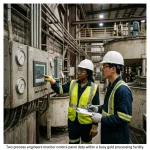
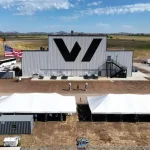
The visual of Zijin’s headquarters in Fujian: a modern corporate complex adorned with the Chinese flag and surrounded by high-tech industrial monitors: symbolizes the new era of mining. It is an era where the center of gravity has shifted East.

To maintain this momentum, Zijin is investing heavily in R&D, specifically in autonomous mining and small modular reactors (SMRs) to power remote sites. This focus on the “mine of the future” aligns with broader industry trends where SMRs are becoming the mining industry’s next power play.
Summary of Zijin Mining 2026 Projections
| Commodity | 2026 Target Production | Year-Over-Year Change |
|---|---|---|
| Mined Gold | 105 Tonnes | +12% |
| Mined Copper | 1.2 Million Tonnes | +10% |
| Lithium (LCE) | 120,000 Tonnes | New Baseline |
| Mined Silver | 520 Tonnes | +8% |
Looking Ahead: Key Risks and Opportunities
Despite the bullish outlook, Zijin must navigate a tightening regulatory environment. Resource nationalism in Africa and South America remains a persistent threat. While Zijin has proven adept at negotiating these waters, the sheer scale of their current operations makes them a visible target for tax adjustments and royalty hikes.
Furthermore, as the company enters the “Top 3” globally, it will face the same “curse of size” that has plagued companies like Rio Tinto and BHP: where finding new deposits large enough to move the needle becomes increasingly difficult. This may force Zijin into even larger, more complex M&A deals in the back half of the decade.
For now, the story of 2026 belongs to Zijin. By executing a strategy of aggressive growth when others were retreating, the company has positioned itself as the dominant force in the 2026 mining cycle. As their M&A strategy matures, the profits are not just a one-off record: they are the new baseline for a company that shows no signs of slowing down.