As of April 2026, the promise of the "fully lights-out" mine remains more of a long-term strategic goal than a daily operational reality for the vast majority of the global mining industry. While the narrative surrounding Autonomous Haulage has been dominated by visions of seamless, remote-controlled pits, the current year has brought a necessary "reality check" for operators.

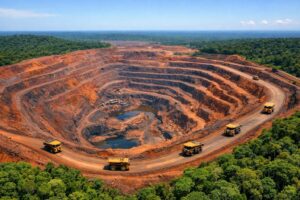
The transition to Autonomous Trucks has moved past the initial excitement phase and into the grueling work of integrating these systems into complex, brownfield environments. In 2026, the primary hurdle is not whether a truck can drive itself from point A to point B, but how it behaves when point B is shared with human-operated light vehicles, unpredictable weather patterns, and legacy hardware that was never designed for a digital brain.
The Mixed Fleet Integration Crisis
The most significant operational challenge facing mining houses in 2026 is the management of Mixed Fleet Mining. Very few tier-one miners have the luxury of starting a greenfield project with a 100% autonomous fleet. Instead, the reality is a patchwork of Level 4 autonomous haulers working alongside human-driven water trucks, graders, and service vehicles.
In these mixed environments, safety systems are often tuned to such a high degree of sensitivity that "phantom stops" are becoming a productivity drain. An autonomous truck’s perception system might detect a dust cloud or a slightly misplaced safety cone and trigger an immediate emergency stop. When this happens in a sequence of five trucks, the entire circuit grinds to a halt.

More Read
Current data from Pilbara-based operations suggest that in mixed fleet environments, autonomous trucks are only achieving about 85% of their theoretical efficiency compared to segregated autonomous zones. The friction occurs at the "interaction points": the intersections and loading floors where human intuition meets algorithmic rigidity. Operators are finding that human drivers often "cheat" the rules of the road to maintain flow, a behavior that AI cannot predict or replicate, leading to frequent system lockouts.

Weather Sensitivity: The Pilbara and Beyond
While autonomous systems excel in the controlled, dry climates of many testing facilities, 2026 has highlighted the vulnerability of sensor suites to extreme weather. For operations in Western Australia, the "Pilbara Cyclones" of the early 2026 season provided a stark reminder of the limitations of current LiDAR and GPS-based navigation.
During heavy rainfall and high-wind events, the scattering of LiDAR pulses by raindrops creates "noise" that the vehicle’s onboard computer interprets as solid obstacles. Furthermore, the rapid shifts in terrain caused by erosion and mud buildup after a storm can confuse SLAM (Simultaneous Localization and Mapping) algorithms.
More Read

In the 2026 operational environment, we are seeing a shift back toward multi-modal sensing. Miners are increasingly demanding "all-weather" autonomy, which incorporates ground-penetrating radar and enhanced thermal imaging to see through dust and rain. However, the cost of these sensor upgrades is significant, often adding 15% to the initial capital expenditure of the haul unit. This technological gap is one reason why experts project full, weather-agnostic autonomous deployment in regions like the American Midwest remains 15–20 years away.

Caption: An autonomous haul truck navigating high-dust conditions where sensor clarity becomes an operational bottleneck.
Purpose-Built vs. Retrofit: The Hardware Divide
A clear divide has emerged in 2026 between companies opting for purpose-built autonomous trucks and those attempting to retrofit their existing fleets. While startups like Waabi and Aurora have made strides in autonomous software, the mechanical reality of Mining Operations favors the incumbents like Caterpillar and Komatsu, who integrate the technology at the factory level.
Why Purpose-Built Outperforms Retrofits in 2026:
- Systemic Integration: Purpose-built trucks feature redundant steering and braking actuators built into the chassis, rather than "bolt-on" kits that are prone to vibration failure.
- Thermal Management: Autonomous computers generate immense heat. Factory units use the truck’s existing liquid cooling systems, whereas retrofits often rely on independent fans that struggle in 45°C (113°F) pit temperatures.
- Data Latency: In a purpose-built machine, the communication between the engine control unit (ECU) and the autonomous controller happens over high-speed fiber optics, reducing the "thinking time" of the truck during critical maneuvers.
For many mid-tier miners, the retrofit path seemed like a cost-effective entry point. However, the maintenance overhead of keeping third-party sensors calibrated on a vibrating 400-ton machine has proven to be a hidden cost that often negates the labor savings of removing the driver.
The Regulatory and Workforce Landscape
The regulatory environment is simultaneously tightening. In February 2026, the SELF DRIVE Act advanced through the U.S. Congress, aiming to establish a federal framework for autonomous deployment. For the mining industry, this means stricter certification for "Remote Operations Centers" (ROCs).
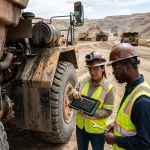
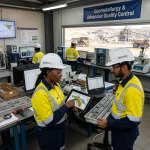
Contrary to early fears of mass unemployment, the industry is facing a different reality: a desperate need for skilled workers who can manage these systems. According to recent research, approximately 3.5 million truck drivers are still needed across various sectors, and mining is no exception. The role of the "driver" is evolving into that of a "fleet monitor," requiring a blend of traditional mining knowledge and data literacy.
Operations in the Lobito Corridor and across Africa are looking at autonomy as a way to bridge the skills gap, but the infrastructure requirements: specifically 5G and Starlink-level connectivity: remain a hurdle for remote sites.
Comparative Operational Performance (2026 Benchmarks)
The following table outlines the current performance gap between traditional, mixed, and fully autonomous haulage environments based on 2026 Q1 industry reports.
| Metric | Traditional (Human) | Mixed Fleet (AI + Human) | Fully Autonomous (Segregated) |
|---|---|---|---|
| Utilization (Hrs/Day) | 18.5 | 19.2 | 21.8 |
| Fuel Efficiency | Baseline | +4% | +11% |
| Tyre Life Improvement | 0% | +5% | +18% |
| Safety Incidents (Per 100k tons) | 1.2 | 1.5* | 0.3 |
| System Resets/Shift | N/A | 4.2 | 0.8 |
*Note: The higher incident rate in mixed fleets is often attributed to human drivers failing to follow autonomous protocols at intersections.

Strategic Outlook for Investors and Operators
For investors monitoring the 2026 Critical Minerals Scoreboard, the efficiency of haulage is a primary indicator of mine-site margins. As ore grades decline, the ability to move more material at a lower cost becomes the difference between a Tier 1 asset and a stranded one.
However, the "Reality Check" of 2026 suggests that the transition will be slower and more expensive than the 2022-2023 hype cycle predicted. Companies that invested heavily in robust site-wide Wi-Fi and high-precision GPS networks three years ago are now seeing those investments pay off, while those who focused solely on the "robot trucks" themselves are struggling with connectivity dropouts.

Conclusion: The Path Forward
The 2026 outlook for Autonomous Haulage is one of disciplined refinement. The industry has accepted that the "human element" isn't going away; rather, it is being redistributed. Success in the current year is defined by how well a site can manage the "Mixed Fleet" friction.
Miners must prioritize purpose-built hardware and invest in weather-resilient sensor technology if they hope to achieve the promised 20%+ gains in productivity. For now, the driver’s seat may be empty, but the need for human oversight, mechanical expertise, and strategic intervention has never been higher.
Social Media Snippet:
The 2026 Reality Check is here: Autonomous haulage is transforming mining, but "Mixed Fleet" operations are proving harder than the hype suggested. From Pilbara cyclones blinding sensors to the retrofit vs. purpose-built debate, we dive into why the driverless mine is still a work in progress. #MiningTechnology #AutonomousHaulage #SmartMining #Mining2026