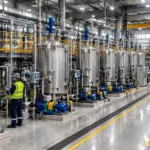
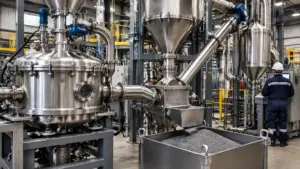
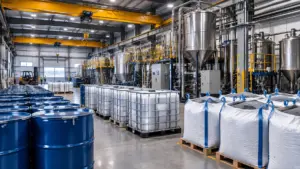
Nickel Industries’ Excelsior project is being developed in Central Sulawesi’s Indonesia Morowali Industrial Park.

Nickel Industries has halted the ramp-up of its Excelsior Nickel Cobalt facility in Indonesia after drought-related water shortages forced the high-pressure acid leach plant to operate at about 30% of nameplate capacity, according to reporting citing the company.
The disruption affects a project designed to produce battery-grade nickel products in Central Sulawesi, one of the world’s most important nickel-processing regions. It also comes as Indonesian smelters face higher ore benchmark prices, limited feedstock availability and growing concerns over the effect of dry weather on water and power supplies.
Nickel Industries’ Excelsior facility, also known as ENC, is located within the Indonesia Morowali Industrial Park, or IMIP. The company holds a 46% interest in the project.
The plant is expected to produce up to 72,000 metric tons per year of contained nickel equivalent across mixed hydroxide precipitate, nickel sulfate and nickel cathode when fully operational, according to Nickel Industries’ project information.
The water shortage has interrupted that planned commissioning path.

Drought limits Excelsior’s operating rate
Nickel Industries had previously reported that Excelsior had reached roughly half of nameplate capacity during the early stages of commissioning. The company has now limited the facility to approximately 30% while industrial water availability remains constrained.
The immediate cause is an extended period of dry weather linked to El Niño conditions. Reduced rainfall has lowered river flows and tightened water availability for industrial users across parts of Sulawesi.
The company has said that its rotary kiln electric furnace operations remain unaffected by the current constraint. Those facilities produce nickel pig iron, primarily for the stainless steel industry, while Excelsior is intended to expand Nickel Industries’ exposure to battery-related nickel products.

Nickel Industries operates multiple nickel-processing assets across Indonesia.
Water availability had already emerged as a risk during the project’s commissioning phase. Earlier management commentary indicated that the start-up of additional processing capacity depended on access to sufficient industrial water, with improved conditions expected during the wet season.
The latest restriction suggests that the problem has become more severe than a short-term commissioning delay. It could also extend the period before Excelsior contributes meaningful additional volumes of mixed hydroxide precipitate, or MHP, to the market.
Excelsior’s role in the nickel supply chain
Excelsior is a high-pressure acid leach, or HPAL, project. HPAL technology processes nickel laterite ores, particularly limonite, into intermediate products that can be refined for use in electric vehicle batteries.
Nickel Industries describes ENC as a project capable of producing three major Class 1 nickel products:
- Mixed hydroxide precipitate
- Nickel sulfate
- Nickel cathode
The project’s integrated design is intended to give the operation flexibility across battery supply chains. Nickel Industries has also said the facility includes an integrated sulfuric acid plant and a proposed renewable power and battery-storage component.
The company’s broader operations portfolio includes the Excelsior and Huayue HPAL projects, four RKEF projects and the Hengjaya nickel mine.
The delay matters because new Indonesian HPAL capacity has been a central source of expected growth in battery-grade nickel supply. However, the initial contribution from Excelsior was already expected to be limited during its first months of commissioning.
Research from Mysteel estimated that the project could produce less than 10,000 tonnes of nickel in MHP during its first six-month commissioning and ramp-up period. Operating at roughly 30% of nameplate capacity could push more of that expected supply into later periods.
Excelsior project at a glance
| Item | Detail |
|---|---|
| Project | Excelsior Nickel Cobalt |
| Location | Indonesia Morowali Industrial Park, Central Sulawesi |
| Nickel Industries interest | 46% |
| Planned contained nickel capacity | 72,000 tonnes per year |
| Main products | MHP, nickel sulfate and nickel cathode |
| Current operating constraint | About 30% of nameplate capacity |
| Main cause | Drought-related industrial water shortage |
Sources: Nickel Industries, Mysteel and market reports citing the company.
Wider risks across Morowali
Excelsior is not the only nickel operation facing weather-related risk.
IMIP is home to a large concentration of nickel mines, smelters, power facilities and downstream processing plants. Reports have warned that production at the industrial park could fall by 30% to 40% if operators cannot secure additional water sources.
The potential impact extends beyond HPAL plants. RKEF facilities require reliable supplies of water and electricity, while lower river levels can also affect hydropower generation and industrial logistics.
In South Sulawesi, dry weather has reportedly constrained water and power supply to nickel and metallurgical facilities, forcing some operators to reduce production rates. Industry groups have not indicated that nationwide smelter shutdowns are likely, but prolonged drought could increase the risk of localized curtailments.

Indonesia’s HPAL capacity is expanding as processors target battery-grade nickel products.
The concentration of processing capacity in Indonesia means that even localized infrastructure problems can have wider effects on the nickel market. The country is the dominant source of global nickel growth, particularly in nickel intermediates and stainless steel feedstock.
A water-related production cut therefore adds another layer of risk to a market already dealing with ore availability and pricing uncertainty.
Indonesian ore benchmark adds cost pressure
Indonesia introduced a revised nickel ore benchmark pricing formula in April. The new framework incorporates nickel, cobalt, iron and chromium content and changes the pricing basis from dry metric tons to wet metric tons.
Using early-April reference prices, Shanghai Metals Market calculated that the benchmark for 1.2% limonite rose to approximately $40.18 per wet metric ton, from around $16 per wet metric ton under the previous framework.
Other market estimates placed the potential benchmark in a range of roughly $40 to $46 per wet metric ton, depending on the nickel price and assumptions for by-product values.
The sharp increase has created tension between miners and smelters. Mining companies are generally not permitted to sell below the official benchmark, while some processors have been reluctant to pay the higher cost.
Reports have also pointed to limited mining quotas and low ore inventories at several Indonesian smelters. Some facilities were said to hold only weeks of available feedstock, increasing the sensitivity of operating rates to both pricing and logistics.
The result is a two-sided squeeze:
- Water shortages restrict how much material some plants can process.
- Higher ore benchmarks raise the cost of the material that remains available.
That combination could encourage further production cuts if smelters cannot pass higher input costs through to nickel, stainless steel or battery-material customers.

Nickel processing infrastructure in Indonesia serves both stainless steel and battery-material markets.
Nickel prices remain sensitive to disruption risk
Nickel prices have not yet reflected a full-scale supply shock from the Sulawesi drought.
Available market data placed LME nickel near $16,400 per tonne on Sept. 15, with recent three-month prices trading in the mid-$16,000s. That is below some earlier market commentary suggesting a range of $16,600 to $16,800 per tonne.
The market response has remained relatively measured because the immediate disruption is concentrated in one project and broader Indonesian production has not been halted. Nickel Industries has also indicated that its other processing operations are not currently affected.
However, the downside risk to supply could grow if dry conditions continue through the commissioning period. A wider reduction in IMIP output would affect both nickel units for stainless steel and intermediate products for the battery sector.
Argus has reported that further production disruptions in Sulawesi could provide support for international nickel prices. The extent of that support will depend on how long water restrictions last, whether operators find alternative supplies and whether Indonesia’s wet season restores river and reservoir levels.
What to watch next
The key indicators for the nickel market are operational rather than speculative.
Water supply and wet-season timing
The duration of the drought will determine whether Excelsior’s 30% operating rate is a temporary commissioning issue or a longer production constraint. Market participants will be watching rainfall, river flows and announcements on alternative industrial water sources.
Excelsior’s next commissioning milestone
The timing of the third autoclave and the return toward higher utilization will show whether the project can still approach its year-end production objectives.
IMIP production guidance
Any formal guidance from IMIP operators on water availability, power generation or production rates would provide a clearer measure of the regional impact.
Indonesian ore transactions
The gap between the official HPM benchmark and actual spot transactions will remain important. If buyers and sellers struggle to agree on prices, ore shortages could continue to limit smelter utilization even after weather conditions improve.
LME nickel prices
A sustained move above recent mid-$16,000 levels would suggest that traders are assigning greater weight to Indonesian supply risks. A muted response would indicate that the market still views the disruption as temporary or manageable.
The Excelsior setback illustrates how Indonesia’s nickel expansion is increasingly exposed to infrastructure and climate-related constraints. The country has built an enormous processing base, but the reliability of water, power and ore supply will determine how much of that capacity can operate consistently.
For operators, investors and policymakers tracking critical-minerals refining and supply-chain concentration, the immediate issue is not whether Indonesia remains central to nickel supply. It is whether its industrial system can maintain high utilization when basic inputs become constrained at the same time.
Sources: Nickel Industries: Excelsior Nickel Project; Nickel Industries: Operations; Mysteel on Excelsior commissioning; Argus on dry-weather risks; SMM analysis of Indonesia’s revised nickel ore benchmark; Bloomberg report on the Excelsior ramp-up.