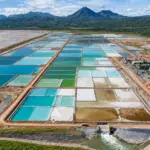
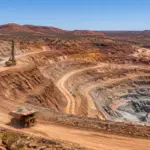
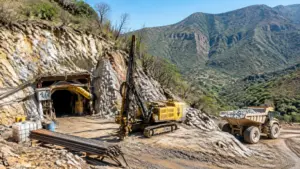
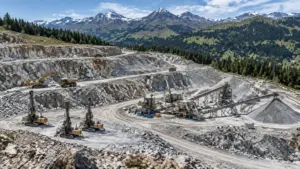
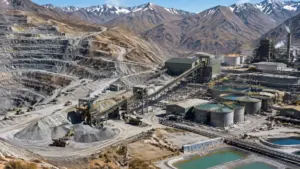
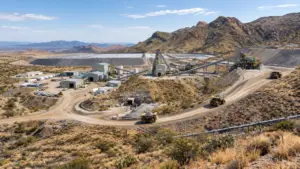
Large-scale mining infrastructure illustrates why buyers are placing a premium on operating districts, processing access and logistics networks.

Mining M&A is increasingly moving beyond the purchase of individual deposits. The most significant transactions are assembling districts, securing processing capacity and linking upstream resources with strategic capital.
That shift is visible across a group of 2026 deals spanning zinc, silver, lithium, gold and royalty finance. Boliden’s agreement to acquire a controlling stake in Nexa Resources for an implied value of about €3.15 billion is the largest example. Other transactions : including Critical Metals’ court-approved acquisition of European Lithium, Elemental Royalty’s $239 million purchase of Vizsla Royalties, First Au’s A$46.5 million takeover of Javelin Minerals and Lithium Argentina’s $180 million Ganfeng investment : show how consolidation is occurring at different points along the mining value chain.
The common thread is strategic control. Buyers are paying for assets that can fit into an existing operating district, provide access to scarce minerals or reduce exposure to development and financing risk.
A deal market focused on strategic fit
Boliden’s Nexa transaction illustrates the changing definition of scale. The Swedish base-metals producer agreed to acquire Votorantim’s 64.68% controlling stake in Nexa through an all-share transaction. The implied value of the full Nexa enterprise is approximately €3.15 billion, although the consideration for the controlling stake is structured in Boliden shares rather than cash.

Nexa brings zinc and silver mines and smelters in Brazil and Peru, giving Boliden a much larger Latin American footprint alongside its Nordic operations. The strategic logic is not limited to additional tonnes. It includes access to processing assets, concentrate flows, procurement opportunities and a broader platform from which to manage zinc-market exposure.

The transaction also illustrates why share-based consideration has become useful in large mining deals. Boliden can preserve cash and debt capacity while giving Votorantim continued exposure to the combined company. Regulatory approvals, shareholder approval and a potential offer for Nexa’s remaining minority shareholders remain important steps before the transaction is complete. Boliden’s transaction materials provide the detailed structure.
Critical minerals are attracting a different form of strategic premium. Critical Metals received court approval for its proposed $1.16 billion acquisition of European Lithium, creating a pathway toward greater control of the Wolfsberg lithium project in Austria.
More Read
The stated value is influenced by Critical Metals’ share price and the transaction’s exchange-ratio mechanics. Under the amended structure, the number of Critical Metals shares issued to European Lithium holders can vary within a defined range based on a VWAP-linked formula. That means the headline value should not be treated as a fixed cash purchase price.
The transaction nevertheless reflects a broader trend: buyers are willing to pay for projects that sit inside politically important jurisdictions and may support regional battery supply chains. For investors, the key questions are whether the project can secure permits, complete financing and move from resource ownership to commercial production.

Control-room data is increasingly important in assessing whether projected synergies can become operating results.
Linkable deal table: what buyers are actually acquiring
The following table compares the five transactions by stated value, structure and strategic rationale. Values are not directly comparable because the deals include enterprise value, equity value, all-share consideration, royalty exposure and convertible financing.
| Transaction | Stated value | Structure | Strategic logic |
|---|---|---|---|
| Boliden–Nexa Resources | ~€3.15 billion implied enterprise value | All-share purchase of 64.68% controlling stake | Add zinc and silver production, smelting capacity and Latin American scale |
| Critical Metals–European Lithium | ~$1.16 billion implied value | Court-approved scheme with VWAP-linked share exchange | Secure European lithium development exposure and regional supply-chain relevance |
| Elemental Royalty–Vizsla Royalties | $239 million | Cash and shares, with a capped cash component | Acquire 2%–3.5% life-of-mine NSR royalties over the Panuco silver-gold project |
| First Au–Javelin Minerals | A$46.5 million | Recommended all-scrip takeover | Consolidate Eastern Goldfields projects near Kalgoorlie |
| Lithium Argentina–Ganfeng | $180 million | Six-year unsecured convertible note | Fund the PPG joint venture, refinance debt and deepen lithium partnership |
Elemental Royalty’s completed acquisition of Vizsla Royalties shows how consolidation can occur without taking direct operational control. The deal gives Elemental exposure to a 2%–3.5% net smelter return royalty over Vizsla Silver’s Panuco project in Mexico. The royalty is described as life-of-mine and uncapped, making the transaction a bet on future production rather than an assumption of mine-level operating responsibilities.
That distinction matters. Royalty companies can avoid direct exposure to labor, energy and sustaining-capital inflation, but they remain dependent on the operator’s ability to permit, build and operate the underlying mine. Elemental’s transaction disclosures and coverage of the Panuco royalty deal outline the principal terms.
First Au’s proposed acquisition of Javelin Minerals is smaller, but its rationale is equally district-focused. The all-scrip transaction would combine First Au’s Gimlet and Riverina East projects with Javelin’s Eureka and Coogee assets in Western Australia’s Eastern Goldfields.
The combined entity is expected to hold approximately 350,600 ounces of gold resources across the projects. The value is therefore less about immediate production than about creating a larger brownfields exploration and development platform. A consolidated land position can improve drilling efficiency, geological interpretation, infrastructure planning and access to future project finance.
Lithium Argentina’s Ganfeng investment takes a different route. The $180 million convertible note carries a six-year term and a 4% annual coupon, with proceeds intended in part to repay debt due in the near term. The financing is connected to the Pozuelos-Pastos Grandes joint venture in Salta, where Ganfeng is expected to hold a 67% interest and Lithium Argentina 33%.
The transaction shows how strategic capital is being used to combine financing, ownership and offtake relationships. Rather than a straightforward acquisition, it gives the strategic investor a stronger position in a future lithium production platform while helping the project owner extend its balance sheet.

Lithium projects with processing infrastructure and strategic partners are attracting capital even when transaction structures remain complex.
Why district consolidation is commanding a premium
Mining districts can create value that is not visible in a single-asset valuation. The potential benefits include:
- Shared roads, power, water and processing facilities.
- Larger and more flexible production schedules.
- Lower exploration costs across contiguous ground.
- Better use of technical teams and equipment.
- Greater negotiating power with suppliers and infrastructure providers.
- More attractive scale for lenders, royalty companies and strategic investors.
However, the premium is justified only when the buyer can convert geographic proximity into measurable operating benefits. A nearby deposit does not automatically create a viable processing hub. Metallurgy, permitting, water access, tailings capacity and mine sequencing still determine whether consolidation improves returns.
This is why the market is increasingly distinguishing between headline resource scale and deliverable value. A large resource may require new infrastructure and years of permitting. A smaller deposit near an existing mill may have greater economic relevance if it can extend mine life or improve plant utilization.
Skillings’ earlier analysis of mining M&A valuation gaps, royalties and execution risk makes the same distinction: ownership is a milestone, not proof of production.
Base, bull and bear framework
The outlook for mining M&A depends on commodity prices, financing conditions and the strategic premium attached to secure supply.
| Scenario | District consolidation | Critical-minerals premiums | Capital flows | Main risk |
|---|---|---|---|---|
| Bear | Buyers retreat to low-cost producing assets and delay exploration consolidation | Premiums narrow as lithium, nickel or other battery-metal prices weaken | Capital favors royalty platforms and established producers | Overpayment, permitting delays and refinancing pressure |
| Base | Mid-tier producers assemble nearby assets and infrastructure-backed districts | Strategic premiums remain selective for permitted or advanced projects | Convertible notes, joint ventures and all-share deals remain common | Synergies take longer to realize than expected |
| Bull | Major producers pursue regional platforms and processing hubs | Supply-security concerns support higher premiums for lithium, copper, zinc and other critical minerals | Cross-border strategic capital accelerates development | Regulatory scrutiny and competition inflate valuations |
Under the base case, M&A remains active but selective. Buyers are likely to favor projects with defined resources, credible studies, existing infrastructure and clear financing pathways. Deals may also rely more heavily on earnouts, royalties, joint ventures and contingent payments to divide development risk.
The bull case would emerge if governments intensify support for domestic supply chains while commodity markets tighten. In that environment, strategic buyers may accept higher premiums to secure assets before competitors do. The risk is that competition begins to price policy ambition ahead of project economics.
In the bear case, capital becomes more defensive. Producing assets with near-term cash flow would attract interest, while early-stage lithium, nickel and critical-minerals projects could face wider valuation discounts. Royalty and streaming platforms may remain relatively attractive because they can provide exposure without assuming direct construction or operating risk.
What operators and investors should monitor
The most useful indicators are not simply announced deal values. Decision-makers should track whether transactions advance through measurable milestones:
- Regulatory and court approvals : particularly for cross-border schemes and critical-minerals assets.
- Resource conversion : whether inferred resources become indicated resources or reserves.
- Infrastructure access : including power, water, roads, ports and processing capacity.
- Capital structure : including dilution from share consideration and convertible notes.
- Royalty and offtake burdens : which can reduce future project cash flow.
- Integration progress : whether promised procurement, processing and logistics synergies appear in operating results.
- Commodity exposure : whether the deal works under normalized rather than peak prices.
The central lesson from 2026’s M&A activity is that buyers are not purchasing tonnes alone. They are purchasing time, infrastructure, jurisdictional access and the ability to connect resources to a functioning supply chain.
For operators, that creates a premium for assets that are close to existing districts or processing networks. For investors, it raises the importance of separating strategic scarcity from execution risk. The strongest transactions will be those where consolidation produces verifiable operating advantages rather than simply a larger resource statement.
LinkedIn snippet
Mining M&A is shifting from isolated asset purchases toward district consolidation and supply-chain control. Boliden’s Nexa deal, Critical Metals’ European Lithium acquisition, Elemental Royalty’s Vizsla transaction and new lithium and gold combinations show where strategic capital is moving : and why infrastructure, permitting and processing access now matter as much as resource size.
X snippet
Mining M&A is consolidating districts, processing routes and critical-minerals supply chains. The 2026 deal pattern: strategic stakes, royalty platforms, all-share combinations and convertible capital : with execution risk deciding whether headline premiums create real value.
By Penny Langford