By Charles Pitts

Hemlo Mining’s underground electrical substation outage shows how quickly a relatively small power-system failure can become a production problem.
The Sept. 4 outage affected the Alimak production area on the 9,765 level at the northern Ontario gold mine. No injuries were reported, and other mining areas and processing operations continued. A temporary electrical bypass restored partial power, but the disruption has complicated Hemlo’s ramp-up toward planned throughput of 4,800 tonnes per day by year-end.
Analysts cited by The Northern Miner said throughput could trend closer to 3,800 tonnes per day. Scotia Capital estimated second-half production at about 59,600 ounces, roughly 20% below its previous estimate. Hemlo shares fell 8.9% to C$7.55 following the update.
The immediate repair is not a megaproject. Hemlo had already ordered a replacement substation under its critical-spares program for approximately US$250,000, with delivery expected in December. The operational consequence, however, is much larger.
More Read

The incident illustrates a widening risk across northern Ontario and other remote mining jurisdictions: transmission capacity, substation resilience and electrical-equipment lead times can constrain mine growth even when ore, permits and processing capacity are available.

Why a US$250,000 part moved a C$2.2 billion company
The financial asymmetry is central to understanding mine power risk.
A replacement substation costing roughly US$250,000 is small compared with the capital base and market value of a major operating mine. Yet the failed component sat on the critical path for an active production area. Its loss affected access to stopes, development sequencing and the timing of planned tonnes.
More Read
That is because mining systems are interconnected. A substation does not need to power the entire operation to become a production bottleneck. It only needs to supply a shaft area, loading zone, ventilation circuit, hoist, pump network or production panel that cannot be readily bypassed.
In Hemlo’s case, the temporary bypass restored partial power rather than normal operating capacity. That distinction matters. A bypass can preserve safety-critical functions and enable limited production, but it may not support the full load required for drilling, mucking, pumping, ventilation and material handling at the planned rate.
The replacement cost is therefore a poor measure of the total exposure. The relevant calculation is the value of tonnes and ounces delayed while the mine operates below its planned configuration.

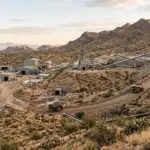
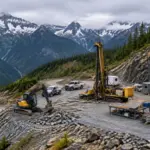
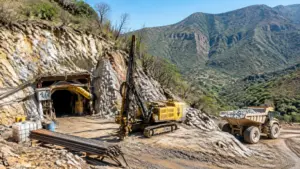
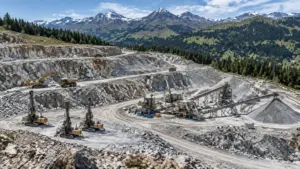
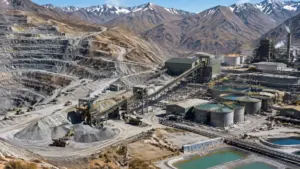
Surface mine power infrastructure connects high-voltage equipment to remote operations.
Mine power failure: cost asymmetry in a ramp-up year
| Indicator | Planned or reported position | Operational significance |
|---|---|---|
| Planned underground throughput | 4,800 tonnes per day | Hemlo’s targeted year-end ramp-up rate |
| Potential near-term throughput | About 3,800 tonnes per day | Analyst estimate following the outage |
| Estimated second-half production | About 59,600 ounces | Scotia Capital estimate, approximately 20% below its prior view |
| Replacement substation | About US$250,000 | Ordered through the critical-spares program |
| Expected replacement delivery | December | Indicates the time between failure and full replacement |
| Share move | -8.9% to C$7.55 | Market response to a production-ramp disruption |
Figures are based on Hemlo Mining’s operational disclosure and analyst commentary reported by The Northern Miner. The share-price move is a market reaction, not a measure of intrinsic value.
The expected production impact may ultimately represent delayed rather than permanently lost ounces if Hemlo can restore full power and resequence work across its developed areas. The distinction is important, but it does not eliminate the operational cost. Delayed production can affect quarterly results, unit costs, contractor schedules, development priorities and confidence in a ramp-up plan.
The company’s existing critical-spares program also provides a useful lesson. Holding a replacement substation reduced the risk of a much longer outage, but the spare still required delivery, installation, testing and integration. Inventory can reduce exposure; it cannot remove the time required to restore a complex underground electrical system.
The regional transmission gap
The Hemlo outage was an underground equipment failure. It should not be treated as evidence that every mine in the region faces the same technical failure mode. It does, however, demonstrate the broader mechanism: when electrical capacity or reliability is limited, production flexibility narrows.
The Northwestern Ontario Municipal Association’s energy task force has warned that existing and proposed transmission capacity may not be sufficient for projected mining growth.
The task force has identified 41 major exploration and mining projects in the region, with 37 expected to be operating by 2033. Its analysis projects approximately 1,484 megawatts of new mining-related load by that point and calls for about 250 MW of additional generation beyond planned capacity.
The concern is not limited to the amount of electricity available on paper. It also involves where power is located, how much a line can carry, whether a mine can connect without reinforcing the network and how quickly new substations can be built.
NOMA has identified potential constraints around the Dryden–Red Lake–Ear Falls–Pickle Lake corridor, the Greenstone and Ring of Fire region, Thunder Bay and the North Shore of Lake Superior. Ontario has recognized transmission expansion as necessary to support new mineral development, including through planning work involving the Independent Electricity System Operator.
For mine developers, the practical issue is timing. A project can complete feasibility work and secure financing while still waiting for a transmission connection, transformer station or utility upgrade. That creates a gap between technical readiness and physical energization.
Power equipment is also becoming harder to procure. Industry and utility supply-chain assessments cited in the Electro-Federation Canada grid technology roadmap place large power-transformer lead times in a range of roughly 2.5 to four years, with engineered medium-voltage switchgear commonly requiring about nine to 18 months.
Ontario and Quebec are competing for the same manufacturers, electrical steel, copper, aluminium, insulation systems and specialist engineering capacity. Grid expansion, electric-vehicle charging and mine electrification are all drawing on the same supply chain.
This creates a circular pressure. The energy transition requires more copper and aluminium conductors, transformers and switchgear, while mining companies need those same materials and systems to produce the metals required by the transition.
Electrification raises the stakes
Electrification can reduce diesel consumption, emissions and underground heat. It can also make power reliability more consequential.
Battery-electric haulage requires charging capacity, load management and sufficient distribution infrastructure. Drilling equipment, crushers, hoists, pumps and ventilation systems place additional demands on mine power networks. The more equipment that moves from diesel to electricity, the more production depends on the performance of the electrical system.
Skillings’ coverage of autonomous mining technology and electric haulage shows why charging and energy management are becoming part of mine planning rather than separate utility functions.
Emergency generators do not solve this problem by themselves. They are generally sized to maintain safety-critical loads such as ventilation, dewatering, communications, controlled access and emergency lighting. They are not normally designed to sustain full production across an electrified mine.
That distinction changes the value of redundancy. A mine may remain safe during a grid or substation failure while still losing production capacity. For operators, the relevant question is not only whether emergency systems work, but how much of the production sequence can continue while primary power is unavailable.
The Young-Davidson regional power-line failure provides another illustration of the mechanism. A storm-related failure on the line serving the Ontario mine caused about three days of unplanned downtime and contributed to lower mining rates. It was not the same technical event as Hemlo’s underground substation outage, but it showed how a remote power interruption can compound other operational constraints.

Electrified mine fleets require charging capacity, distribution redundancy and reliable ventilation.
Base, bull and bear framework for mine power risk
| Scenario | Operating assumptions | Likely outcome |
|---|---|---|
| Base case | Transmission projects advance, but connection queues and equipment lead times remain extended | Existing mines protect critical spares, phase electrification and use temporary or staged capacity where possible |
| Bull case | Ontario and Quebec accelerate transmission investment, utilities align plans with mine demand and transformer supply improves | New mines connect more quickly, electrified fleets scale and power reliability becomes a competitive advantage |
| Bear case | Transmission approvals slip, transformer deliveries are delayed and regional demand exceeds planned capacity | Ramp-ups are resequenced, diesel equipment remains in service longer and some projects defer expansion or commissioning |
The base case is likely to be uneven rather than uniform. Large, established operations may be able to finance redundancy, reserve equipment and negotiate utility upgrades. Smaller developers and remote projects may face greater exposure to connection delays and single points of failure.
What to watch
Mine power risk is becoming more visible in technical reports, feasibility studies and quarterly operating updates. Investors, operators and policymakers should track five indicators:
- Transformer and switchgear lead times: Delivery estimates should be tested against commissioning schedules, not treated as fixed procurement assumptions.
- Grid connection queues: A project’s proposed connection date may not match the date when sufficient transmission capacity is available.
- Utility capital plans: Planned lines and transformer stations need to be assessed for capacity, phasing and route-level constraints.
- On-site redundancy capital: Critical spares, alternate feeders, mobile substations and bypass capability can materially change outage exposure.
- Disclosure quality: Technical reports should identify electrical single points of failure, emergency-generation limits and the consequences of operating below full power.
The Hemlo outage reinforces a straightforward conclusion: in remote mining districts, power is no longer just an operating cost or an enabling utility. It is part of the production plan.
As mines become more electrified and regional mineral development accelerates, transmission capacity may determine how quickly tonnes can be moved from the stope to the plant. The constraint may not be the orebody. It may be the transformer, the switchgear lineup or the line that has not yet been built.
Social snippets
A US$250,000 replacement substation has become a material production issue for Hemlo Mining, where an underground outage has put a planned 4,800-tonne-per-day ramp-up at risk. The wider lesson is regional: transmission capacity, transformer lead times and electrical redundancy are becoming first-order mine-growth constraints in northern Ontario.
X
Mine power is becoming a production risk. Hemlo’s substation outage put a 4,800 t/d ramp-up against an estimated 3,800 t/d near-term rate. In northern Ontario, the bigger constraint may be transmission capacity( not ore.)