China’s rare-earth export-control suspension is approaching a decision point that could reshape procurement plans across the Western automotive, defense, electronics and energy industries.

The suspension covering six export-control announcements issued in October 2025 is scheduled to expire on Nov. 10. That is not an automatic embargo date, but it is the point at which the measures could return unless Beijing extends, modifies or replaces the pause.
The uncertainty is already affecting trade. Several Chinese rare-earth suppliers have independently halted shipments to U.S. customers since early August, according to Reuters reporting. The reported refusals have occurred even where export licences were available, suggesting that commercial risk assessments are tightening faster than the formal rules.
That distinction matters. A supply chain can remain legally open while becoming commercially unreliable.
The result is a test of whether Western manufacturers have built enough alternative refining, separation and magnet capacity to withstand a disruption : or whether new mines will continue to depend on Chinese midstream infrastructure.

The deadline is a policy cliff, not a simple ban
China’s Ministry of Commerce paused implementation of six October 2025 announcements from Nov. 7, 2025, until Nov. 10, 2026. The measures cover a wide range of products and activities, including certain medium and heavy rare earths, processing equipment, related technologies, lithium-battery and graphite-anode materials, and overseas products with a Chinese rare-earth connection.

A legal analysis by Pillsbury described the arrangement as a conditional pause rather than a rollback. The underlying legal framework remains intact, while earlier controls on seven medium and heavy rare earths : including dysprosium, terbium, yttrium and samarium : remain in force.
The controls also include provisions that could affect companies outside mainland China. One suspended measure would apply to foreign-produced goods containing at least 0.1% Chinese-origin controlled rare-earth content by value, or goods produced using Chinese-origin rare-earth technology.
More Read
For manufacturers, the practical question is therefore broader than whether a shipment receives a licence. It is whether the product, technology, supplier, end user and downstream customer can all pass a changing compliance review.
| Key point | Policy lever | Supply-chain indicator |
|---|---|---|
| Early August | Chinese suppliers began refusing some U.S.-bound rare-earth shipments amid geopolitical and sanctions concerns | Licences may be issued but not used |
| Sept. 24 | Xi-Trump summit expected to address trade, energy and critical minerals | Potential signal on extension, licensing or broader negotiations |
| Nov. 10 | Suspension of six October 2025 Chinese export-control measures expires | Controls could resume, be amended or be extended |
| Nov. 27 | Separate suspension covering gallium, germanium, antimony and certain super-hard materials expires | Semiconductor, LED, defense and advanced-materials exposure |
| Early September | Brazil’s Senate approved its National Policy for Critical and Strategic Minerals | New financing and processing incentives for non-Chinese supply |
| Six-year implementation period | Brazilian producers may contribute to the guarantee fund and research programs | Policy support linked to domestic value addition |
The table is designed as a tracking framework for procurement teams and investors. The key indicators are not only export volumes, but also licence-processing times, supplier willingness to ship, customer qualification and the availability of separated products outside China.
Informal shipment halts expose the midstream weakness
The reported U.S. shipment refusals show why supply-chain analysis cannot stop at mine production.
Rare-earth ore and concentrate must be separated into individual oxides before they can be converted into metals, alloys and permanent magnets. Those steps are technically complex, capital-intensive and heavily concentrated in China.
Industry estimates place China’s share of global rare-earth separation and refining capacity at roughly 85% to 90%. China’s position is stronger still in heavy rare earths such as dysprosium and terbium, which are important in high-temperature permanent magnets used in electric vehicles, wind turbines, robotics and defense systems.
By contrast, ex-China refiners account for less than 15% of global rare-earth oxide separation capacity, while U.S. and European capacity combined is estimated at roughly 6% to 7% in 2026. Separated neodymium-praseodymium capacity outside China remains well below estimated demand.
This is the central constraint facing Western supply-chain planners: geology is becoming more geographically diverse, but refining is not diversifying at the same speed.
As Skillings has previously reported, the top three refining countries accounted for an average 86% of refined output across six major energy minerals in 2024. That concentration was higher than the corresponding share of mining production.

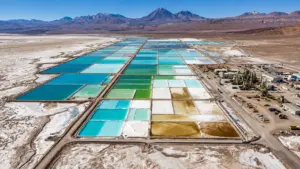
Industrial separation equipment illustrates why midstream capacity remains the critical bottleneck.
New projects in the United States, Canada, Europe, Australia and Malaysia are expanding the alternatives. Lynas remains a major non-Chinese separator, while MP Materials, Energy Fuels, Neo Performance Materials, the Saskatchewan Research Council and Solvay are building or operating additional capacity.
However, most Western projects are still ramping up, operating at smaller scale or targeting commissioning dates beyond the immediate policy window. Even with planned additions, analysts expect the West to retain significant dependence on China for heavy rare earths through the end of the decade.
The November test therefore arrives before the alternative system is fully built.
Brazil adds policy support, not immediate replacement supply
Brazil is emerging as one of the most important policy responses to the concentration problem.
The Senate approved Bill No. 2,780/2024, establishing the National Policy for Critical and Strategic Minerals. The measure moves to presidential sanction and is intended to support exploration, mining, beneficiation, processing and industrialization inside Brazil.
The framework includes a Mineral Activity Guarantee Fund with potential assets of up to R$2 billion. It also establishes a federal processing and transformation program with tax credits that could reach R$5 billion between 2030 and 2034, according to a Demarest analysis.
The policy is significant because it targets the stages that China currently dominates: beneficiation, chemical processing, mineral transformation and the production of inputs for batteries, energy storage systems and permanent magnets.
It also introduces a national registry and traceability system for critical and strategic mineral projects. That could help foreign customers verify the origin, licensing status and compliance of Brazilian material, although the framework gives the federal government a greater role in screening strategic transactions and supply agreements.
Brazil’s advantage is not only resource endowment. The country has established mining infrastructure, a large industrial base and experience with niobium and other specialty minerals. The Araxá project in Minas Gerais illustrates the potential for rare earths and niobium to develop within an existing mining district rather than an isolated greenfield region.
Still, policy support does not create separated oxides overnight. Permitting, pilot testing, power, water, residue management, project finance and customer qualification will determine whether Brazil becomes a meaningful processing hub.

Brazil’s incentives target domestic processing, but commercial scale-up will depend on technical and permitting execution.
Three scenarios for the November decision
Base case: managed uncertainty
In the base case, China extends or modifies the suspension while keeping licensing leverage in place. Formal exports continue, but suppliers remain selective with U.S. customers and companies with complex ownership or end-use profiles.
Western buyers respond by increasing inventories, qualifying alternative suppliers and paying more attention to product-level traceability. Brazil’s policy attracts project studies and partnerships, but it does not materially replace Chinese supply in the short term.
The result is continued volatility rather than a sudden global shortage.
Bull case: negotiated extension and faster diversification
In the bull case, the Xi-Trump summit produces a workable extension, clearer licensing channels or validated end-user arrangements. Shipment reliability improves, reducing immediate pressure on manufacturers.
The temporary stability gives Western and Brazilian projects time to complete commissioning, qualify products and secure offtake agreements. Brazil uses the R$2 billion guarantee fund and R$5 billion in tax credits to move projects beyond exploration and into domestic processing.
This scenario would not eliminate China’s leverage. It would, however, create a longer runway for alternative supply chains to become commercially credible.
Bear case: controls return as suppliers pull back
In the bear case, the suspension expires without a replacement framework, while informal shipment refusals broaden to additional U.S. and allied customers. Chinese licensing becomes slower or more restrictive, and the separate gallium, germanium and antimony deadline adds a second pressure point later in the month.
Western refiners cannot immediately replace the lost capacity. Manufacturers draw down inventories, compete for limited non-Chinese material and delay product qualification. Heavy rare earths become the most exposed segment because alternative separation capacity remains particularly limited.
The commercial impact would likely appear first as higher premiums, longer lead times and contract renegotiations before it becomes a visible production shutdown.
What operators and investors should track
The most useful indicators between now and the deadline are operational:
- Licence reliability: Are approved licences translating into actual shipments?
- Product availability: Can buyers secure separated oxides, metals and magnet-grade materials rather than concentrates?
- Customer qualification: How long will Western refiners need to qualify products for automotive, aerospace and defense applications?
- Inventory coverage: How many weeks of supply do manufacturers hold for dysprosium, terbium, gallium and germanium?
- Brazilian implementation: When will the guarantee fund, tax credits and project registry become usable?
- Technology exposure: Which projects rely on Chinese-origin processing equipment, technical data or downstream partners?
The strategic lesson is straightforward. Diversification is not achieved when a new deposit is announced. It is achieved when material can be mined, separated, refined, qualified and delivered without passing through the same geopolitical bottleneck.
The Nov. 10 deadline will measure how much of that chain the West has actually rebuilt.
LinkedIn: China’s rare-earth export-control suspension expires Nov. 10, but supply-chain pressure is already visible as some Chinese suppliers halt U.S. shipments. With Western refining still limited and Brazil introducing R$2 billion in guarantees plus R$5 billion in tax credits, the next phase of critical-minerals competition is moving downstream.
X: The Nov. 10 rare-earth deadline is not an automatic embargo : but it is a major supply-chain test. Chinese shipment halts, limited Western refining and Brazil’s new R$7B policy package show why critical-minerals security now depends on processing, not just mining.