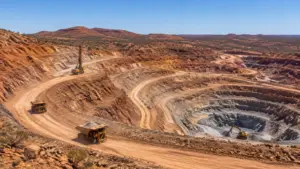
Diamond drill core from a high-grade silver-gold exploration setting.

Outcrop Silver & Gold has more than doubled inferred silver resources and increased indicated silver by nearly a quarter at its Santa Ana project in Colombia, adding scale to one of the country’s highest-grade primary silver exploration assets as prices trade near elevated levels.
The company’s updated mineral resource estimate contains 21.7 million ounces of indicated silver and 20.1 million ounces of inferred silver, according to the company and industry coverage reported by The Northern Miner. Compared with the 2023 maiden estimate, indicated silver is up about 23.5%, while inferred silver has risen 106.3%.
The update comes as spot silver trades near $64.50 an ounce, up roughly 1.6% on the day and close to historically strong levels. Higher prices can improve the potential economics of deposits that might have been marginal under lower price assumptions, although they do not remove the technical, permitting or financing risks associated with building a mine.
Resource growth adds scale to Santa Ana
Santa Ana is a 100%-owned project in the Mariquita district of Tolima, Colombia. Outcrop says the property covers more than 28,000 hectares and includes a mineralized corridor extending about 17 kilometres.
The updated estimate is based on 130,006 metres of drilling across 646 holes, compared with approximately 59,000 metres used for the 2023 maiden estimate. Mineralization is distributed across 13 primary vein systems, several of which remain open along strike or require additional drilling.

| Santa Ana resource | 2023 maiden estimate | Updated estimate | Change |
|---|---|---|---|
| Indicated silver | 17.6 Moz | 21.7 Moz | +23.5% |
| Inferred silver | 9.7 Moz | 20.1 Moz | +106.3% |
| Indicated silver equivalent | 24.2 Moz | 29.9 Moz | +23.5% |
| Inferred silver equivalent | 13.5 Moz | 27.9 Moz | +106.3% |
The updated indicated resource contains 1.8 million tonnes grading 376 grams of silver per tonne and 1.8 grams of gold per tonne. The inferred resource contains 2.3 million tonnes grading 266 grams of silver per tonne and 1.29 grams of gold per tonne.
On a silver-equivalent basis, the indicated resource averages 518.7 grams per tonne, while the inferred resource averages 369 grams per tonne. The company says average indicated grades across the 13 vein systems range from approximately 197 grams per tonne to 855 grams per tonne silver equivalent.
More Read

Those figures help distinguish Santa Ana from a large, low-grade bulk-tonnage project. The deposit is defined by narrow, structurally controlled veins, meaning future mine planning will depend heavily on continuity, vein width, dilution control and the suitability of underground mining methods.

Quartz-sericite vein material is characteristic of the structurally controlled mineralization being evaluated at Santa Ana.
High grades support the silver-equity case
Outcrop’s updated estimate uses underground mining shape optimization and reports resources within shapes considered to have reasonable prospects for eventual economic extraction. The company applied a 95 grams per tonne silver-equivalent cut-off to the Santa Ana and Los Naranjos veins and a 130 grams per tonne cut-off to other vein areas.
The estimate also uses assumed prices of $40 per ounce silver and $3,100 per ounce gold, together with metallurgical recoveries of 96.3% for silver and 98.5% for gold. Those assumptions are different from the current spot market, which is one reason the silver price has become central to the project discussion.
At $64.50 per ounce, the updated contained silver would represent a gross, in-situ value of approximately $2.7 billion across the indicated and inferred categories. That calculation is only a market-value reference. It excludes recoveries, mining dilution, operating costs, capital spending, royalties, taxes, financing costs and the time value of money. Mineral resources are not mineral reserves and do not demonstrate economic viability.
The distinction matters particularly for a narrow-vein project. High grades can support underground development, but the final outcome depends on whether the company can convert geological continuity into mineable tonnes at competitive costs.
The company says the revised classification applied a more rigorous standard than the 2023 estimate. Indicated resources require three supporting drill holes within a defined search area, while inferred resources require two. That helps explain why the increase in indicated ounces was more modest than the jump in inferred material despite the substantial increase in drilling.
Exploration upside remains, but so does development risk
Outcrop says at least 12 known vein systems have not yet been drill tested at a resource-definition level. Additional geophysical and geochemical anomalies could provide further targets.
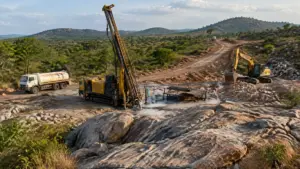
The company is continuing a 35,000-metre drill campaign focused on expanding known resources and testing new vein systems. Much of the mineralization identified so far occurs within about 300 metres of surface, while deeper ore shoots and feeder structures could provide additional exploration potential.

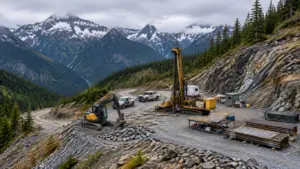
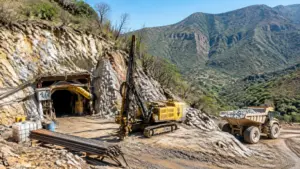
Santa Ana’s mineralized corridor extends across a mountainous and environmentally sensitive operating region.
The next major question is whether resource growth can be translated into a preliminary economic assessment and, later, a mine plan. Santa Ana remains an exploration and resource-stage project. It does not yet have a demonstrated economic study supporting commercial production, and further development, environmental and operating permits would be required.
Colombia adds another layer of uncertainty. Outcrop has secured exploration access and is drilling along a permitted corridor, but the company does not own all surface rights across the project area. Continued access depends on agreements with landowners and effective community engagement.
The country also presents broader risks involving regulatory changes, taxation, environmental approvals, security, social unrest and potential delays. Those risks are not unique to Santa Ana, but they are material to any valuation based on future production. A larger resource does not by itself resolve questions around infrastructure, local acceptance, water management, mine construction or long-term security.
Silver metal versus silver equities
The sharp move in silver creates a familiar question for investors: is it better to own the metal directly or gain exposure through a silver explorer such as Outcrop?
Silver equities can offer greater upside sensitivity because a stronger metal price may improve project economics, increase the value of in-ground resources and make financing or strategic interest more feasible. A high-grade discovery can also attract a premium that is not available through bullion ownership.
But that leverage works in both directions. Shareholders in an explorer face drilling risk, permitting risk, dilution, capital costs, construction risk and the possibility that resources cannot be converted into reserves. The metal itself does not carry those company-specific risks.
| Exposure | Potential benefit | Principal risk |
|---|---|---|
| Physical silver or silver-linked instruments | Direct exposure to the metal price | No project-specific operating leverage |
| Producing silver miners | Metal exposure plus operating cash flow | Cost inflation, mine performance and reserve depletion |
| Development-stage equities | Potential leverage to resource growth and project de-risking | Financing, permitting, construction and dilution |
| Exploration-stage equities | Discovery and takeover potential | Geological uncertainty and high probability of capital raises |
A Cramer-style market reaction might focus on the potential torque to a rising silver price. A more measured assessment is that Santa Ana is a higher-beta development exposure, not a direct substitute for silver. Its value will depend on the company’s ability to demonstrate mineable continuity, complete economic studies, obtain permits and fund the next stages of work.
For decision-makers, the next useful markers are likely to be the preliminary economic assessment, additional drilling results, resource conversion, metallurgical data and evidence that Colombian land-access and permitting risks remain manageable.
What the update changes
The resource estimate gives Outcrop a larger and more clearly defined platform from which to advance Santa Ana. The most important change is not simply the number of ounces, but the combination of resource growth and consistently high grades across multiple vein systems.
The increase in inferred silver suggests that exploration has continued to identify mineralization beyond the more tightly drilled core of the project. The 23.5% increase in indicated silver provides a more defined base for potential mine planning, although it remains subject to further technical work.
With silver near $64.50 an ounce, the market is providing a supportive backdrop for that work. Whether the price environment lasts, and whether Santa Ana can convert geological potential into an economically permitted operation, remain separate questions.
For now, Outcrop has delivered a substantial resource expansion at a high-grade Colombian silver project. The next stage will test whether those ounces can move from an exploration success into a financeable mine development story.
Related reading: Gold and silver market analysis from Skillings and mining ESG, permitting and disclosure risks.

Core logging and assay work remain central to resource conversion and mine planning.