By Penny Langford

The latest gold mining news 2026 cycle has produced a useful case study in how a junior company can try to move from exploration to production without building an entirely new processing network. Forrestania Resources has released pre-feasibility studies for four Western Australian gold projects (Edna May, British Hill, Tycho and Johnson Range) alongside maiden ore reserves and a combined development narrative built around existing infrastructure.
The headline figures are substantial: Edna May carries a maiden 402,800-ounce probable reserve, while its PFS forecasts approximately A$728.7 million in pre-tax, undiscounted free cash flow at an assumed gold price of A$5,500 per ounce.
Those numbers are forecasts, not realised returns. The more important question is whether four studies released together demonstrate a credible operating portfolio or simply place several short-life assets under one strategic umbrella.
The consolidation-by-PFS strategy
Forrestania’s model is based on a hub-and-spoke approach. The Edna May processing plant, with reported capacity of about 2.9 million tonnes per year, is intended to serve as the main processing hub for nearby deposits. A second processing centre at Lake Johnston is part of the broader two-hub strategy.

That structure matters because the conventional development path for a small gold deposit is often difficult. A standalone mine may not have enough reserves to justify a new mill, tailings facility, power system and permanent workforce. Trucking ore to an established plant can reduce upfront capital, but it introduces exposure to haulage costs, road access, scheduling and third-party infrastructure.

Forrestania’s four PFSs attempt to solve that problem through portfolio construction:
- Edna May provides the scale and processing anchor.
- British Hill supplies a larger satellite opportunity with a planned two-year operating period.
- Tycho offers a small, near-term ore source that can be trucked to Edna May.
- Johnson Range adds a higher-grade, short-duration development option.
This is consolidation by technical study rather than by a single large acquisition. Each PFS adds another defined project to the potential production schedule, while the hub reduces the capital intensity of developing each deposit independently.


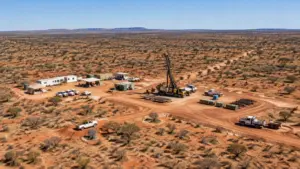
Processing infrastructure is central to Forrestania’s hub-and-spoke development model.
What the four studies actually say
The headline 402koz reserve relates specifically to Edna May. The four projects are not equivalent in size, grade, mine life or cost structure.
| Project | Probable reserve | Grade | Project life | Pre-production capital | Forecast pre-tax FCF | AISC |
|---|---|---|---|---|---|---|
| Edna May | 402.8koz | 0.99 g/t | About 10 years of mining | A$98M | A$728.7M | A$3,293/oz |
| British Hill | 71.9koz | 1.43 g/t | About 2 years | A$16.1M | A$104.8M | A$3,609/oz |
| Tycho | 14.7koz | 1.10 g/t | About 8 months | A$11.5M | A$9.9M | A$3,849/oz |
| Johnson Range | 28.5koz | 2.88 g/t | About 12 months | A$8.0M | A$60.1M | A$2,905/oz |
Sources: Forrestania Resources project disclosures and coverage by The West Australian and ShareCafe. Figures are rounded.
Edna May carries most of the economic weight. Its reserve is more than five times the size of British Hill’s and almost 30 times the size of Tycho’s. The project also benefits from existing processing infrastructure, forecast recoveries of about 93% and a planned operating period that is long enough to absorb development and restart costs.
British Hill is smaller but potentially important for the production schedule. Its PFS outlines approximately 63,900 ounces of production from a 71,900-ounce reserve, with ore transported about 145 kilometres to Edna May. The project’s modest A$16.1 million development capital requirement is attractive in absolute terms, although its AISC of A$3,609 per ounce leaves less protection against a weaker Australian-dollar gold price than Johnson Range.
Tycho illustrates both the value and limitations of the hub strategy. Its A$11.5 million capital requirement supports only 14,700 ounces of reserve, producing a simple pre-production capital intensity of roughly A$782 per reserve ounce. Ore must travel about 278 kilometres by road to Edna May, and the study assumes an AISC of approximately A$3,849 per ounce.
That does not make Tycho irrelevant. Its eight-month schedule and existing contracts for mining, haulage and tailings infrastructure could make it useful as early cash-generating feed. But its economics are particularly sensitive to delays, haulage rates, recovery performance and any increase in mobilisation costs.
Johnson Range is a different proposition. Its 28,500-ounce reserve grades 2.88 g/t, and its AISC of about A$2,905 per ounce is the lowest of the four studies. With only A$8 million of project capital and forecast pre-tax free cash flow of A$60.1 million, it could provide a high-margin but short-lived contribution to the wider portfolio.
Capital intensity tells a more complicated story
Using reported pre-production capital and probable reserve ounces, the simple capital intensity across the four projects is approximately:
- Edna May: A$243 per reserve ounce
- British Hill: A$224 per reserve ounce
- Tycho: A$782 per reserve ounce
- Johnson Range: A$281 per reserve ounce
Across the four projects, reported probable reserves total roughly 518koz and pre-production capital totals about A$133.6 million. That produces a simple portfolio ratio of approximately A$258 per reserve ounce.
The ratio is useful, but it should not be treated as a valuation metric. The capital figures are not necessarily defined on an identical basis, and the projects rely on shared infrastructure. Edna May’s plant, for example, carries strategic value beyond its own reserve because it may process satellite ore. Conversely, the satellite projects carry haulage and scheduling costs that would not appear in a conventional standalone mine comparison.
The sharper test is whether the capital plan can be delivered in sequence. A$98 million at Edna May, A$16.1 million at British Hill, A$11.5 million at Tycho and A$8 million at Johnson Range are manageable numbers individually. They become more demanding when construction, plant restart, road haulage, working capital and operating readiness overlap.
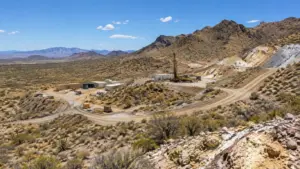
The portfolio combines a processing hub with smaller satellite deposits.
Reserve conversion is the central investment question
The market should distinguish between mineral resources, production targets and ore reserves. A reserve is the portion of a resource judged economically mineable after applying modifying factors such as mining method, dilution, recovery, infrastructure, approvals and operating costs.
That is why the maiden reserves matter. They move the projects beyond exploration language and provide a more concrete basis for development planning.
The conversion is not complete across the broader regional portfolio, however. Forrestania’s own project information continues to identify exploration upside at British Hill and other prospects across the Forrestania greenstone belt. Additional drilling may increase resources or improve confidence, but it should not be counted as production until it has passed through the relevant technical and economic work.
The immediate reserve-conversion questions are:
- How much of the resource inside planned pit shells can become reserve?
- Can drilling convert inferred material without lowering grade or increasing strip ratios?
- Do metallurgical recoveries hold across different ore domains?
- Can the company maintain consistent ore feed as one short-life satellite follows another?
- Are the reserve estimates sufficiently robust to support financing and final investment decisions?

Drilling and geological confidence will determine how much regional upside becomes mineable inventory.
What the market should scrutinise next
The first issue is execution sequencing. Edna May is expected to restart after plant work, while British Hill, Tycho and Johnson Range require mining, haulage and processing coordination. A delay at the hub could affect every satellite project connected to it.
The second is haulage economics. Tycho’s 278-kilometre road journey and Johnson Range’s reported 236-kilometre route make fuel, contractor availability, road conditions and weather material assumptions. The PFS numbers should be tested against actual contractor rates and contingency allowances.
The third is gold-price sensitivity. The A$5,500-per-ounce assumption is strong by historical standards, but the projects also carry high AISC figures. Johnson Range appears most resilient on cost; Tycho appears most exposed to operational slippage.
The fourth is capital availability. Forecast free cash flow is not the same as funding capacity. Investors will want to see a clearly sequenced capital plan, balance-sheet position, financing terms and any potential dilution before treating the combined A$729 million figure as corporate value.
Finally, the market should examine whether the two-hub model creates genuine operating leverage or simply adds complexity. A processing hub can lower capital intensity, but it can also become a bottleneck if multiple mines compete for the same plant, haulage fleet or technical workforce.
The Cramer-style investor take
The punchy version is simple: the plant is the asset, the reserve is the proof point, and the satellites are the option value.
Edna May gives Forrestania the scale needed for a credible production narrative. Johnson Range provides the strongest cost profile. British Hill looks like the most meaningful satellite by reserve size. Tycho is the near-term test of whether the hub-and-spoke concept can convert a small deposit into useful cash flow despite a long haul.
The caution is equally direct: four PFS releases do not equal four operating mines. Investors should focus on reserve quality, financing, restart milestones, haulage contracts, permitting and monthly production reconciliation. The portfolio has a coherent strategic logic, but its value will be determined by delivery rather than by the arithmetic of adding forecast cash flows together.
For readers tracking mining news, this is less a story about a single 402koz reserve than about whether regional consolidation can turn modest Western Australian gold deposits into a scalable operating business. It also fits the broader mining M&A deals 2026 theme: infrastructure, processing access and production optionality are becoming as important as headline resource size.
Social snippet
LinkedIn/X: Forrestania Resources has released four WA gold PFSs at once, led by Edna May’s 402.8koz maiden reserve and A$728.7M forecast pre-tax free cash flow. The real test is execution: can existing processing infrastructure, satellite ore and long-haul logistics combine to create a durable two-hub gold business?

Long-distance ore haulage is a key operating variable in the satellite-project model.