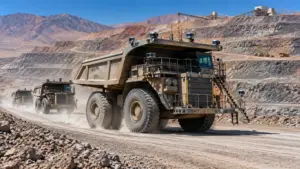
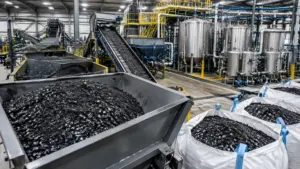
Conceptual editorial image: autonomous-ready haulage and trolley-assist infrastructure at a future Canadian nickel operation.

Canada Nickel has selected Komatsu and its largest Canadian dealer, SMS Equipment, to supply more than 300 machines for the proposed Crawford nickel project in northern Ontario, in a fleet package valued at approximately C$1.5 billion over the mine’s expected 40-year life.
The selection covers Crawford’s load-and-haul equipment and associated support fleet. Canada Nickel said the package is intended to incorporate Komatsu’s FrontRunner autonomous haulage system, DISPATCH fleet management technology, trolley-assisted truck haulage and a future transition to battery-electric vehicles.
The companies have not yet signed definitive supply agreements. Canada Nickel said negotiations with Komatsu and SMS Equipment are expected to conclude in the first quarter of 2027, alongside fleet support agreements and previously announced financing arrangements involving Taykwa Tagamou Nation.
The company expects to make a construction decision later in 2027.
Fleet selection moves Crawford into execution phase
Canada Nickel said it reviewed comprehensive proposals from four equipment vendors before selecting Komatsu. The company cited the manufacturer’s experience in automation and electrification as key factors in the decision.

The proposed fleet would support Crawford, a large-scale open-pit nickel project located about 40 kilometres north of Timmins, Ontario, in the Timmins-Cochrane mining camp.
“This marks a major step in the development of this project,” Canada Nickel CEO Mark Selby said in the company’s release. He pointed to the potential role of DISPATCH in coordinating mine traffic and FrontRunner in enabling autonomous haulage.
The C$1.5 billion figure represents the current estimated value of equipment expected to be purchased throughout Crawford’s projected operating life. It is not being presented as the value of a completed, binding equipment contract.
That distinction is important for investors, suppliers and project planners. The fleet selection establishes a preferred equipment and technology pathway, but final commercial terms, delivery schedules, support obligations and financing arrangements remain subject to negotiation.
Trade reporting by the Canadian Mining Journal and Northern Ontario Business described the announcement as a significant procurement step for the project.

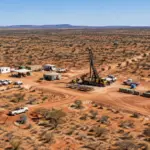
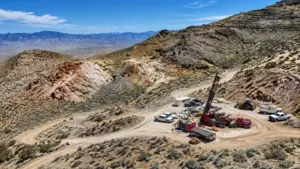
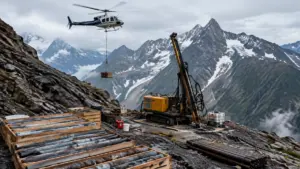
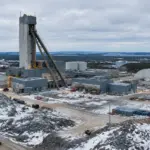
Exploration and development activity in a boreal mining setting.
What the Komatsu technology package includes
The planned Crawford fleet is designed around several connected systems rather than conventional truck-and-shovel equipment operating independently.
| Technology | Intended role at Crawford |
|---|---|
| FrontRunner | Autonomous operation of haul trucks in defined mining areas |
| DISPATCH | Fleet management, truck assignment and haulage coordination |
| Trolley assist | Use of overhead electric lines to support trucks on uphill ramps |
| Battery-electric equipment | Longer-term transition away from diesel-powered haulage |
| SMS Equipment support | Canadian equipment supply, field service and technology implementation |
FrontRunner is Komatsu’s autonomous haulage platform. In a large open-pit operation, autonomous trucks can be coordinated through predefined routes and operating zones, reducing the number of manual interactions required between haulage units and other mobile equipment.
DISPATCH is intended to manage the movement of trucks and loading units across the mine. The system can help coordinate truck assignments, monitor cycle times and balance equipment use across loading and dumping locations. Its effectiveness at Crawford will depend on the final mine plan, communications infrastructure, traffic rules and operating procedures.
The selection also includes trolley-assist capability. Under a trolley system, trucks use roof-mounted connections to draw electricity from overhead lines on selected portions of an uphill haul road. Trucks can use electric power on those ramps while relying on onboard power systems elsewhere on the route.
Canada Nickel said trolley assist could reduce diesel consumption and carbon dioxide emissions while creating a pathway toward battery-powered electric haulage.

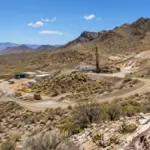
Komatsu haulage equipment shown with trolley-assist infrastructure. Credit: SMS Equipment via Northern Ontario Business.
Trolley assist provides an interim electrification pathway
For a project expected to begin construction later in the decade, the technology sequence is central to Crawford’s development plan.
Battery-electric mining trucks are advancing, but large fleets require more than vehicle availability. Operators must also plan charging infrastructure, electrical distribution, maintenance systems, workforce training, battery handling and changes to mine scheduling.
Trolley assist can provide an interim step by electrifying the most energy-intensive sections of a haul cycle. Loaded trucks typically consume more energy while climbing ramps, making those sections a potential focus for overhead power infrastructure.
The approach may also allow a mine to begin with a mixed fleet. Diesel or hybrid equipment could operate on sections without overhead lines, while trolley-enabled trucks use grid power on designated ramps. Over time, battery-electric trucks could be introduced as the technology becomes available and the mine’s electrical system expands.
Canada Nickel’s release said battery-powered electric vehicles are anticipated to be available when the company expects to begin production. The timing and scale of that transition will depend on equipment development, project financing, power availability and the final mine design.
The planned system places Crawford within a broader mining industry shift toward autonomous technology and electric haulage. Skillings has previously examined the expansion of autonomous mining technology and electric haulage, as mining companies seek to address fuel costs, emissions and operational consistency.
Crawford’s scale creates a demanding operating test
Crawford is expected to be a high-tonnage, open-pit operation producing nickel and other mineral products. Canada Nickel has described the project as one of the largest nickel resources and reserves globally, and the company is advancing it as a potential source of materials for stainless steel and electric-vehicle supply chains.
The project’s scale also creates implementation risks.
A fleet of more than 300 machines would require long-term coordination between Canada Nickel, Komatsu and SMS Equipment. The commercial agreements are expected to cover not only equipment supply but also support services, maintenance, parts availability and operational assistance.
For an autonomous fleet, commissioning will require detailed digital mapping, reliable communications, traffic management and integration between loading, hauling, blasting and maintenance activities. Operators will also need to establish procedures for mixed traffic during construction and early production, when autonomous and manually operated equipment may work in the same areas.

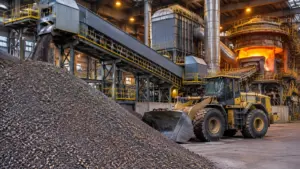
Mining operations control rooms are expected to play a central role in autonomous fleet management.
SMS Equipment’s Canadian service network was another factor cited by Canada Nickel. The dealer has branches in Timmins and Thunder Bay and has experience supporting mining operations and trolley-assist systems in Canada.
SMS Equipment President and CEO Robin Heard said the company viewed Crawford as one of Canada’s most important new mining projects and would work with Canada Nickel to execute its planned operating model.
Financing and construction remain key milestones
The fleet selection does not remove the larger financial and permitting requirements facing Crawford.
Canada Nickel must still finalize definitive agreements, secure project financing and complete the work needed to support a construction decision. Northern Ontario Business reported that the company has been working toward a substantial capital requirement for the project while placing orders for long-lead items.
The company has also pointed to federal approval allowing Crawford to proceed, a milestone reported by the Canadian Mining Journal. The next phase will require Canada Nickel to translate that approval and its technical studies into a fully financed construction plan.
For equipment suppliers, the preliminary selection provides visibility into a potential multidecade project and creates an opportunity to shape the mine’s automation and electrification architecture before construction begins. For Canada Nickel, the decision is intended to reduce procurement uncertainty and align the fleet with its proposed low-carbon production strategy.
The critical question now is whether the proposed technology package can be converted into binding agreements and integrated into a construction schedule that supports the company’s later-2027 decision.
That process will determine how much of the planned fleet is delivered as autonomous equipment, when trolley infrastructure is installed and how quickly battery-electric trucks can enter the operation.
What to watch next
The next milestones for Crawford include:
- Negotiation of definitive agreements with Komatsu and SMS Equipment.
- Completion of fleet support agreements.
- Finalization of fleet financing arrangements involving Taykwa Tagamou Nation.
- Further project financing and construction planning.
- A construction decision later in 2027.
- Detailed engineering for trolley-assist and electrical infrastructure.
- Confirmation of the initial equipment delivery and commissioning schedule.
The announcement gives Crawford a defined equipment strategy, but the project’s commercial and construction milestones remain ahead. Until those agreements are finalized, the C$1.5 billion fleet figure should be viewed as an estimated life-of-project procurement value rather than a completed equipment order.
Sources: Canada Nickel company release; Canadian Mining Journal trade report; Northern Ontario Business report; Mining Digital analysis.